Hobble Skirt
Clothing Definitions — definitions of garments and clothing terms from Apparel Search
Search Apparel Search
At a Glance
Definition: A hobble skirt is a skirt with a hem narrow enough to significantly impede the wearer's stride; the term typically refers to the narrow ankle-length skirts of the early 1910s popularised by designer Paul Poiret.
Category: Clothing Definitions
Word Origin
The skirt is named for what it does: to hobble is to walk with an impeded, awkward stride, and a hem narrow enough to shorten every step hobbled the wearer — the name describes the gait the garment imposed.
A hobble skirt is a skirt with a narrow enough hem to significantly impede the wearer's stride, thus earning its name. Though restrictive skirts first appeared in Western fashion in the 1880s, the term typically refers to the short-lived trend of narrow ankle-length skirts in the early 1910s, made popular by designer Paul Poiret. This page explains the trend's origin — including Katherine Wright tying her skirts to fly with her brother Wilbur — why the motorcar ended it, and how the hobble skirt relates to the pencil skirt and to later fetish fashion. The general clothing-root page is the hobble skirt definition; this page is the fuller treatment in the fetish clothing group.
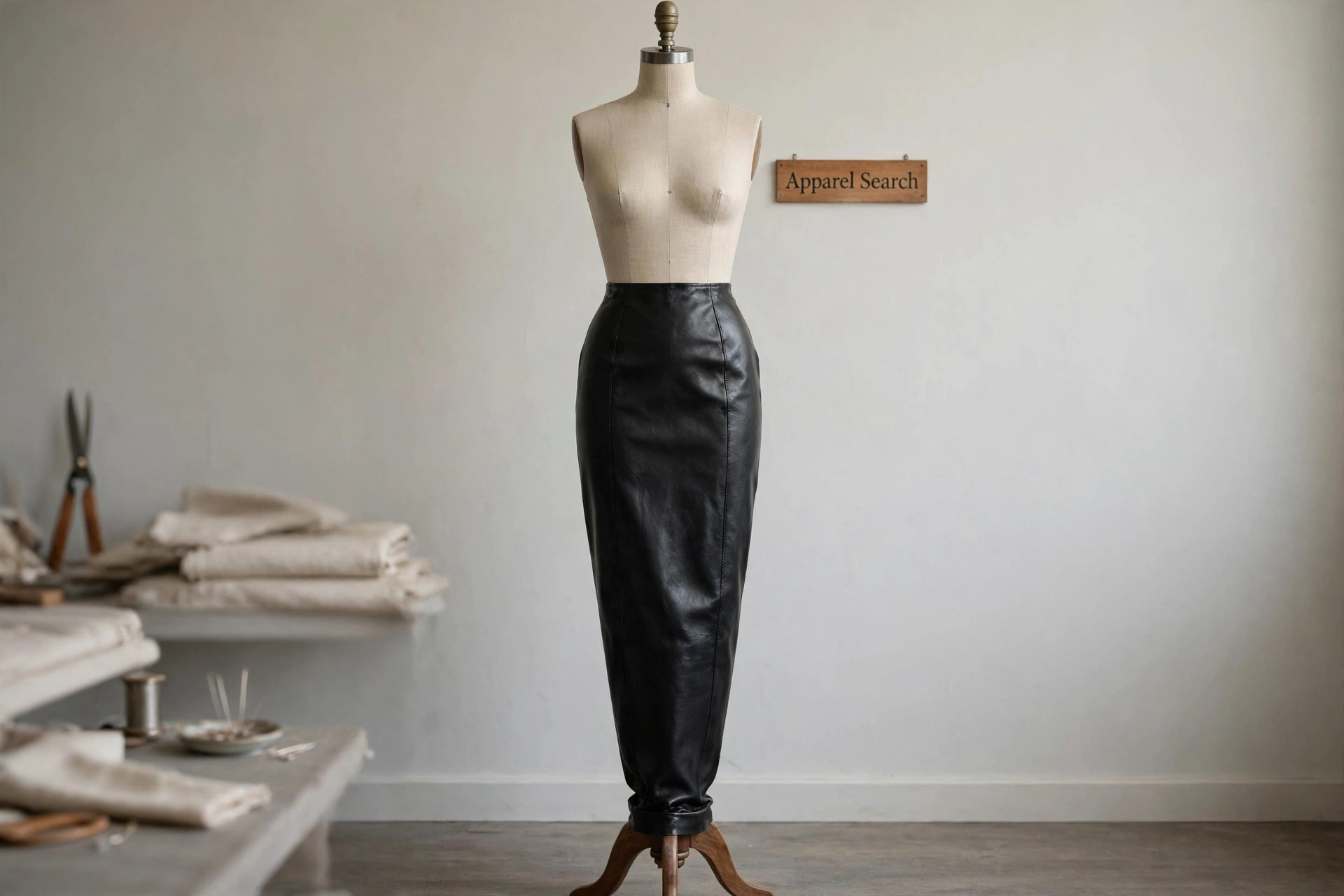
Poiret, Katherine Wright and the Early 1910s
Restrictive skirts first appeared in Western fashion in the 1880s, but the hobble skirt proper belongs to the early 1910s, when narrow ankle-length skirts became a short, intense trend. The designer who made them popular was Paul Poiret. Poiret was inspired by Katherine Wright, sister of the Wright brothers, who used a piece of rope to tie her skirts around her legs when flying with her brother Wilbur, in order to keep them from flapping while in flight — a practical improvisation that produced, by accident, the silhouette Poiret then sold as fashion.
The construction is simple to state and difficult to wear: a skirt cut straight and close, narrowing toward the ankle, with a hem circumference small enough that a normal stride is impossible. The wearer takes short, mincing steps — the hobble of the name. No slit or pleat relieves the restriction in a true hobble skirt; the restriction is the design.
As a cut, the hobble skirt belongs to the moment when fashionable skirts had narrowed from the wide, supported shapes of the previous decade to a straight column. The hobble took that narrowing to its limit at the ankle while the top of the skirt stayed comparatively easy, producing the peg-top silhouette associated with the years just before the First World War. Read that way, the style is less an aberration than the extreme end of a general movement toward narrower skirts — the point at which the movement defeated its own wearers.
Why the Trend Faded
The original trend faded quickly, due to the advent of cars — hobble skirts made it difficult to get into one — as well as the general impracticality of a garment that restricts walking. A fashion that cannot climb a step, board a tram or enter a motorcar has a built-in term limit, and the hobble skirt reached it within a few seasons.
The skirts did, however, catch enough attention to become one of the identifying features of the time period — for example, the shape of the classic Coca-Cola bottle is named after them. Few garments of so brief a vogue leave so durable a silhouette behind them.
The restriction governed everything the wearer did. Steps had to be short and even; sitting, climbing and hurrying were all negotiated rather than done. Contemporary comment treated the skirt as a spectacle precisely because its effect was visible in motion — the wearer could be identified across a street by her gait alone. That visibility is part of why the style, impractical as it was, spread at all: few garments advertise themselves with every step their wearer takes.

Later Tight Skirts and the Fetish Afterlife
Long tight skirts would reappear through the century in various forms among women's fashions, particularly among evening gowns, and inspired the pencil skirt — a shorter version of a hobble skirt that became popular in the 1950s, though the latter would typically feature a slit to increase the wearer's mobility. The pencil skirt is the hobble skirt made practical: the same close line, shortened and slit so that the wearer can walk.
Since at least the mid-century, hobble skirts have also been a mainstay in fetish fashion, often made out of leather, PVC or latex, where the restriction that ended the original trend is the point of the garment. They were, for example, a regular topic in the 1950s fetish magazine Bizarre, published by John Willie. In that context the hobble skirt is made in the close, unyielding materials of the corset tradition rather than in dress fabrics, and is worn as a costume garment rather than as day dress.
In fetish manufacture the construction follows the corset tradition rather than the dress tradition: close panels, unyielding material, and fastenings — zips, laces or buckles — that hold the narrow hem at its set circumference. A dress hobble skirt restricts because its hem is small; a leather or latex hobble skirt restricts because its hem cannot stretch, which is a stricter version of the same definition. Both are measured the same way, by hem circumference against the wearer's stride.
Not to Be Confused With
Told apart by length and by the slit. The hobble skirt is ankle-length, with a hem so narrow that the stride itself is impeded and no slit relieves it. The pencil skirt is its shorter descendant — a straight, tight skirt of the 1950s, typically knee-length and typically cut with a slit to increase the wearer's mobility. A pencil skirt is snug; a hobble skirt, by definition, restricts walking. See also the general hobble skirt page in the clothing definitions.
Common Questions
What is a hobble skirt?
A hobble skirt is a skirt with a narrow enough hem to significantly impede the wearer's stride. The term typically refers to narrow ankle-length skirts of the early 1910s, made popular by designer Paul Poiret.
How did the hobble skirt start?
Poiret was inspired by Katherine Wright, sister of the Wright brothers, who used a piece of rope to tie her skirts around her legs when flying with her brother Wilbur, to keep them from flapping in flight.
What ended the hobble skirt trend?
The original trend faded quickly due to the advent of cars — hobble skirts made it difficult to get into one — as well as general impracticality. Long tight skirts returned later, notably as the pencil skirt of the 1950s, usually with a slit for mobility.