Brocade
Fabric Definitions — fabric and textile definitions from Apparel Search
Search Apparel Search
At a Glance
Definition: Brocade is a thick, heavy woven fabric whose raised pattern is formed during weaving by supplementary weft threads worked into a ground weave, rather than printed or embroidered on afterward.
Category: Fabric Definitions
Brocade is a thick, heavy fabric into which raised patterns have been woven. The pattern is not printed onto the surface, and it is not stitched on afterward: extra weft threads are woven in only where the design requires them, so the motif sits raised above the ground weave and forms part of the cloth's structure. Turn a true brocade over and the same threads appear on the back as loose floats — the surest test that the pattern was made in the loom.
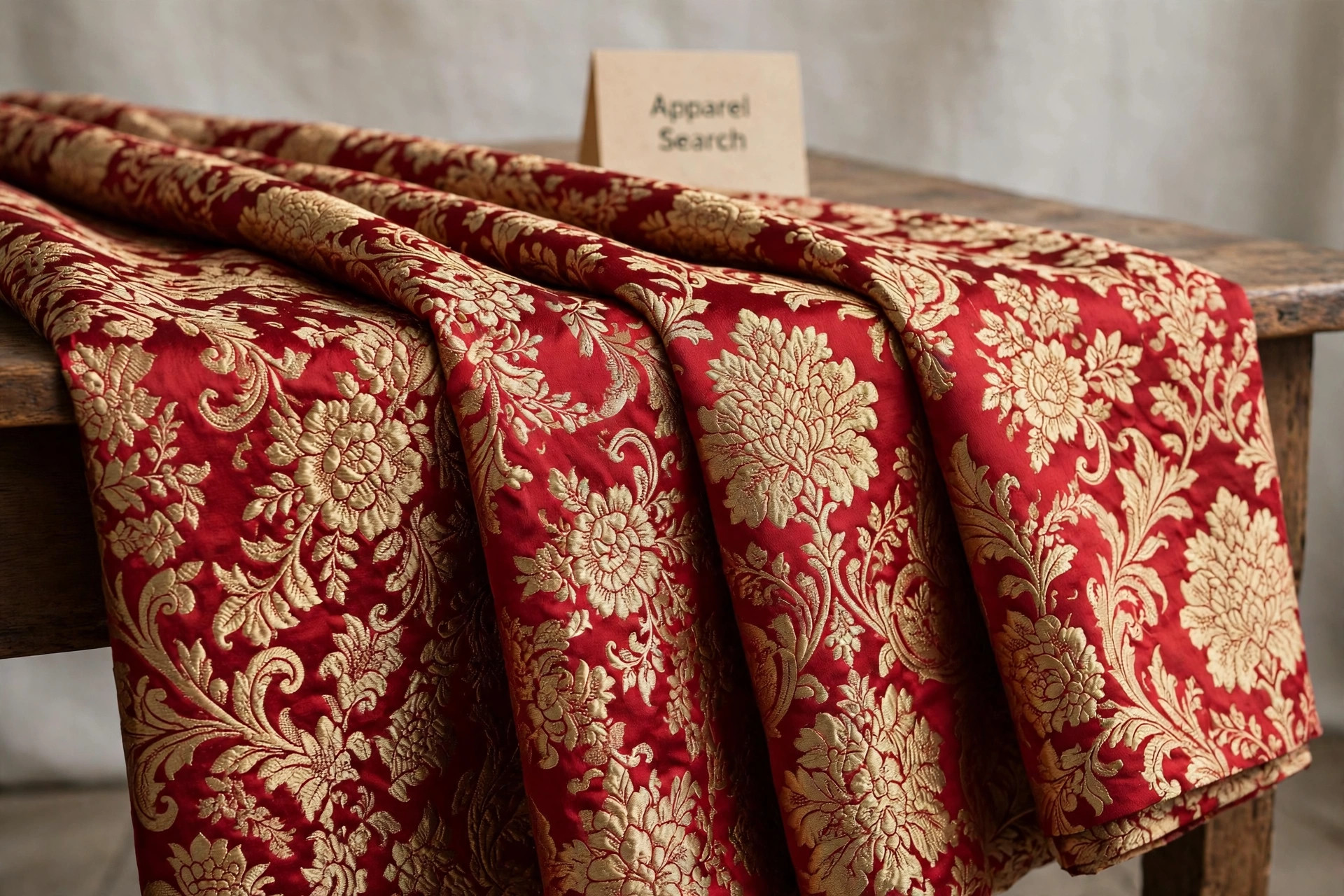
A Pattern Woven In, Thread by Thread
Brocade belongs to the family of figured textiles whose decoration is structural. A printed pattern sits on finished cloth and can crack, fade or peel away from it; an embroidered pattern is stitched through finished cloth. A brocade pattern is the cloth, in the places where it appears: the loom inserts additional weft threads — the brocading wefts — that travel only within their motif, floating across the back where the design does not need them and rising to the face where it does. Historically those wefts were silk in strong colours and, in the richest work, gold or silver thread, which is why brocade became the prestige fabric of courts and churches across Asia and Europe: the splendour could not wash off, wear off or be separated from the garment. The trade name still signals that construction. A light printed cloth in a brocade-style pattern is an imitation of the weave, not the weave itself.
Where Brocade's Qualities Fit
Weight, stiffness and a raised surface decide brocade's uses. A fabric that holds its own shape suits structured formal garments — evening jackets, waistcoats, ceremonial robes and formal dresses with shaped bodices — and furnishing work such as upholstery, drapery and cushions, where body is an advantage and the cloth is not repeatedly flexed at elbows and knees. The same qualities argue against it for soft, fluid clothing: brocade does not drape, its floats catch on jewellery and rough surfaces, and its thickness makes fine seams and small details clumsy. Modern brocades widen the fibre range well beyond silk — cotton, wool and synthetic brocades serve upholstery and fashion at lower cost — but the defining test remains the weave: raised pattern threads integrated into the ground, visible as floats on the reverse. A buyer who turns a supposed brocade over and finds a flat, printed back is looking at an imitation, however convincing the face.
Brocade, Brocatelle and Related Figured Weaves
The figured-weave family has close relations worth separating. Brocatelle is a sturdier relative in which the pattern is pushed into higher relief, traditionally with a linen back, and is made for upholstery rather than dress. Lampas combines two warps and two wefts to build patterns of damask-like complexity in several colours. All of them share the jacquard loom's ability to lift warp threads in programmed patterns — the mechanism that replaced the drawloom's human pattern-reader and turned figured weaving from a luxury bottleneck into an industry — but each name describes a different thread structure, and confusing them leads to wrong expectations about weight, reversibility and price. As a woven cloth, brocade sits at the heavy, formal end of the woven fabrics described in this section.
Not to Be Confused With
Brocade is often confused with damask, the other great figured jacquard weave. Both build their pattern in the loom, but damask forms its design from the weave structure itself — satin against sateen in a single colour — and is reversible, while brocade lays supplementary pattern threads over a ground weave, often in contrasting colours and metallic yarns, producing a raised, non-reversible design whose reverse shows loose pattern floats.
Common Questions
How is brocade different from damask?
Both are figured weaves with the pattern built into the cloth. Damask forms its pattern from the weave structure itself — satin against sateen in a single colour — and is reversible. Brocade adds supplementary pattern threads on top of a ground weave, often in contrasting colours and metallic yarns, producing a raised, non-reversible design whose reverse shows loose pattern floats.
Is brocade the same as jacquard?
Jacquard names the loom mechanism — a harness system, now computerised, that controls individual warp threads so complex figured weaves can be made. Brocade and damask are both woven on jacquard looms today, but jacquard is the equipment while brocade and damask are kinds of cloth; many jacquard-woven fabrics are neither.
Why is brocade heavy, and how should it be cared for?
The supplementary pattern threads add material across the whole design area, and traditional brocades add metallic threads as well, making the fabric thick, stiff and heavy for its size. The raised floats snag and abrade more easily than a flat weave, so brocade garments are typically dry-cleaned and stored away from rough contact.