Men's Leather Shoes Guide
A shoe is an item of footwear intended to protect and comfort the human foot while doing various activities, and also an item of decorative fashion - our original guide's definition, from a page that traced the leather shoe to its oldest known example: a single piece of cowhide laced with a leather cord along seams at front and back, found in the Areni-1 cave complex in Armenia in 2008 and believed to date to 3500 BC. Leather has been the shoe material of record for five and a half thousand years, and in expensive dress shoes, as the original page noted, it remains the standard today.
Shop Men's Leather Shoes Now
Shop Men's Leather Shoes on Amazon Shop Men's Leather Shoes on eBayThe Amazon and eBay links on this page are affiliate links. If you make a purchase through them, Apparel Search may earn a commission.
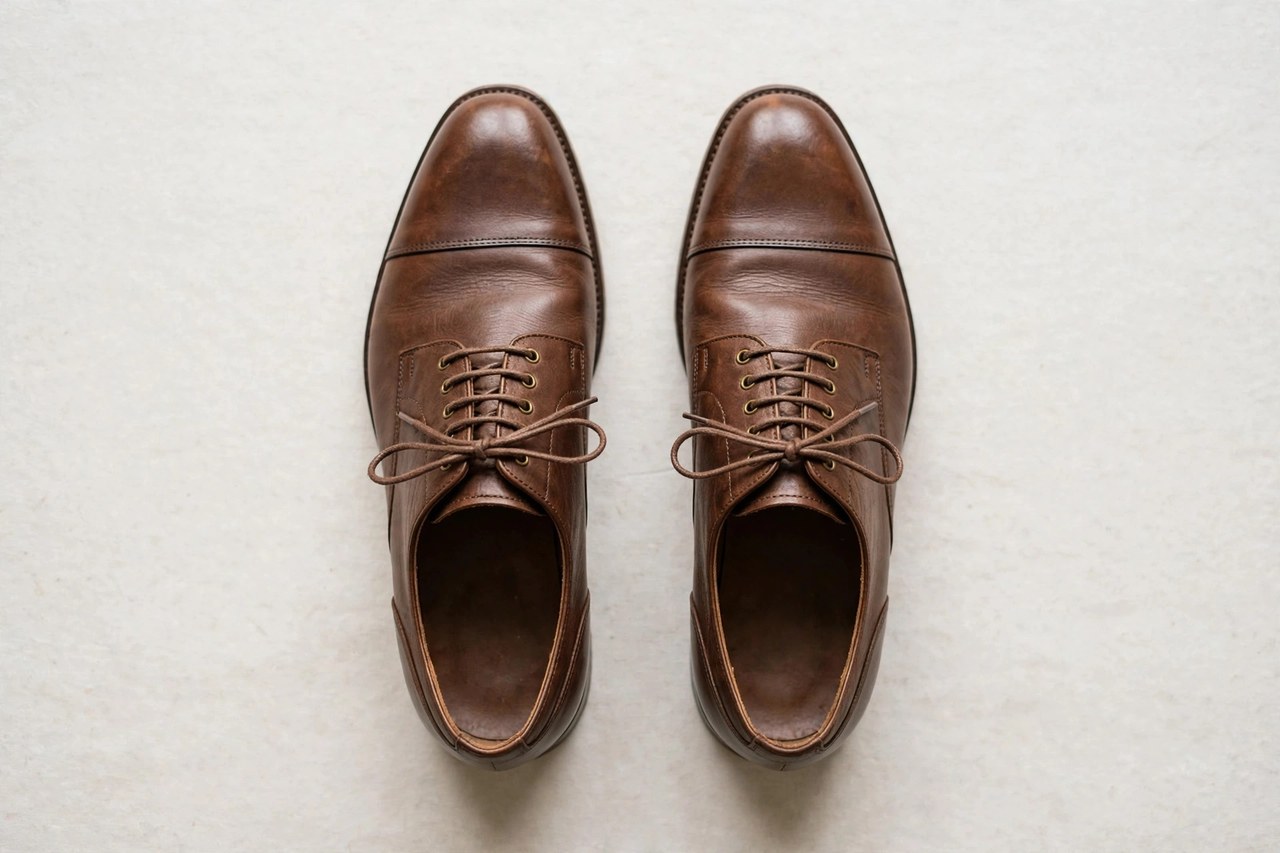
A shoe is an item of footwear intended to protect and comfort the human foot while doing various activities, and also an item of decorative fashion - our original guide's definition, from a page that traced the leather shoe to its oldest known example: a single piece of cowhide laced with a leather cord along seams at front and back, found in the Areni-1 cave complex in Armenia in 2008 and believed to date to 3500 BC. Leather has been the shoe material of record for five and a half thousand years, and in expensive dress shoes, as the original page noted, it remains the standard today. This guide covers the styles worth knowing, the fit points that decide comfort, the fabrics and construction that separate a good buy from a regret, and the simple care that makes the garment last.
From Areni-1 to the Goodyear Welt
The history explains the construction, because nearly every modern feature answers an old problem. The earliest designs were simple foot bags of leather protecting feet from rocks, debris and cold; toggled flaps and drawstrings followed, to tighten the leather for a better fit. Since the 17th century, most leather shoes have used a sewn-on sole - and that remains the standard for finer-quality dress shoes, now usually as the Goodyear welt, where the sole can be replaced without disturbing the upper. Mechanization arrived with Tomas Crick's 1853 patented riveting machine and the steam-powered rolling and cutting machines of the mid-1850s, which greatly increased production speed; the mid-20th century then added rubber, plastics, synthetic cloth and industrial adhesives, letting shoes stray far from traditional crafting - athletic shoes often have little or no real leather, while the classic categories kept it: oxfords, derbies, brogues, loafers and monk straps in full-grain calf, with suede and cordovan as the connoisseur variations. Judge a dress shoe by those old standards - the grain of the upper, the stitching of the sole, a leather lining, and a heel built in stacked layers rather than molded plastic.
Judge footwear by attachment and compound: cemented soles are light and affordable, stitched or welted constructions cost more and can be repaired, and the outsole rubber decides grip against longevity - soft compounds bite, hard compounds endure. Linings decide comfort over hours, removable insoles decide whether your own supports can come along, and honest weight decides whether the pair disappears on the foot or taxes every mile of the day.
Length Never Changes: Fitting Leather Shoes
Fit leather shoes late in the day, in dress socks, on both feet - most men have one foot measurably larger, and the pair must fit that one. The standard is a thumb's width - roughly three-eighths to half an inch - beyond the longest toe, the ball of the foot at the shoe's widest point where it flexes, and a heel held firmly without slip once laced. Leather uppers ease across the width with wear and mold to the foot's top, but length never changes, and a shoe that pinches the toes on day one will pinch them in year five. The instep tells its own story through the lacing: eyelet rows that pull nearly closed or gape wide both signal a volume mismatch. Walk on a hard floor, not only carpet - carpet forgives fits that pavement exposes - and remember that a well-made leather shoe feels structured rather than soft in the shop; the comfort arrives as the cork and leather footbed compress into your own footprint.
Fit footwear late in the day in the socks you will actually wear, with roughly a thumb's width beyond the longest toe, the heel held without lift, and the foot's widest point meeting the shoe's widest point. Sizes are unstandardized between makers - trust your measured length and width over the printed number, and require no break-in argument: a shoe that needs excuses in the shop delivers them on the road.
Rotation, Trees and Resoling
Leather shoes live on rotation, the single habit that multiplies their years: alternate pairs day by day so linings dry and footbeds rebound, with cedar trees inserted while the shoes are still warm to draw moisture and hold the shape. Brush after wear, condition the uppers when they look dry, and polish to protect as much as to shine - cream for nourishment and color, wax for the toe and heel gloss of formal wear. Keep shoes out of gym bags and car trunks, dry wet pairs slowly at room temperature with paper inside, and resole welted shoes before wear reaches the welt stitching. A shoe repaired on schedule is the Areni-1 principle honored: one good upper, maintained, across many soles - the economics and the elegance of the category in a single habit.
Rotation is the first care rule: a day of rest between wears lets linings dry and cushioning rebound, and it doubles a rotation's life compared with daily wear of one pair. Clean after use, dry at room temperature away from radiators, hold shape with trees or paper, and condition leather on a schedule rather than when it looks thirsty. Reproof weather finishes when water stops beading, and resole stitched footwear before the wear reaches the welt.
Common Questions
How long have leather shoes existed?
At least five and a half thousand years. The world's oldest known leather shoe - made from a single piece of cowhide, laced with a leather cord along seams at the front and back - was found in the Areni-1 cave complex in Armenia in 2008 and dates to about 3500 BC, as our original guide recorded. The earliest shoes were simple leather foot bags against rocks, debris and cold; drawstrings and toggles for fit came next, and the sewn-on sole that still defines fine dress shoes arrived by the 17th century.
What makes a leather dress shoe good quality?
Materials and the sewn sole. Look for a full-grain leather upper, a leather lining, and a sole stitched on - traditionally the standard for finer dress shoes since the 17th century, today usually Goodyear-welted - which allows the shoe to be resoled repeatedly. Tomas Crick's riveting machine of 1853 and the steam-powered machinery that followed mechanized production, but the quality markers stayed the old ones: tight, even stitching, a built-up leather heel, and an upper that creases fine rather than cracking across the vamp.
How should men's leather shoes fit?
With a thumb's width beyond the longest toe, the ball of the foot at the shoe's flex point, and a heel that does not slip when laced - fitted late in the day, on the larger foot, in the socks you will wear. Leather eases in width and molds across the top as the footbed compresses into your footprint, but it never gains length, so toe room is the one dimension to get right in the shop and the one that no break-in will fix.
More in Men's Clothes Guide L
From Our Original Guide: Five Thousand Years of Leather Shoes
Our original leather shoes page carried the category’s full history, and this guide keeps it. A shoe is an item of footwear intended to protect and comfort the human foot while doing various activities, and shoes are also used as an item of decorative fashion. The world’s oldest leather shoe, made from a single piece of cowhide laced with a leather cord along seams at the front and back, was found in the Areni-1 cave complex in Armenia in 2008 and is believed to date to 3500 BC. The earliest designs were very simple, often mere “foot bags” of leather to protect the feet from rocks, debris and cold; later shoes were developed with toggled flaps or drawstrings to tighten the leather around the foot for a better fit. Since the 17th century, most leather shoes have used a sewn-on sole — which remains the standard for finer-quality dress shoes today. Tomas Crick patented the design for a riveting machine in 1853, using an iron plate to push iron rivets into the sole, greatly increasing the speed and efficiency of production, and introduced steam-powered rolling-machines for hardening leather and cutting-machines in the mid-1850s. Since the mid-20th century, advances in rubber, plastics, synthetic cloth and industrial adhesives have allowed manufacturers to create shoes that stray considerably from traditional crafting techniques; leather, the primary material in earlier styles, has remained standard in expensive dress shoes, while athletic shoes often have little or no real leather. Soles, once laboriously hand-stitched, are now more often machine stitched or simply glued. The original page’s footwear news, shoe and footwear definitions and leather family links are carried below.
More to Explore on Apparel Search
- Men's Shoes
- Men's Shoes Guide
- Men's Footwear and Shoe Guide
- Men's Shoe Wholesalers
- Men's Shoe Stores
- Where to Buy Shoes
- Shopping For Shoes
- Leather Apparel Retailers
- Leather Belts
- Leather Clothing
- Leather Gloves
- Leather Hats
- Leather Jackets
- Leather Pants
- Shoe Definition
- Footwear Definition
- Popular Brands
- Footwear Definition List
- Men's Clothes Guide H-P
- Men's Clothes Guide Q-Z
Looking for Men's Clothing Stores?
This guide explains men's leather shoes. To browse where to buy, visit our men's clothing store directory, where you can find retailers that carry them.