Men's Leather Pants Guide
Leather pants are trousers - an item of clothing worn from the waist to the ankles, covering both legs separately - cut from tanned hide instead of cloth. That single material change transforms the garment: a simple fabrication or style of pant can define your appearance as well as your attitude, and leather is the strongest version of that truth, a trouser with the presence of the jacket it usually matches, and construction demands no cloth trouser ever makes.
Shop Men's Leather Pants Now
Shop Men's Leather Pants on Amazon Shop Men's Leather Pants on eBayThe Amazon and eBay links on this page are affiliate links. If you make a purchase through them, Apparel Search may earn a commission.
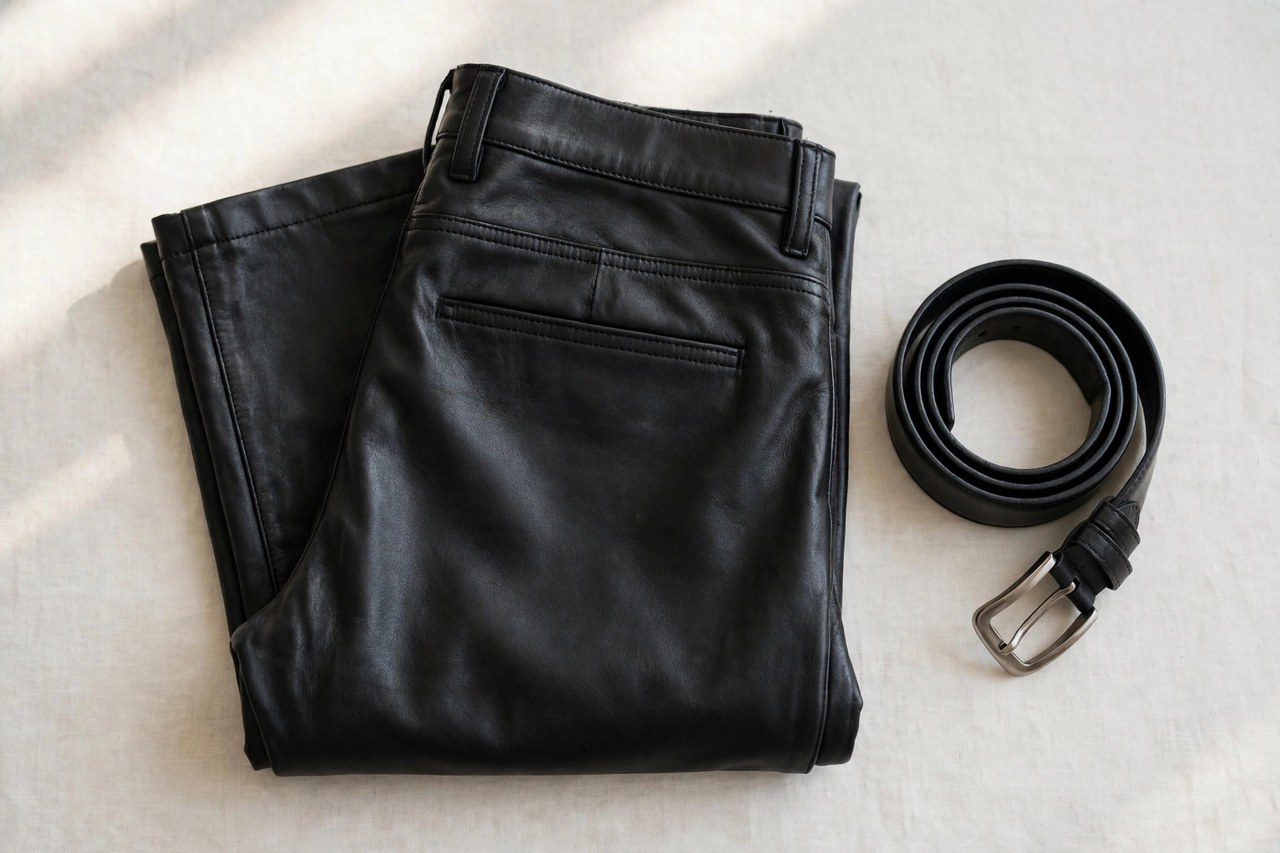
Leather pants are trousers - an item of clothing worn from the waist to the ankles, covering both legs separately - cut from tanned hide instead of cloth. That single material change transforms the garment: a simple fabrication or style of pant can define your appearance as well as your attitude, and leather is the strongest version of that truth, a trouser with the presence of the jacket it usually matches, and construction demands no cloth trouser ever makes. This guide covers the styles worth knowing, the fit points that decide comfort, the fabrics and construction that separate a good buy from a regret, and the simple care that makes the garment last.
Riding Cut Versus Dress Cut
Cut sorts the category before hide does. Motorcycle pants are protective equipment: thick cowhide, often with reinforced seat and knees, cut long to cover the boot in riding posture and close at the ankle. Dress and fashion leather pants slim the same five-pocket or flat-front patterns as cloth trousers, most often in lambskin or thin goatskin that drapes rather than armors. The hide choice follows the job - cowhide for abrasion, lambskin for drape and comfort, suede finishes for texture at the cost of weather tolerance. Construction details worth inspecting: a partial lining to the knee or a full soft lining, without which leather drags against the leg and wears hot; seams stitched with heavy thread and finished flat, since a bulky seam in a close leather trouser announces itself all day; and a waistband that closes with a real button and zip rather than relying on the hide's grip. Because panels are cut from individual hides, color and grain should match across both legs and the seat - hold the pair to the light and check.
For any leg garment the rise is the first specification, because it decides sitting comfort before fabric gets a vote: measure from front waistband through to back and compare it with a pair that already works. Then audit the stress points - bar-tacked belt loops and pocket corners, double-stitched inseams, hems finished evenly - and the pocketing, which should be deep, smooth and strong enough to carry what the garment's pockets invite you to carry.
No Alterations: Buy the Fit
Fit is the whole purchase, because leather trousers cannot be tailored the way cloth can - there is effectively no seam allowance to let out, and taking in hide is specialist work. Buy the waist that closes comfortably now, the seat and thigh that let you sit and climb stairs without the leather pulling drum-tight, and the length measured in the boots or shoes you will wear, remembering that riding cuts run deliberately long. New leather pants should feel snug and will ease by perhaps half a size at the waist, seat and knees as the hide conforms - the same breaking-in that shapes every garment in this letter. Snug is right; restrictive is not, and any pair that limits a full stride or a deep sit will not break in enough to forgive the mistake. If your measurements fall between sizes, the larger size with a belt ages better than the smaller size under constant strain at the seams.
Measure where the waistband will actually sit, plus inseam to your preferred break, and thigh and seat for closer cuts. Then sit, squat and climb a step in the fitting room - a leg garment that only works standing still does not work. Waistbands relax roughly half an inch in wear and inseams shrink most in early washes, so buy the fit you want after those changes rather than the fit in the mirror.
Rotation, Conditioning and the Friction Zones
Leather pants ask for rotation and restraint. Rest them a day between wears, hung by the waistband on a trouser hanger with padded clips or folded over a broad bar - never balled, since hide creases set hard. Wipe road dust and spills promptly with a barely damp cloth, condition the seat, knees and inner thigh a few times a year where friction concentrates, and keep them out of heat and sealed storage like every leather in this letter. Lined pairs air inside-out after wear. Professional leather cleaning handles deep soil; home washing and ordinary dry cleaning both risk the finish. Cared for this way, leather pants hold their shape and surface for many years, easing into a fit that is quite literally molded to one wearer - which is also why they are bought carefully, and kept.
Wash leg garments inside out and cool; heat is the agent that fades dye, tires elastic and shortens inseams. Dry low or on the line, hang or fold promptly, and crease deliberately or not at all. Walk the stress points each season - hem edges, pocket corners, seat and inner thigh - and mend the small fray while it is still small: leg garments fail gradually, then suddenly, and the two-minute October repair prevents the November replacement.
Common Questions
Can leather pants be tailored or altered?
Only within narrow limits, and only by a leather specialist. Unlike cloth trousers, leather pants carry no usable seam allowance to let out, the needle holes from any restitching remain visible in the hide, and hemming requires cutting and gluing or specialist stitching rather than a turned cuff. The practical rule is to buy the fit at the rack - waist, seat and stride right on day one, with length checked in your own boots - and treat alterations as a last resort for hems alone.
Do leather pants stretch with wear?
Yes, modestly and permanently, where the body presses: expect roughly half a size of ease at the waist, seat and knees as the hide conforms - the same breaking-in behavior described throughout this letter's guides. They do not stretch in length, and they never shrink back. Buy snug rather than loose for that reason, but never restrictive: leather eases to a working fit, it does not grow a size.
What is the difference between motorcycle and fashion leather pants?
Purpose, expressed in hide and cut. Motorcycle pants are protective gear - thick cowhide, reinforced at seat and knees, cut long for the riding posture - built to slide on pavement so the rider does not. Fashion and dress leather pants use thinner, softer hides such as lambskin in trouser patterns copied from cloth, built for drape and appearance. Wearing the fashion version on a motorcycle gives fashion-level protection, which is to say almost none.
More in Men's Clothes Guide L
Trousers, But So Much More
Yes, trousers are an item of clothing worn from the waist to the ankles, covering both legs separately — however, they can be so much more: a simple fabrication or style of pant can define your appearance as well as your attitude. Leather is a durable and flexible material created by tanning animal rawhide and skin. The men’s pant guide in the P section and the leather clothing and leather jackets pages of this letter are linked below.
More to Explore on Apparel Search
Looking for Men's Clothing Stores?
This guide explains men's leather pants. To browse where to buy, visit our men's clothing store directory, where you can find retailers that carry them.