Men's Loafers Guide
Loafers are slip-ons - typically low, lace-less shoes - and the style most commonly seen, known as a loafer in American culture, has a moccasin construction. What began as a casual shoe became something rarer, a slip-on that climbed the formality ladder until loafers increased in popularity to the point of being worn in America with city lounge suits - the only casual shoe that offices, weddings and boardrooms all accept.
Shop Men's Loafers Now
Shop Men's Loafers on Amazon Shop Men's Loafers on eBayThe Amazon and eBay links on this page are affiliate links. If you make a purchase through them, Apparel Search may earn a commission.
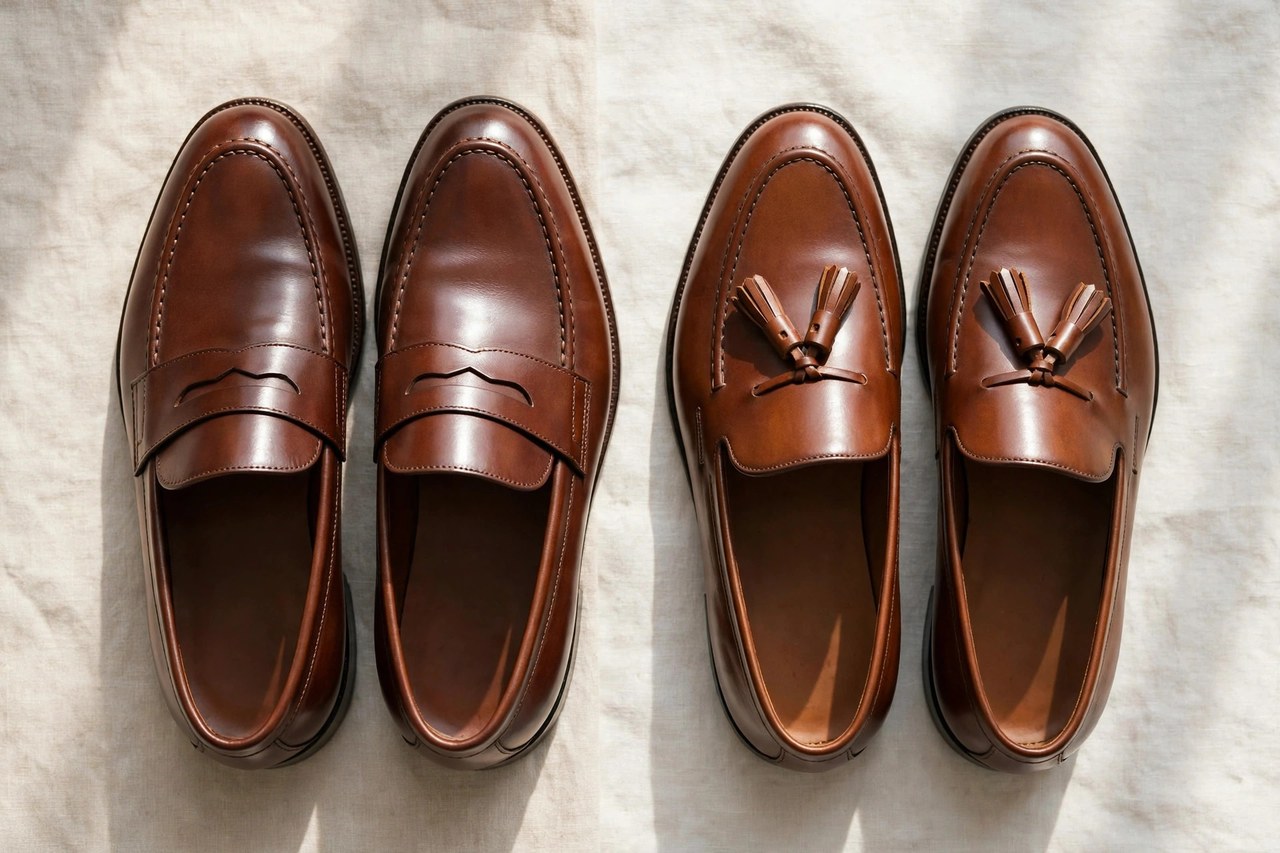
Loafers are slip-ons - typically low, lace-less shoes - and the style most commonly seen, known as a loafer in American culture, has a moccasin construction. What began as a casual shoe became something rarer, a slip-on that climbed the formality ladder until loafers increased in popularity to the point of being worn in America with city lounge suits - the only casual shoe that offices, weddings and boardrooms all accept. This guide is built around the questions buyers actually ask: which style, which size, which fabric, and what will it look like after a year of real use - answered in order, with the trade-offs stated plainly.
Two Births: Wildsmith and the Aurland Shoe
The loafer has two births, and the styles still descend from them. One of the first designs was introduced in London by Wildsmith Shoes - the Wildsmith Loafer - beginning as a casual house and country shoe that rose steadily in formality. The other arrived as the Aurland shoe, the Aurlandskoen of Norway, in the early 20th century: a moccasin-inspired slip-on whose American descendants acquired the saddle strap, and with it the penny loafer - named for the coin students slipped into the strap's slot. The tassel loafer adds its laced-and-tasseled vamp, the horsebit loafer its metal bar - the 'Gucci' loafer - and a less casual, earlier type is made with side gussets: the dress loafer, built in the same shape as a lace-up oxford but with elasticated inserts at the sides, allowing the shoe to be removed easily while remaining snug when worn, a cut with its greatest popularity in Britain. Construction still follows the moccasin idea in true loafers - a single piece of leather wrapping under the foot - while cemented and Blake-stitched versions trade some of that suppleness for price or sleekness.
Judge footwear by attachment and compound: cemented soles are light and affordable, stitched or welted constructions cost more and can be repaired, and the outsole rubber decides grip against longevity - soft compounds bite, hard compounds endure. Linings decide comfort over hours, removable insoles decide whether your own supports can come along, and honest weight decides whether the pair disappears on the foot or taxes every mile of the day.
The Lace-Less Fit Problem
A loafer must fit without its laces, which makes its fitting the most exacting in the shoe wardrobe: the heel must be held by the shoe's own shape, because there is no closure to tighten later. Buy in the afternoon, try both feet, and walk briskly - a quarter-inch of heel slip when new is the outer limit, since leather gives across the width and a loafer that slips today will flop within a month. The vamp should hold the instep comfortably without biting when the foot flexes, and the toes need the same thumb's width as any shoe. Sizing between makers varies notoriously in slip-ons, and thin dress socks versus loafer socks change the fit by half a size - bring the socks you intend. Suede loafers start marginally snugger in feel and give a touch more; patent and stiff calf give least, so fit those exactly.
Fit footwear late in the day in the socks you will actually wear, with roughly a thumb's width beyond the longest toe, the heel held without lift, and the foot's widest point meeting the shoe's widest point. Sizes are unstandardized between makers - trust your measured length and width over the printed number, and require no break-in argument: a shoe that needs excuses in the shop delivers them on the road.
Trees Every Time: Shape Is Function
Loafers reward the standard leather care with one addition: because nothing fastens them, their shape is their function, so trees go in after every wear, without exception, to keep the vamp from collapsing into deep creases and the heel counter from softening. Rotate pairs, brush suede with a dry crepe brush and never polish it, condition smooth leather sparingly - an over-softened loafer loses the grip at the heel that its fit depends on - and keep the saddle strap, tassels and bit hardware checked, since a loose tassel cord or bit screw is the category's small, preventable failure. Worn sockless or with no-show socks in summer, rinse the linings' worth by airing the shoes a full day afterward. A loafer kept in shape keeps its one great trick - on in a second, right with everything from shorts to a lounge suit - for years.
Rotation is the first care rule: a day of rest between wears lets linings dry and cushioning rebound, and it doubles a rotation's life compared with daily wear of one pair. Clean after use, dry at room temperature away from radiators, hold shape with trees or paper, and condition leather on a schedule rather than when it looks thirsty. Reproof weather finishes when water stops beading, and resole stitched footwear before the wear reaches the welt.
Two loafer details have their own guides: the fringed kiltie that lies over the instep, and the Blake stitch construction most Italian loafers are built with.
Not every slip-on is stitched, though - many are simply glued: see cemented shoe construction for how to tell what you are buying.
Common Questions
Where do loafers come from?
From two places at once. Wildsmith Shoes introduced one of the first designs in London - the Wildsmith Loafer - which began as a casual shoe and rose in formality until loafers were worn in America with city lounge suits. The other line is Norwegian: the Aurland shoe, or Aurlandskoen, of the early 20th century, whose moccasin construction underlies the classic American loafer and its penny, tassel and horsebit descendants.
How should loafers fit, since they have no laces?
More precisely than any laced shoe, because the shape alone must hold the heel. Fit them in the afternoon, in the socks you will wear, and allow no more than a slight heel movement when new - leather eases across the width with wear, and slip that starts as a whisper becomes a flop. The instep should feel held by the vamp without biting, the toes keep their thumb's width, and gusseted dress loafers should feel snug on and still slip off by hand, exactly as their elasticated inserts intend.
What is a dress loafer?
The most formal branch of the family: a slip-on made in the same shape as a lace-up oxford, but lacking the laces - instead, elasticated inserts at the sides (side gussets) let the shoe be removed easily while staying snug when worn. This cut has its greatest popularity in Britain. It is the loafer that pairs with tailoring when even a penny loafer reads casual, and the natural next step up from the tassel and horsebit styles.
More in Men's Clothes Guide L
Wildsmith, Aurland, and the Dress Loafer
Slip-ons are typically low, lace-less shoes; the style most commonly seen, known as a loafer or slippers in American culture, has a moccasin construction. One of the first designs was introduced in London by Wildsmith Shoes, called the Wildsmith Loafer; they began as casual shoes, but have increased in popularity to the point of being worn in America with city lounge suits. Another design was introduced as Aurlandskoen — the Aurland Shoe — in Norway in the early 20th century. Loafers are worn in many situations in a variety of colors and designs, often featuring tassels on the front, or metal decorations — the “Gucci” loafer. A less casual, earlier type of slip-on is made with side gussets (sometimes called a dress loafer): made in the same shape as lace-up Oxfords, but lacking the laces, these shoes have elasticated inserts on the side which allow the shoe to be easily removed but remain snug when worn; this cut has its greatest popularity in Britain. The penny loafers and tassel loafers guides are linked below.
Looking for Men's Clothing Stores?
This guide explains men's loafers. To browse where to buy, visit our men's clothing store directory, where you can find retailers that carry them.