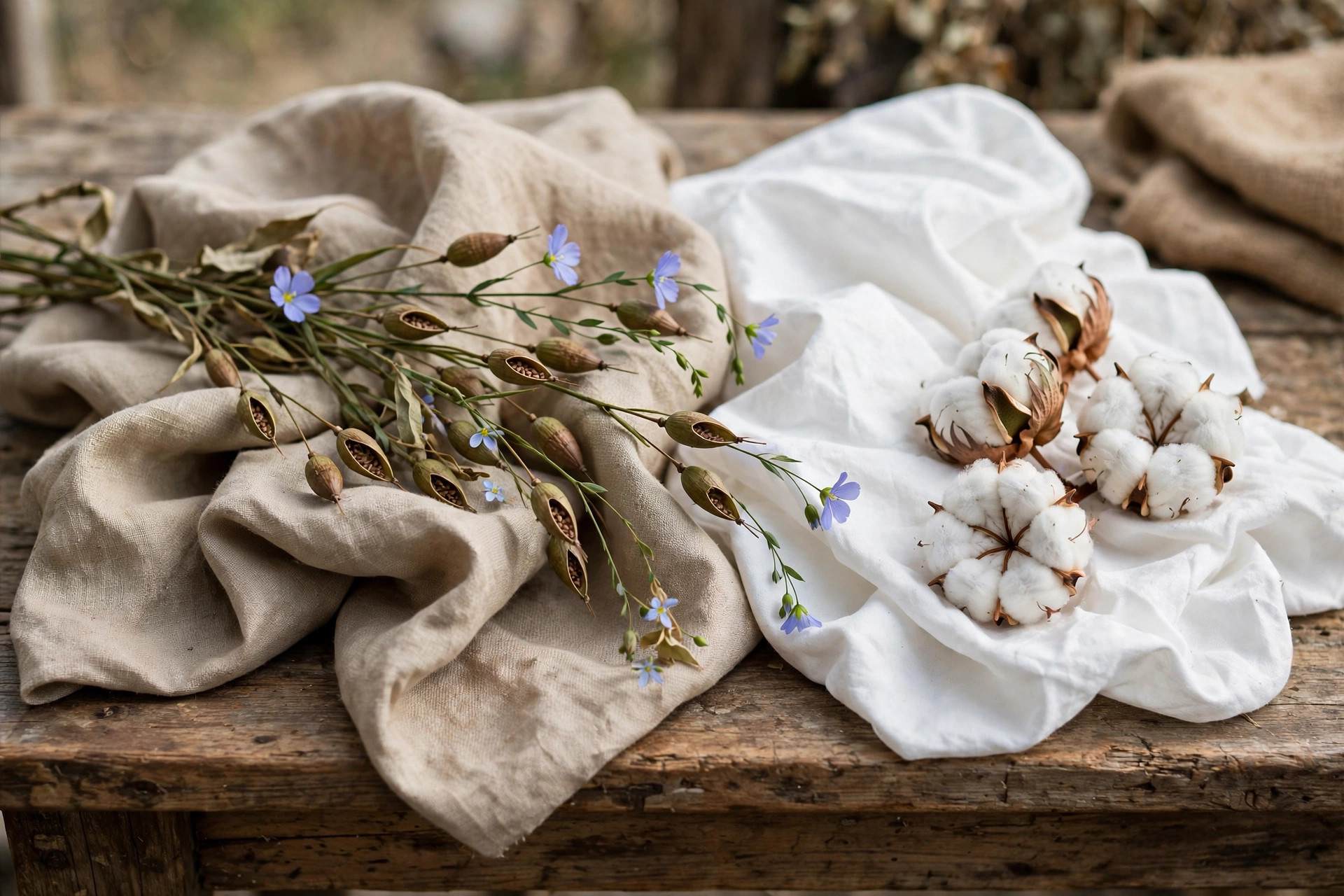
Linen and cotton are the world's two classic plant-fiber fabrics, and they divide summer between them. Linen is woven from the stem fibers of the flax plant; cotton from the seed fluff of the cotton plant. That botanical difference - long, hollow stem fibers versus short, soft seed fibers - explains nearly every practical difference between them: how they feel, how they handle heat and moisture, how they wrinkle, and how long they last.
The short version: linen breathes and dries better, feels cooler, and outlasts cotton, but wrinkles freely and costs more. Cotton is softer from day one, cheaper, easier to dye and print, and far more forgiving to wash and wear. Neither is "better" - they suit different garments and different owners.
What Linen Is
Linen is made from flax: the long bast fibers that run up the plant's stem, separated by retting (controlled rotting of the stem) and spinning. The fibers are long, smooth and naturally lustrous, with a hollow core that moves moisture quickly. A linen fabric feels crisp and slightly textured when new, softens steadily with washing, and has a characteristic relaxed wrinkle that fashion treats as part of its look rather than a defect. Linen's production is labor-intensive, which keeps it the pricier of the two fabrics. Its properties and history are covered in the linen guide and the linen fiber definition.
What Cotton Is
Cotton is the soft fiber that protects the seeds inside the cotton boll - short, fluffy, and easy to spin into yarns of every weight, from gauze to denim. Cotton feels soft immediately, takes dye and prints brilliantly, stretches a little, and asks almost nothing in care: it is the default fabric of T-shirts, shirts, underwear, jeans and bedding for good reason. Its weaknesses show in heat and water: cotton absorbs a great deal of moisture and dries slowly, so a soaked cotton garment stays heavy and clammy, and its fibers are weaker than linen's, so cotton garments generally wear out sooner. The everyday end of the range is on show in the men's cotton shirts guide.
Side by Side
| Feature | Linen | Cotton |
|---|---|---|
| Fiber source | Flax plant stems (bast fiber) | Cotton plant seed bolls |
| Feel | Crisp and textured new; softens with washing | Soft from the first wear |
| Breathability | Excellent - the cooler summer fabric | Good, but holds moisture against the skin |
| Moisture | Absorbs and releases it quickly; dries fast | Absorbs a lot and dries slowly |
| Wrinkling | Wrinkles readily - part of its character | Wrinkles moderately; many easy-care finishes exist |
| Durability | Very strong; among the longest-lasting apparel fabrics | Moderate; thins and wears sooner than linen |
| Care | Washable; soften with washing; iron damp for crispness | Easiest care of any fabric; tolerant of hot washes |
| Price | Higher | Lower |
Both are natural, biodegradable, and comfortable against skin, and both are commonly blended - linen-cotton blends aim to keep linen's coolness while borrowing cotton's softness and lower price, and they genuinely work.
How to Choose
- Choose linen for hot, humid weather and relaxed tailoring - summer suits, overshirts, wide trousers, shirt dresses - where airflow matters and a lived-in wrinkle is acceptable or welcome.
- Choose cotton for everyday basics, underwear, knitwear, workwear and anything washed constantly, where softness, price and easy care lead.
- For bedding and towels, linen sheets are cool and durable while cotton (especially percale or sateen) is cheaper and softer at first touch; cotton towelling wins for absorbency in towels.
- Try the blend if you like linen's hand but not its price or creasing - a linen-cotton mix is the practical middle road for shirts and summer dresses.
Common Questions
- Is linen cooler than cotton?
- Yes. Linen's long, hollow flax fibers and typically open weaves move air and moisture better than cotton, and linen releases absorbed moisture quickly instead of holding it. In hot, humid weather a linen shirt feels noticeably cooler and drier than a cotton one.
- Why does linen wrinkle so much?
- Flax fibers have very little natural elasticity, so once a linen fabric is creased, the fibers hold the crease instead of springing back. The wrinkling is intrinsic to the fiber; most wearers accept it as part of linen's relaxed character, and steaming or ironing while damp restores smoothness when needed.
- Which lasts longer, linen or cotton?
- Linen. Flax is one of the strongest natural fibers, and linen garments commonly outlast equivalent cotton ones, softening rather than thinning with age. Cotton is still durable in heavy weaves like denim, but in comparable shirt-weight fabrics linen has the longer life.
- Is linen harder to care for than cotton?
- Somewhat. Linen washes well and actually improves with washing, but it comes out more creased, prefers gentler cycles to protect its fibers, and needs ironing while slightly damp for a crisp finish. Cotton tolerates almost any wash routine, which is its great practical advantage.
Fashion Comparisons: The Full Series
This page is part of the Apparel Search fashion comparisons series, which puts two similar garments, fabrics or materials side by side. Browse the full series below.