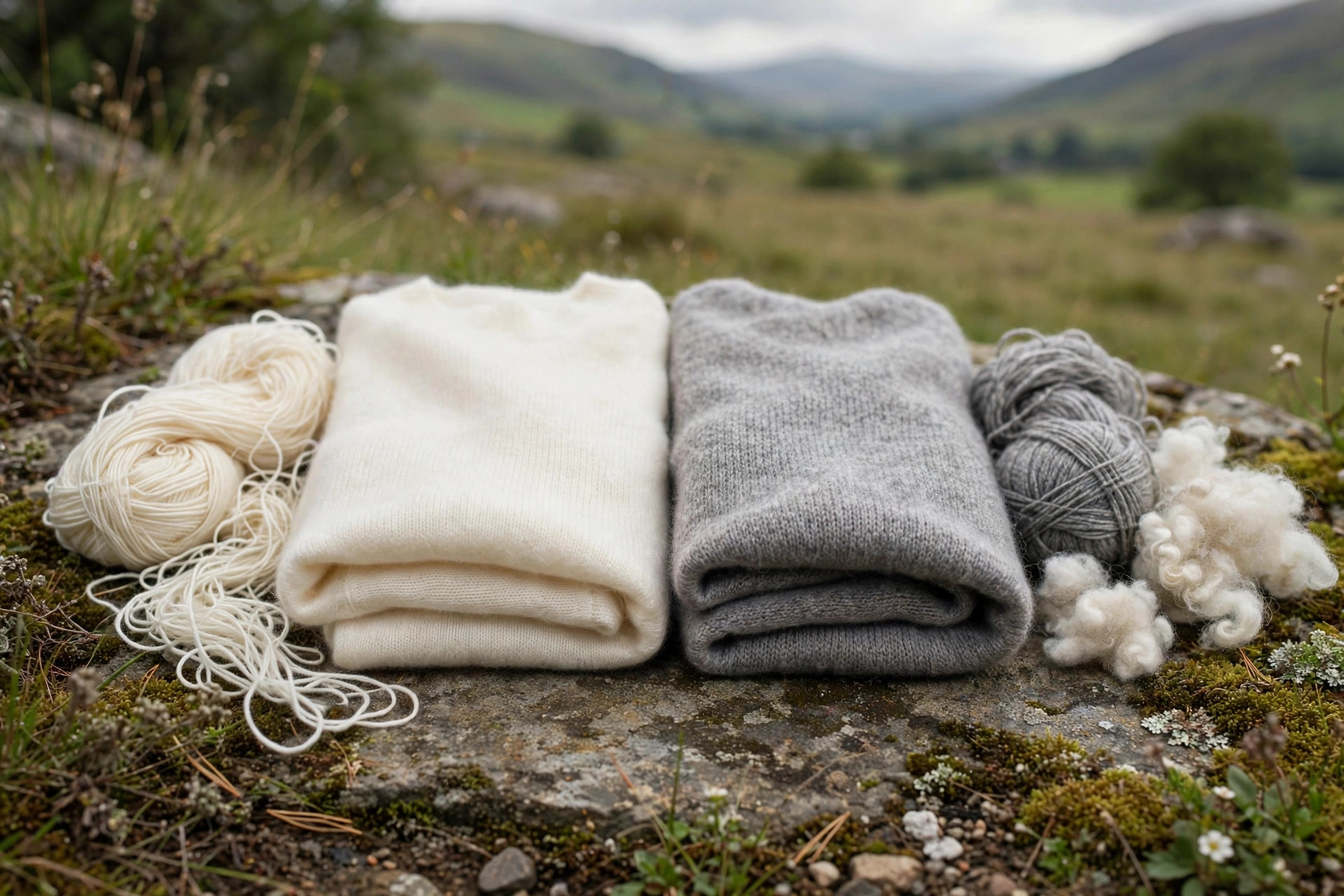
Cashmere and merino are both premium natural fibers, but they are not interchangeable. Cashmere is the fine undercoat of cashmere goats; merino is the fleece of Merino sheep, bred for unusually fine wool. A cashmere sweater and a merino sweater at the same weight feel different, wear differently and cost very differently - this page puts them side by side so the choice is based on use, not just on the label.
The short version: cashmere is softer and warmer for its weight, and more delicate and expensive. Merino is nearly as soft in its fine grades, more elastic and hard-wearing, easier to wash, and far cheaper - and it is the only one of the two used for next-to-skin athletic wear. The details follow.
What Cashmere Is
Cashmere comes from the soft underdown that cashmere goats grow beneath a coarse outer coat, combed out by hand in spring. Each goat yields only a small amount of usable fiber a year, which is the root of cashmere's price. The fibers are very fine and relatively short, and spun into yarn they trap air in a light, lofty knit - that is why a thin cashmere sweater can feel warmer than a much thicker ordinary wool one. The same short, fine fibers are its weakness: cashmere pills readily, especially in the first wears, and abrades faster than longer-fibered wools, so it rewards gentle rotation rather than daily wear. The Apparel Search cashmere guide covers grades, ply and garment types in depth.
What Merino Wool Is
Merino is wool from Merino sheep, selected over centuries for fine, crimpy fleece. "Fine" is graded: coarser merino goes to suiting and outerwear, while the finest grades are soft enough for underwear and base layers - a range cashmere cannot match, because cashmere is a single luxury grade by nature. Merino fibers are longer and more elastic than cashmere, springing back from stretching and wrinkling, and the fiber's structure manages moisture and resists odor, which is why merino dominates performance base layers and travel clothing. Modern merino is often treated to be machine washable. The fiber is defined in the merino wool definition, and the men's merino sweaters guide shows the garment range.
Side by Side
| Feature | Cashmere | Merino wool |
|---|---|---|
| Fiber source | Undercoat of cashmere goats | Fleece of Merino sheep |
| Softness | Exceptionally soft, almost no prickle | Soft in fine grades; coarser grades feel more like classic wool |
| Warmth for weight | Excellent - light knits feel very warm | Very good; slightly heavier for the same warmth |
| Durability | Delicate; pills easily, abrades at friction points | More elastic and resilient; holds up to frequent wear |
| Moisture & odor | Insulates when slightly damp; not a sports fiber | Manages moisture and resists odor; used for base layers |
| Care | Hand wash or dry clean; rest between wears | Often machine washable (check the label); more forgiving |
| Price | High - many times the cost of merino | Moderate - premium over ordinary wool, far below cashmere |
Both fibers are natural, breathable, and warmer than cotton knitwear, and both are attacked by clothes moths, so storage care - clean, sealed, with cedar or lavender - matters for each.
How to Choose
- Choose cashmere for a dressy sweater, scarf or wrap you will wear occasionally and keep for years: maximum softness and warmth per gram, for evenings, offices and travel where weight matters.
- Choose merino for everyday sweaters, base layers, socks and anything worn hard or washed often: nearly the comfort, a fraction of the price, and a much tougher fiber.
- Budget rule: a well-made merino garment will outlast a cheap cashmere one. Very low-priced "cashmere" is often short-fibered or blended down, pills badly, and gives the fiber a bad name - at the same money, mid-priced merino is usually the better garment.
- Blends split the difference: merino-cashmere blends are common precisely because they add cashmere's surface softness to merino's stronger, cheaper base.
Common Questions
- Is cashmere warmer than merino?
- Pound for pound, yes - cashmere's fine, lofty fibers trap more air, so a light cashmere knit feels warmer than a similar-weight merino. Merino can match the warmth in a heavier knit, and it performs better when damp or during activity.
- Why is cashmere so much more expensive?
- Supply. A cashmere goat produces only a small quantity of usable undercoat fiber each year, gathered by combing, while a Merino sheep yields a full fleece at shearing. Fine grading and careful spinning add to the cost from there.
- Which pills more, cashmere or merino?
- Cashmere. Its shorter fibers work loose and form pills, especially in the first wears and at friction points. A sweater comb removes them, and pilling eases over time as the loosest fibers are shed. Merino's longer, elastic fibers pill less.
- Can merino be worn next to the skin?
- Fine-grade merino, yes - it is the standard fiber for next-to-skin base layers and underwear. Coarser merino grades can feel prickly, so for next-to-skin use look for garments described as fine or extrafine merino.
Fashion Comparisons: The Full Series
This page is part of the Apparel Search fashion comparisons series, which puts two similar garments, fabrics or materials side by side. Browse the full series below.