Men's Merino Sweaters Guide
A merino sweater is the fine-wool standard of the sweater wardrobe: a pullover knitted from merino yarn - the soft, finely crimped wool, generally under 24 microns, of the Merino sheep - in gauges fine enough to wear over a shirt and under a jacket. The whole merino family is linked from this page, and the family logic applies: the fiber's temperature regulation, moisture handling and softness make the sweater that can be worn against a shirt all day, in a heated office, without the itch and sweat that coarser wools deliver. This guide covers the merino sweater as the category's center - its neighbors here are its cardigan and V-neck forms.
Shop Men's Merino Sweaters Now
Shop Men's Merino Sweaters on Amazon Shop Men's Merino Sweaters on eBayThe Amazon and eBay links on this page are affiliate links. If you make a purchase through them, Apparel Search may earn a commission.
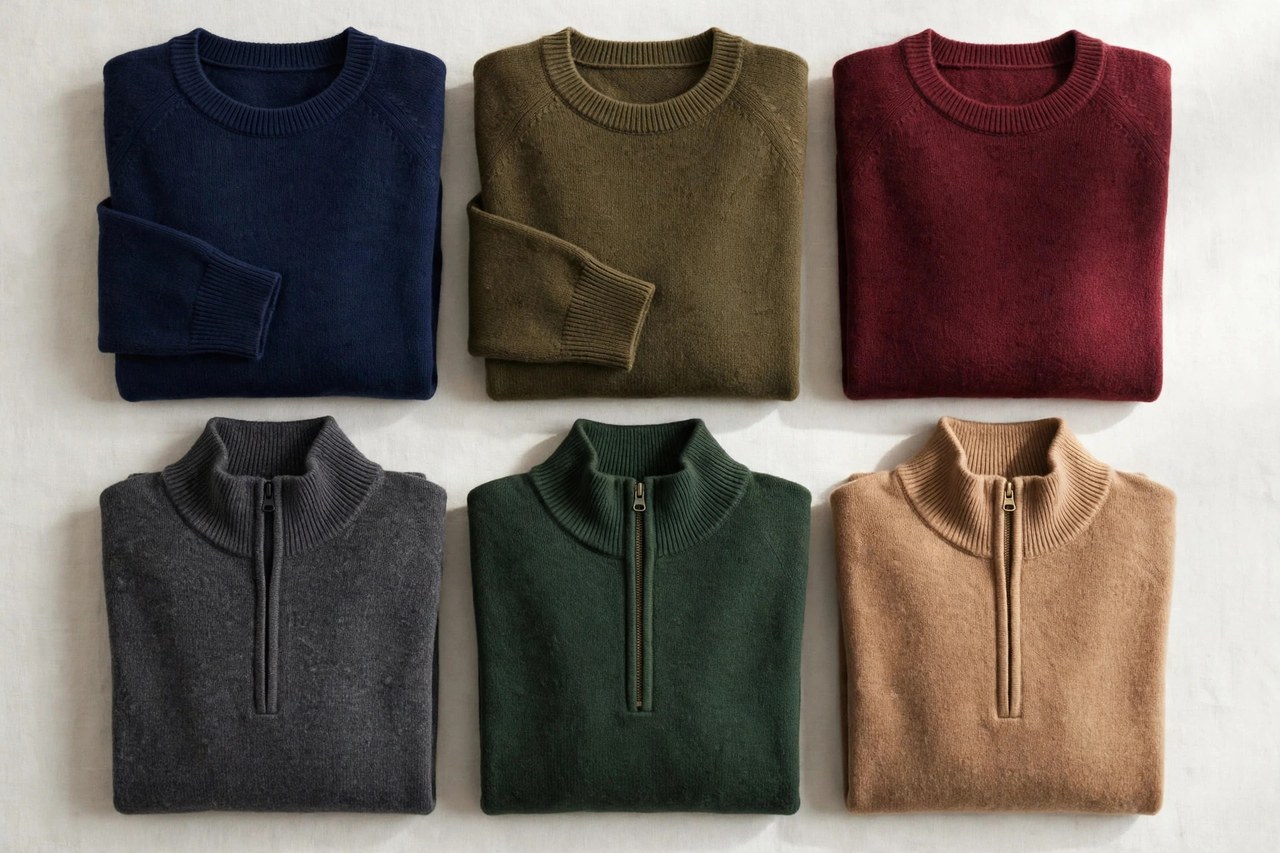
A merino sweater is the fine-wool standard of the sweater wardrobe: a pullover knitted from merino yarn - the soft, finely crimped wool, generally under 24 microns, of the Merino sheep - in gauges fine enough to wear over a shirt and under a jacket. The whole merino family is linked from this page, and the family logic applies: the fiber's temperature regulation, moisture handling and softness make the sweater that can be worn against a shirt all day, in a heated office, without the itch and sweat that coarser wools deliver. This guide covers the merino sweater as the category's center - its neighbors here are its cardigan and V-neck forms. This guide is built around the questions buyers actually ask: which style, which size, which fabric, and what will it look like after a year of real use - answered in order, with the trade-offs stated plainly.
Gauge and Neckline Decide
Choose by gauge and neckline, the two decisions that define the garment. Fine gauges - 14 to 18 - knit the smooth dress sweater: crew and V-necks that layer over a collared shirt and vanish under a blazer. Mid gauges trade smoothness for texture and a little more warmth; chunky merino exists but spends the fiber's advantage. The crew neck is the generalist, framing a shirt collar or a tee; the quarter-zip and mock forms are treated in their own guides' families. Fully-fashioned construction - panels knitted to shape and linked, rather than cut from cloth and sewn - is the quality mark to ask for, with saddle or properly set sleeves and ribbed cuffs and hems that recover. Against lambswool, merino is smoother and less warm per weight; against cashmere, less cloudlike and far more durable per dollar - the working sweater's honest position between them.
Judge knitwear by gauge, ply and finishing rather than by softness in the shop, because every knit feels kind on day one. Gauge counts stitches per inch - finer gauges drape and layer, coarser gauges insulate and read casual. Ply counts the strands twisted into the yarn: more plies mean more warmth, roundness and price. Fully-fashioned shaping, knitted in rather than cut and sewn, marks better garments, and linked seams at the shoulders and neck lie flatter and last longer than overlocked ones.
A Layer in Both Directions
Fit a merino sweater as a layer in both directions: over a shirt without the buttons ghosting through the knit, under a jacket without bunching at the arms. The body should skim - merino drapes, and excess cloth drapes into untidiness - with sleeves to the wrist bone and the hem at the waistband's cover. Fine knits show what is beneath them, so the honesty test is the mirror in daylight: if the shirt's placket and your belt buckle print through, the gauge is too fine for that pairing or the size too small. Buy the size that fits the shoulders exactly; merino relaxes a fraction in wear and the wash restores it, so a slightly firm start is the correct long-term fit.
Fit knitwear by the body, not the shoulders alone: a sweater should skim rather than cling, with ease for a shirt beneath at the chest, sleeves ending at the wrist bone, and body length covering the waistband without pooling. Knits relax with wear - a slightly firm new fit is often the right long-term fit - but ribbed cuffs and hems should recover when stretched, and a neckline should sit flat against the base of the neck, neither gaping nor strangling.
Rarely, Gently, Flat
Merino sweaters are washed rarely and gently: air after wear, spot-clean promptly, and wash cool by hand or wool cycle only when the garment actually needs it - then flat-dry reshaped to its measurements, because a fine knit dries into the shape it is left in. Fold for storage with moth protection; hangers are for the shop, not the drawer, on any knit you wish to keep its shoulders. Depill the underarm and side rub points with a comb. Kept this way a good merino sweater is a decade garment - the fiber is elastic, resilient and soil-resistant by nature, and asks only to be spared heat, hanging and over-washing in exchange.
Knitwear care is gentle by default: wash cool by hand or on a wool cycle with knitwear detergent, never wring, roll in a towel to lift water, and dry flat on a mesh or towel, reshaped to its measurements. Fold for storage - hangers stretch shoulders into points - with cedar or lavender against moths, and rest a sweater a day between wears so its fibers recover their loft. Depill with a comb or electric shaver; pilling is loose fiber migrating, not the garment failing.
Common Questions
Why is merino used for sweaters so often?
Because its fibers are finer than ordinary wool - generally under 24 microns, and down to the low teens in superfine grades - which makes the yarn soft against skin rather than prickly, while keeping wool's working virtues: temperature regulation, moisture wicking, natural elasticity and odor resistance. A merino sweater can be worn over a shirt all day in a heated building, which is the exact job most sweaters fail at in coarser wool.
Merino or cashmere for a sweater?
Cashmere is softer and warmer for its weight; merino is more durable, more elastic, far less expensive, and easier to care for. For a sweater worn weekly in rotation - the working case - merino usually wins on value and lifespan; cashmere is the luxury choice for lighter duty. Blends of the two split the difference. Either way, construction decides as much as fiber: a fully-fashioned merino outlasts a cut-and-sew cashmere in most wardrobes.
How often should a merino sweater be washed?
Rarely, and only when needed. Merino resists odor and releases soil, so airing after wear restores the sweater for many wears between washes. When washing is due: cool water, wool cycle or hand wash, gentle detergent, then dry flat reshaped to size. Heat, hanging and frequent washing are the three things that age a merino sweater; avoid them and it serves for years.
More in Men's Clothes Guide M
The Merino Family’s Center
This page is the family’s crossroads, linking the merino cardigans and merino V-neck sweaters beside it and the men’s sweaters guide in the S section beyond. All are linked below.
Looking for Men's Clothing Stores?
This guide explains men's merino sweaters. To browse where to buy, visit our men's clothing store directory, where you can find retailers that carry them.