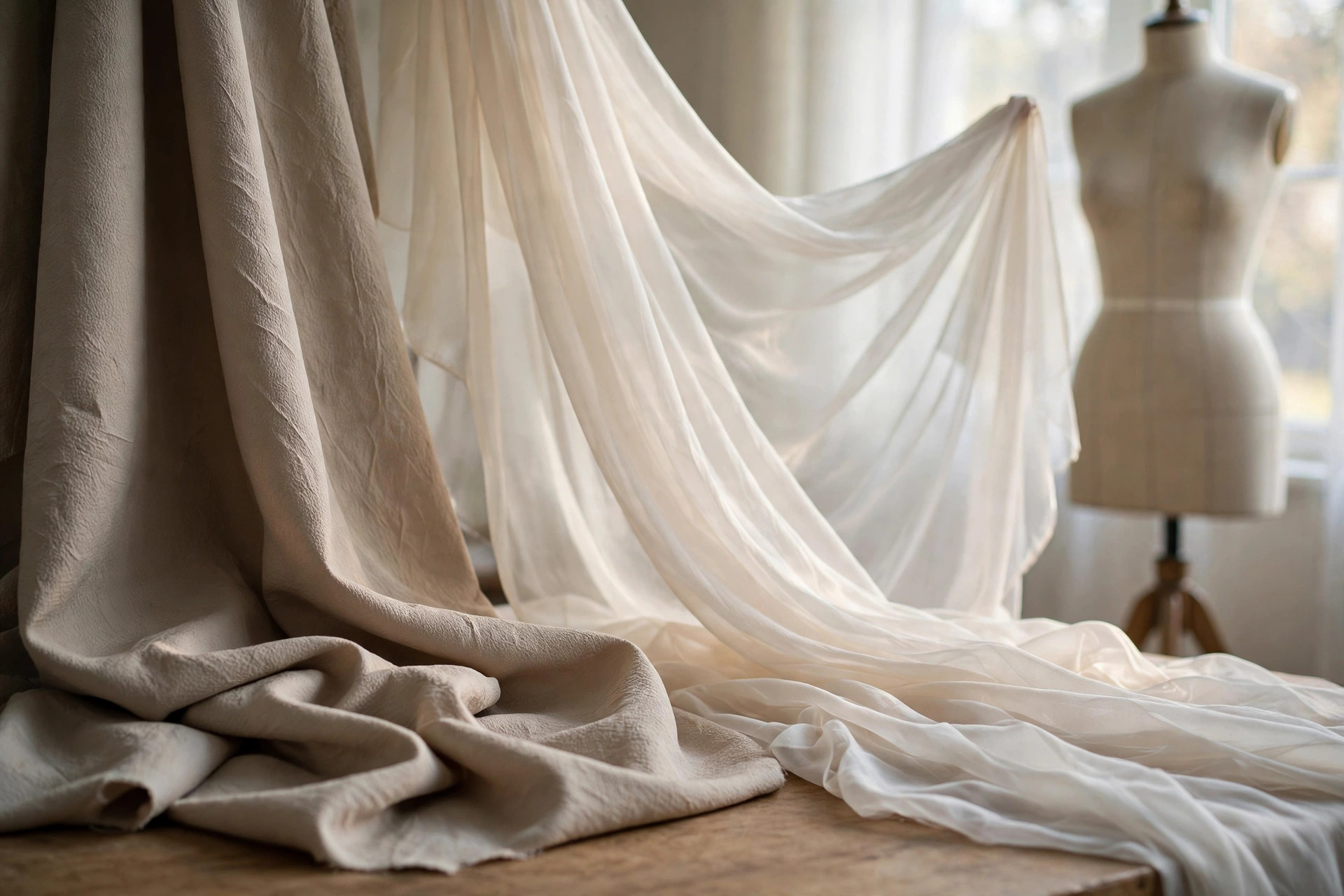
Crepe and chiffon are two of the classic dress fabrics, and they are often confused because both are light, fluid and used for evening and occasion wear. They are easy to tell apart by touch: crepe has a crinkled, pebbly, matte surface and is opaque; chiffon is smooth, sheer and floats. Either can be woven from silk or from polyester and other manufactured fibers, which decides the price and the care more than the fabric type does.
Choose crepe when a garment needs body, texture and coverage - structured dresses, tailored separates, matte eveningwear. Choose chiffon when the design calls for transparency, layering and movement - overlays, flowing skirts, scarves, sleeves. The details, and the care each fabric demands, follow.
What Crepe Is
Crepe is defined by its yarns: highly twisted threads that, once woven and finished, relax into a crinkled, granular texture with a matte surface and a dry hand. The twist gives crepe a natural spring and wrinkle resistance unusual in dress fabrics, and its drape has weight and body - it falls in soft folds rather than floating. Crepe is opaque at normal garment weights and is woven from silk, wool, cotton, polyester and blends; wool crepe is a tailoring staple, silk crepe a luxury dress fabric. It is defined further in the crepe fabric definition, with sources in the crepe fabric directory.
What Chiffon Is
Chiffon is a plain-weave fabric made with fine, twisted yarns in an open, balanced structure that leaves it sheer, weightless and slightly springy, with a soft, faintly textured hand. It does not drape so much as float and drift, which is why it is layered over opaque fabrics, gathered into flowing skirts, and used for sleeves, scarves and overlays where a hint of the layer beneath should show. Silk chiffon is the original luxury version; most chiffon today is polyester, cheaper and somewhat more durable, though still delicate. Working with it is famously demanding - it slips, frays and shows every needle mark. Examples in garments appear in the silk chiffon blouses guide, and suppliers in the chiffon fabric directory.
Side by Side
| Feature | Crepe | Chiffon |
|---|---|---|
| Surface | Crinkled, pebbly, matte | Smooth, soft, slightly grainy |
| Transparency | Opaque | Sheer - needs a layer beneath |
| Drape | Weighted, body-holding folds | Floating, airy, drifting |
| Weight | Light to medium, by type | Very light |
| Wrinkle behavior | Resists wrinkles well (the texture hides them) | Wrinkles show; steam with care |
| Durability | Moderate to good | Delicate; snags and pulls easily |
| Sewing difficulty | Moderate - stable for a dress fabric | Difficult - slippery, fraying, sheer seams |
| Typical uses | Dresses, tailored separates, matte eveningwear | Overlays, gowns, blouses, scarves, sleeves |
The two are often used together in one garment: a crepe dress with chiffon sleeves or a chiffon overlay over a crepe bodice combines crepe's coverage and structure with chiffon's movement.
How to Choose
- Choose crepe for a dress or suit that must look composed all day - weddings as a guest, work occasions, travel - because it covers, resists wrinkles, and keeps its line without a lining's help.
- Choose chiffon for romance and motion: bridal and bridesmaid dresses, evening gowns, layered skirts and blouses where sheerness is part of the design.
- By fiber: silk versions of both are the luxury choice with the most demanding care; polyester crepe and chiffon are budget-friendly and washable, with polyester crepe in particular being a workhorse for occasion dresses.
- By budget and skill (for sewers): crepe forgives; chiffon tests. New sewists should make the chiffon garment second.
Common Questions
- Is chiffon or crepe better for a wedding guest dress?
- For most guests, crepe: it is opaque, wrinkle-resistant and structured enough to look polished through a long day and evening. Chiffon is the choice for bridesmaid and romantic styles where a lined bodice and flowing skirt are part of the design.
- Can chiffon be worn without a lining?
- Only where sheerness is acceptable - scarves, overlays, some sleeves. For dresses and blouses, chiffon is worn over a lining or an opaque underlayer, because the fabric is transparent in all but the darkest colors and heaviest qualities.
- Which is harder to sew, crepe or chiffon?
- Chiffon, by a wide margin. It slips under the presser foot, frays at cut edges, and shows needle holes, so it needs sharp fine needles, careful pinning and often a stabilizer. Crepe handles much more like an ordinary dress fabric.
- Do crepe and chiffon wrinkle?
- Crepe barely shows wrinkles - its crinkled texture camouflages them, and the twisted yarns spring back. Chiffon creases more visibly and should be steamed gently rather than ironed hard, with silk versions kept away from direct high heat.
Fashion Comparisons: The Full Series
This page is part of the Apparel Search fashion comparisons series, which puts two similar garments, fabrics or materials side by side. Browse the full series below.