Women's Clutch Handbags Guide
Small bag, whole evening — frame clutches, minaudières, and envelopes, chosen and carried well.
Shop Women's Clutch Handbags Now
Shop Women's Clutch Handbags on Amazon Shop Women's Clutch Handbags on eBayThe Amazon and eBay links on this page are affiliate links. If you make a purchase through them, Apparel Search may earn a commission.
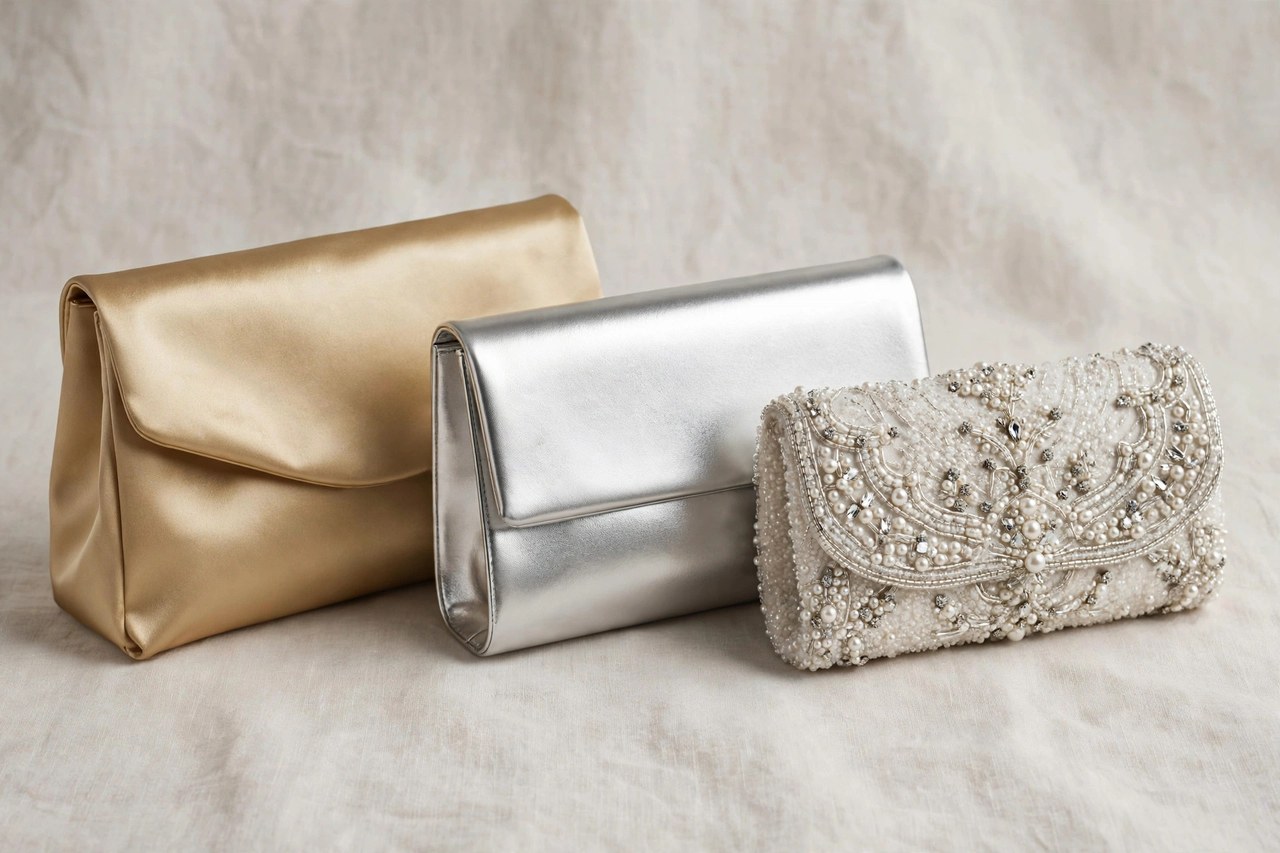
A clutch is a small, handheld bag designed for occasions where you carry the essentials and nothing more: an evening out, a wedding, a cocktail party, a formal dinner. It has no shoulder strap by definition, though many modern clutches hide a detachable chain for emergencies, and it is held — clutched — in one hand or tucked under the arm. That constraint is also its elegance: it forces a short, honest packing list and leaves a dress line uninterrupted by straps. Choosing one well means balancing three things that fight each other: the look you want, the few items you genuinely need to carry, and a closure secure enough that you can set the bag down, applaud, and dance without a thought. This guide works through all three.
Styles: Frame, Minaudière, Envelope, and Pouch
The frame clutch is the classic: fabric or leather stretched over a metal frame with a kiss-lock or snap clasp on top, structured, vintage in spirit, and secure. The minaudière is the jewel of the family — a small, hard case in metal, enamel, crystal, or lacquer, often carried as much as jewelry as a bag; it holds the least and makes the strongest statement. The envelope clutch is flat with a pointed or straight flap, the most modern and businesslike, slipping easily under the arm. The pouch or soft clutch slouches in leather or satin, roomier and more relaxed, suiting less formal evenings. Oversized day clutches borrow the shape at a larger scale for fashion looks. When comparing styles, open and close each one several times: a clasp you fumble in the shop will not improve under party lighting with a drink in the other hand.
One of these styles has a full guide of its own: the envelope clutch, the flat fold whose pointed flap is its entire architecture — construction, day and evening sizes and fastening checks covered in depth.
What Actually Fits: An Honest Capacity Guide
Test capacity with your real items, because clutch dimensions lie politely. A typical evening clutch holds a phone, a slim card case or a few cards and folded cash, a key or key fob, and one lip product — and that is the full list. A minaudière may hold only cards, cash, and a lipstick, with the phone carried in a coat pocket or left in hand. If your phone is oversized, measure it against the interior before buying; many rigid cases and frame clutches predate the largest phones and simply will not close over them. Compact mirrors, mints, and a folded tissue can usually squeeze in, while sunglasses cases, full wallets, and makeup bags cannot — a full-size wallet is precisely what a credit card wallet or slim card case replaces on clutch nights. A clutch that bulges loses its line and strains its clasp, so if the bag only closes when forced, the honest answer is to edit the contents or choose the larger style.
Materials, Color, and Embellishment
Evening materials divide into soft and hard. Satin is the traditional formal choice, luminous and dyable, but it water-spots and shows wear at corners. Metallic leather and faux leather — gold, silver, pewter — are the most versatile, reading as neutrals that suit nearly any dress color. Beaded and sequined clutches supply texture and sparkle for plain dresses and need gentle handling, since lost beads multiply quickly once threads loosen. Velvet suits winter formality, while patent leather gives a sharp, modern gloss. A useful strategy is one metallic clutch as the wardrobe anchor, since it resolves the bag question for most evening outfits, then a second in black satin or a jewel tone for variety. Inspect embellishment by running a palm lightly over it: anything that snags skin will snag a dress. Check corners and the clasp hinge first — they take the wear that decides how long the bag looks new.
Holding, Carrying, and Evening Etiquette
Carry a clutch in your left hand as your default, leaving the right free for handshakes, greetings, and holding a glass — the small social choreography the bag was designed around. At a seated dinner, the clutch goes on your lap under the napkin, on the chair behind your back, or on the table only if it is small, clean, and the setting is informal enough to welcome it; never on the floor, where it collects damage and dirt. When standing for photographs, hold it low in front with both hands or in one hand at your side rather than raised like a shield. If your clutch has a hidden chain or wristlet, use it on the dance floor without apology — designers include it for exactly that hour. Practice the one-handed open at home if the clasp is new. Grace with a clutch is mostly preparation: knowing your essentials fit, your closure works, and your hands have a plan.
Care, Storage, and Making It Last
Clutches live hard short lives per outing — cosmetics, drinks, and crowded tables — so a minute of care after each event pays well. Empty the bag fully, shake out debris, and wipe the interior lining, where lipstick and pen marks begin. Blot satin spills immediately without rubbing, and let the bag dry open before storing. Beaded and sequined styles should be spot-cleaned only, with loose threads secured promptly. Store clutches stuffed lightly with tissue to hold their shape, each in its dust bag or a soft pouch so hardware and embellishment do not scratch neighbors, and keep frame hinges and clasps closed but not strained. Metallic finishes can transfer and scuff in tight storage, so give them breathing room. Kept this way, a well-made clutch outlasts the dresses it was bought for and becomes the reliable finishing piece you reach for without thinking.
Related Women's Guides
Photos

Looking for Women's Clothing Stores?
This guide helps you choose women's clutch handbags by style, fabric and fit. To browse where to buy, visit our women's clothing store directory, where you can find retailers that carry them.