Women's Handbags on eBay
Totes, satchels, crossbody bags and clutches — leather grades, hardware weight and the corner-wear checks dealers use
Handbags hold value and invite imitation in equal measure, which makes them the category where listing-reading skill pays most directly on eBay. This guide stays with the bag itself: the shapes sellers list — totes, satchels, crossbody bags, clutches — the leather grades behind the word leather, the hardware and stitching that reveal build quality in a photograph, and the wear pattern (corners, handles, lining) that decides what a used bag is honestly worth.
An auction page is not a shop shelf: stock arrives garment by garment, described by thousands of different sellers, and leaves again within days. The guidance below follows the order a careful buyer actually works in — find the right listings, judge the garment in front of you, then bid with a ceiling already set.
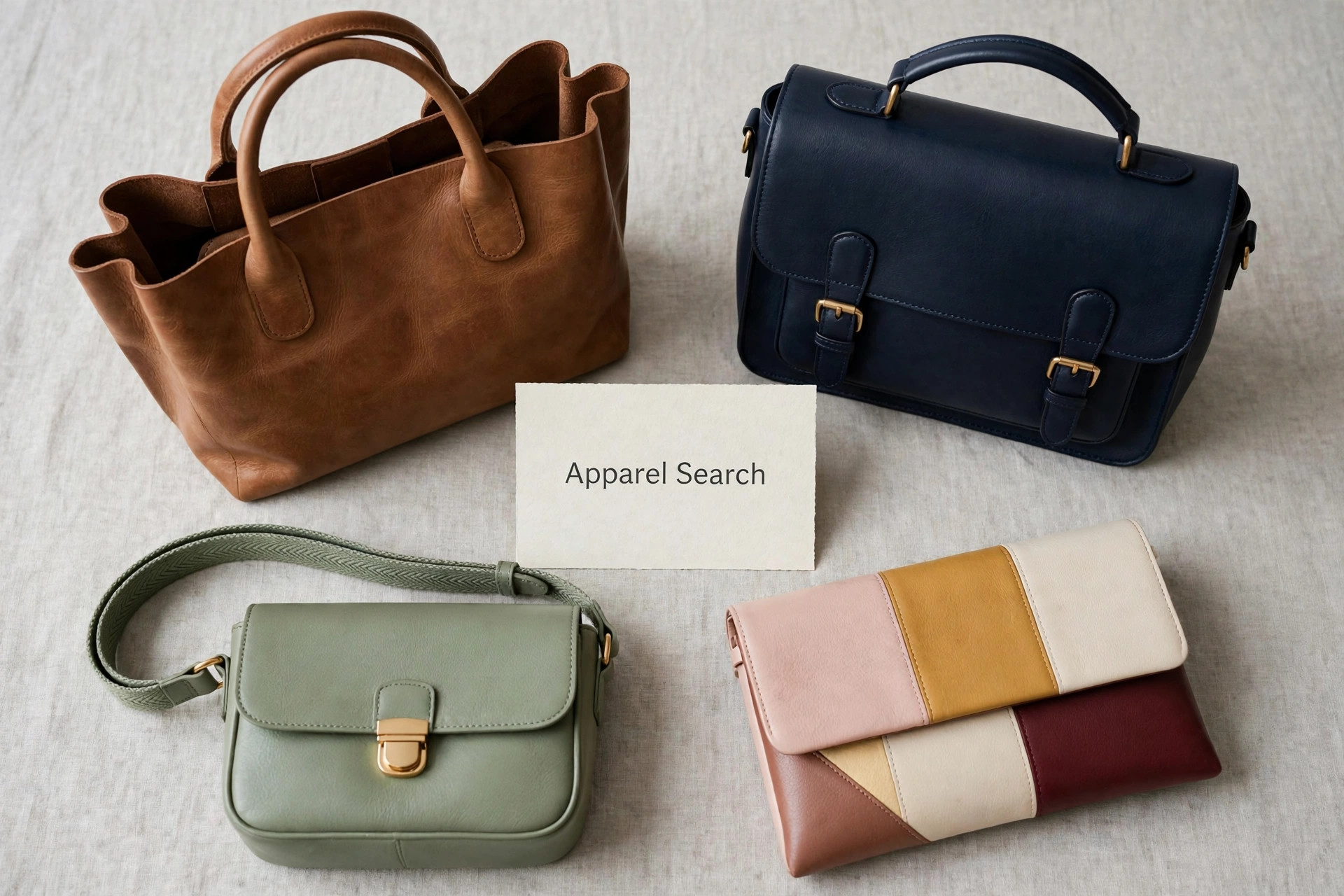
Everyday bags at set prices are an easy comparison to make. The Apparel Search Amazon clothing guide collects the Amazon handbag departments — price a new tote there, then judge whether the auction bags below beat it on leather and build.
Bag Shapes in the Listings
Listings for women's handbags on eBay typically cover leather totes and shoppers, structured satchels and top-handle bags, crossbody and shoulder bags, clutches and evening bags, backpack and bucket styles in the same listings and vintage bags by decade. The sellers behind them range from individuals clearing a wardrobe to specialist dealers and outlet accounts, so photography, description depth and condition grading vary widely from one listing to the next. Wardrobe rotation supplies the good used stock: bags carried for a season, stored properly, and listed when taste or need changes — often with dust bags and cards included. Begin broad, then narrow with the size, color and condition filters; a saved search with alerts catches the short listings that end before a casual browser ever sees them.
Because seller wording is inconsistent, run several searches rather than one: "leather tote bag"; "structured satchel"; "crossbody leather bag"; "vintage handbag". Vaguely titled and misspelled listings are where quiet bargains hide, since fewer bidders ever find them. Search the leather words precisely — 'full grain' and 'saffiano' find the durable bags; the single word 'leather' also covers coated and bonded stock. Sort by ending soonest to catch neglected auctions, and compare price plus postage together — a low bid with heavy shipping is seldom the cheapest way to own the garment.
Dimensions, Drop and Leather Grades
Fit comes first: a bag's fit is its dimensions against your carrying life: base width, drop length of the handles, and whether your largest daily item (laptop, folder, bottle) passes the opening — all stated or derivable from a good listing's measurements. Auction garments cannot be tried on, so the flat measurements in the description are the only dependable evidence, and a seller who lists none is worth a message before bidding. On materials, expect full-grain and saffiano leathers, coated canvas, suede and nubuck and fabric and straw summer bags. Edge paint and stitching density are the build tells visible in photographs: even, dense stitching and cleanly painted edges mark the well-made bag at every price point.
In this category condition moves value more than age does. Corners, handle attachments and lining are a bag's wear map: scuffed corners, darkening handles and a stained or torn lining should all be photographed, and their absence from a listing's pictures is worth a question. Study the photographs at full size, read the returns policy, and judge the seller's feedback by the pattern that matters — description accuracy — rather than the headline score alone. A garment described as new with tags should show those tags in a photograph; if it does not, ask before bidding.
Reading Wear Like a Dealer
Timing shapes the price. Bags move all year, with color seasons — dark leathers list into autumn, pale and straw bags into spring — and January wardrobe clearances briefly widening choice at every price. A well-made leather bag resoled by nothing and repaired by little outlasts fashion cycles; bought used at a third of new, it is among the soundest cost-per-wear purchases in fashion. Fix a maximum that includes postage, bid it once, and let the automatic bidding do the work — chasing an auction past your ceiling is how a bargain turns into an overpayment. Do not judge a bag by its front photograph: the back, base corners and interior carry the wear, and honest sellers photograph all of them unprompted.
Common Questions
What should I check first when buying women's handbags on eBay?
Measurements and condition. a bag's fit is its dimensions against your carrying life: base width, drop length of the handles, and whether your largest daily item (laptop, folder, bottle) passes the opening — all stated or derivable from a good listing's measurements. Then confirm the fabric content and read the seller's returns policy before bidding.
Which search phrases find the best women's handbags listings?
Try several seller wordings — leather tote bag, structured satchel, crossbody leather bag — and save the searches so short or mis-titled auctions are caught before they end.
When is the cheapest time to buy women's handbags at auction?
Bags move all year, with color seasons — dark leathers list into autumn, pale and straw bags into spring — and January wardrobe clearances briefly widening choice at every price. Bidding on off-peak endings and setting a firm maximum that includes postage keeps the delivered price down.