Clothing Auctions on eBay
The marketplace mechanics — saved searches, maximum bids, feedback and postage — behind every eBay clothing purchase
This guide is about the marketplace itself rather than any one garment: how eBay clothing auctions are structured, how the bidding engine handles a maximum bid, what seller feedback does and does not tell you, and how postage, returns and dispute routes protect a clothing buyer. The category guides elsewhere in this section handle individual garments; the mechanics here apply underneath all of them, whether the listing ends in an hour or runs at a fixed price with offers enabled.
Auction buying rewards preparation more than speed. A saved search, a tape measure and a clear idea of what the garment should cost turn a scattered marketplace into a reliable source, and the notes below are organized in exactly that order.
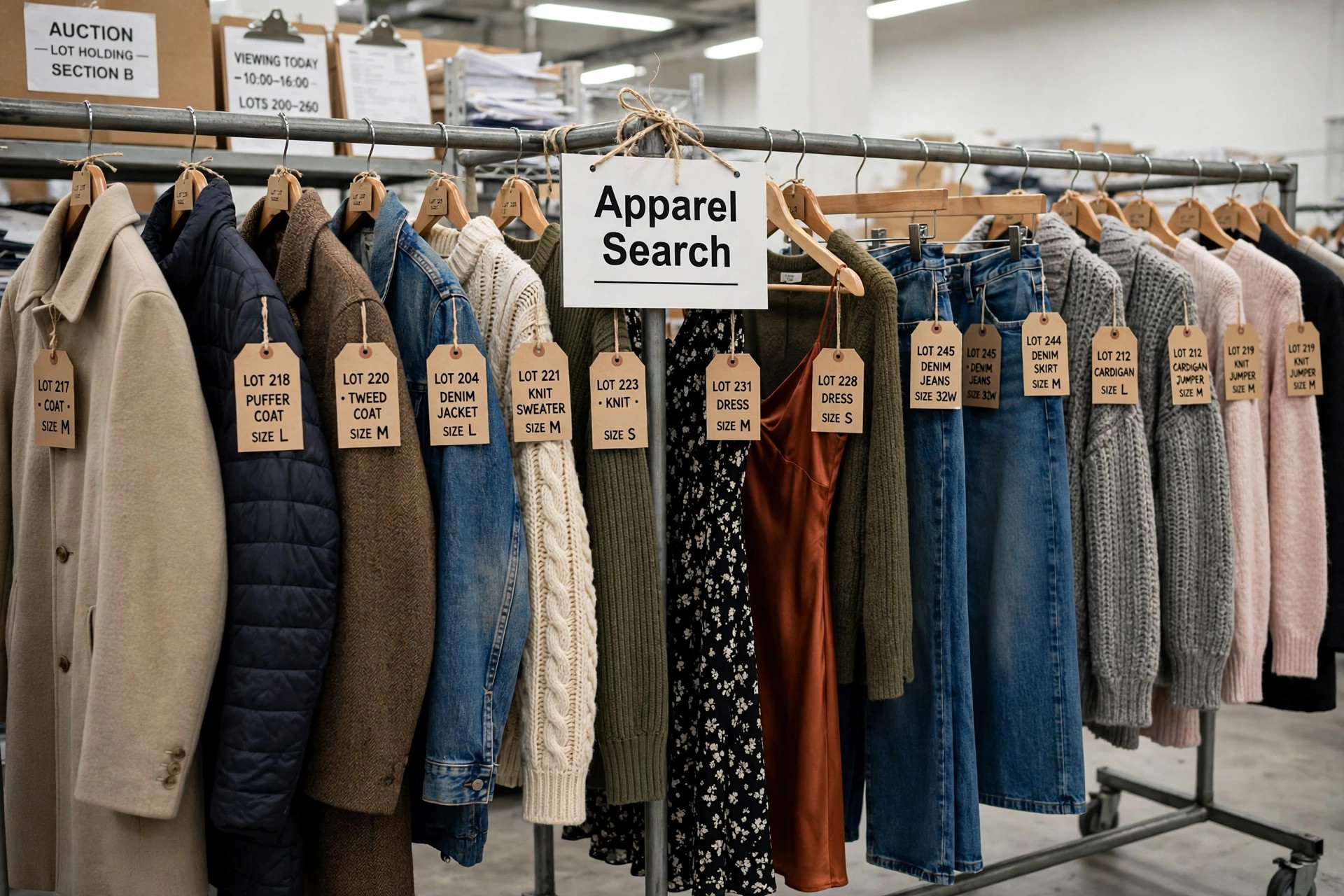
Before bidding, it helps to know the set-price alternative for the same garment. The Apparel Search Amazon clothing guide collects the Amazon clothing departments in one guide — check the fixed price there, then decide what the auction version is worth to you.
How the Marketplace Is Structured
The eBay clothing auctions listings on eBay typically cover timed auctions with automatic maximum bidding, Buy It Now clothing listings, fixed-price listings open to offers, multi-item and lot auctions and charity and outlet store auctions. Sellers range from individuals clearing a wardrobe to specialist dealers and outlet accounts, so condition, photography and description depth vary a great deal from one listing to the next. Most clothing volume now sits in fixed-price listings, but the timed auction remains where unusual, vintage and under-described pieces surface cheapest. Start a search broad, then narrow by size, color and condition filters; saved searches with email alerts catch the short auctions that end before a casual browser ever sees them.
Seller wording is inconsistent, so run several searches rather than one: "ending soonest clothing"; "misspelled brand auction"; "clothes auction lot"; "eBay outlet clothing". Misspellings and vague titles are where the quiet bargains hide, because fewer bidders find those listings. Save each search once and let alerts do the watching — checking manually every day is how buyers miss the one-hour listings entirely. Sort by ending soonest to catch neglected auctions, and by price plus postage to compare the true delivered cost — a low bid price with high shipping is rarely the cheapest route to the garment.
Feedback, Filters and Evidence
Fit first: marketplace filters narrow by labeled size only, so the description's flat measurements remain the deciding evidence on any garment. Auction listings cannot be tried on, so the measurements in the description — taken flat, in inches or centimetres — are the only reliable guide, and a seller who lists none is worth a message before bidding. On materials, expect every fiber family, leather and suede, technical sportswear and delicate occasion fabrics. Filters can narrow by material on many categories; use them, because sellers title fabrics loosely but the category fields are structured.
Condition decides value in this category more than age does. eBay's condition grades for clothing are broad, so the photographs and the seller's own words carry the real information — read both, in full, every time. Study the photographs at full size, read the returns policy, and check the seller's feedback for the pattern that matters — accurate descriptions — rather than the headline score alone. A garment described as new with tags should still show the tags in a photograph; if it does not, ask.
Maximum Bids and Postage Math
Timing shapes price here. Marketplace-wide promotions cluster around the retail calendar — back to school, the winter holidays and January sales — and auction endings thin out on holiday weekends, which quietly lowers prices. Understanding the mechanics compounds: the same garment bought with a saved search, a firm maximum and combined postage costs markedly less than the same garment chased live. Set a maximum that includes postage, bid it once, and let the automatic bidding work — chasing an auction past your ceiling is how bargains turn into overpayments. The most expensive marketplace habit is bidding early and often — early bids only advertise competition and raise the price a patient buyer would have paid.
Common Questions
What should I check first when buying eBay clothing auctions on eBay?
Measurements and condition. marketplace filters narrow by labeled size only, so the description's flat measurements remain the deciding evidence on any garment. Then confirm the fabric content and read the seller's returns policy before bidding.
Which search phrases find the best eBay clothing auctions listings?
Try several seller wordings — ending soonest clothing, misspelled brand auction, clothes auction lot — and save the searches so short or mis-titled auctions are caught before they end.
When is the cheapest time to buy eBay clothing auctions at auction?
Marketplace-wide promotions cluster around the retail calendar — back to school, the winter holidays and January sales — and auction endings thin out on holiday weekends, which quietly lowers prices. Bidding on off-peak endings and setting a firm maximum that includes postage keeps the delivered price down.
Photos
