Women's Patchwork Handbag Guide
A patchwork handbag is built the way a quilt is: from many small pieces of fabric or leather joined into one patterned whole — no two exactly alike, and every seam part of the design.
Shop Women's Patchwork Handbags Now
Shop Women's Patchwork Handbags on Amazon Shop Women's Patchwork Handbags on eBayThe Amazon and eBay links on this page are affiliate links. If you make a purchase through them, Apparel Search may earn a commission.
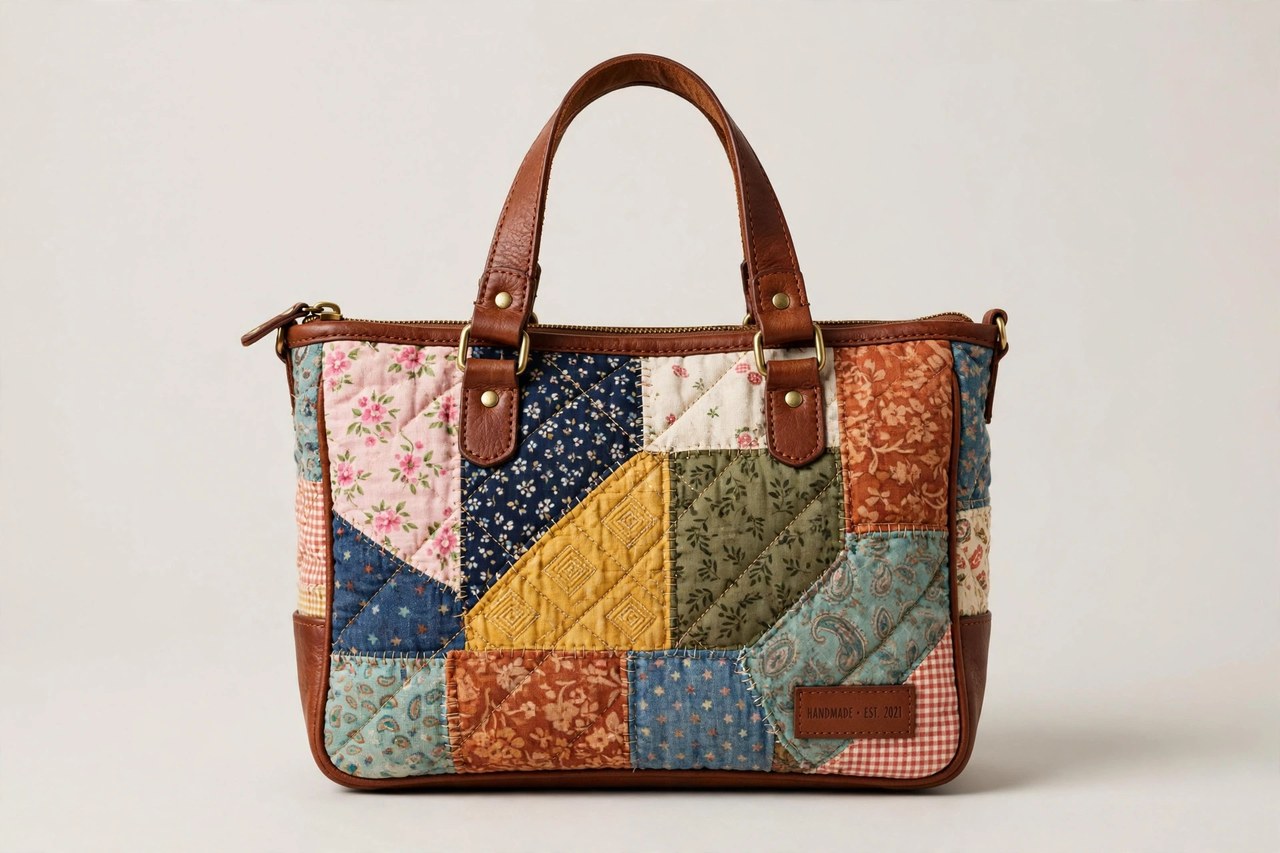
A patchwork handbag is a bag whose body is constructed from multiple smaller pieces of material — squares, strips, diamonds or free-form scraps of fabric or leather — sewn together to form a larger patterned surface. The technique is borrowed directly from patchwork quilting, one of the oldest textile crafts, in which precious fabric remnants were pieced rather than wasted. On a handbag, the piecing is both structure and decoration: the pattern you see is literally how the bag is made.
That makes patchwork bags unusual in the handbag world. A printed bag wears its pattern on the surface; a patchwork bag's pattern goes all the way through, with a seam at every color change. This guide covers the main constructions — pieced fabric, quilted and leather patchwork — the bag shapes the technique suits, what to check in the craftsmanship before buying, and how to style and care for a bag with dozens of seams.
Construction: Pieced Fabric, Quilting and Leather Patchwork
Pieced fabric patchwork joins cotton, canvas, linen or upholstery-weight pieces in geometric patterns — classic squares, log-cabin strips, triangles and crazy-quilt free-form work. Because individual fabric pieces are light, fabric patchwork bags are usually quilted: the pieced top is layered over thin batting and a backing and stitched through all layers, often along the seam lines. Quilting adds body, softness and durability, and gives these bags their characteristic padded, cozy hand-feel associated with craft and country styles.
Leather patchwork joins pieces of leather or suede, sometimes in tonal shades of one color, sometimes in deliberate contrast. Leather pieces are heavier, so these bags are typically lined rather than quilted, with the piecing backed for strength. Mixed-media patchwork combines fabric, leather trim, embroidery, lace or woven textiles such as kilim-style pieces in one bag — the bohemian branch of the category. In every version, the piecing should be backed or quilted so that the many small pieces share the load instead of each seam bearing it alone.
Styles: Totes, Shoulder Bags and Crossbody Bags
The patchwork tote is the roomiest form: an open or zip-top carryall where the large flat panels show the piecing to best effect. Totes suit shopping, work and craft-carrying, and quilted versions are light for their size. The shoulder bag and hobo use patchwork on softer, slouchier bodies; piecing in curves or free-form patterns suits these shapes better than rigid geometry. The crossbody bag is the small, everyday form — a compact patchwork panel, a long adjustable strap, and just room for phone, keys and wallet, with the hands-free practicality that makes crossbody the default daily style for many women.
Smaller forms include patchwork clutches and wristlets for evenings and events, where a single pieced panel is the whole statement, and backpacks in quilted patchwork for casual and travel use. When choosing a style, weigh the pattern against the shape: large geometric piecing needs a large flat panel to read properly, while small-scale or crazy-quilt patchwork works at any size.
Craftsmanship: What to Check Before Buying
Patchwork multiplies seams, and seams are where bags fail, so inspection matters more here than on any plain bag. Seams should be straight, evenly stitched and secured at intersections, with no puckering where several pieces meet. On quilted bags, the quilting stitches should be even and should not skip or loop. Turn the bag inside out if construction allows: a good patchwork bag is fully lined, with the piecing seams finished or covered, not raw against the lining.
Check the engineering points next: strap attachments should be stitched in reinforced boxes or riveted, especially on leather patchwork where weight concentrates; zippers should run smoothly across pieced sections without catching on seam allowances; and the base should feel structured enough that the bag sits rather than slumps, unless the style is an intentional soft hobo. On leather bags, pieces should be of comparable thickness and finish, and dye lots should blend as a deliberate pattern — random mismatched sheen usually means seconds-quality leather assembled from remnants, which is the budget end of the craft.
Styling and Care
A patchwork bag is the patterned element of an outfit, so style around it the way you would around a printed garment: let it carry the color and pattern, and keep the largest clothing pieces comparatively plain or pulled from one of the bag's own colors. Tonal leather patchwork is the most versatile version and works with tailored clothing; bright fabric patchwork suits casual, bohemian and summer dressing; quilted patchwork pairs naturally with knitwear, denim and country styles. Because every patchwork bag is visibly handmade in character, it also softens formal outfits — use that deliberately, not accidentally, at dressy events.
Care depends on material. Fabric and quilted bags can usually be spot-cleaned, and some are gently hand-washable — check the label, air dry flat to protect the batting, and never wring, which distorts the piecing. Leather patchwork is cleaned and conditioned as leather, with extra care at seams where conditioner can darken suede pieces differently from smooth ones; test any product on a low piece first. Store patchwork bags stuffed lightly to hold their shape, out of direct sun, which fades the different pieces at different rates and can turn a balanced pattern patchy in the wrong way.
Related Women's Guides
Photos

Looking for Women's Clothing Stores?
This guide helps you choose women's patchwork handbags. To browse where to buy, visit our women's clothing store directory, where you can find retailers that carry them.