The Short Answer
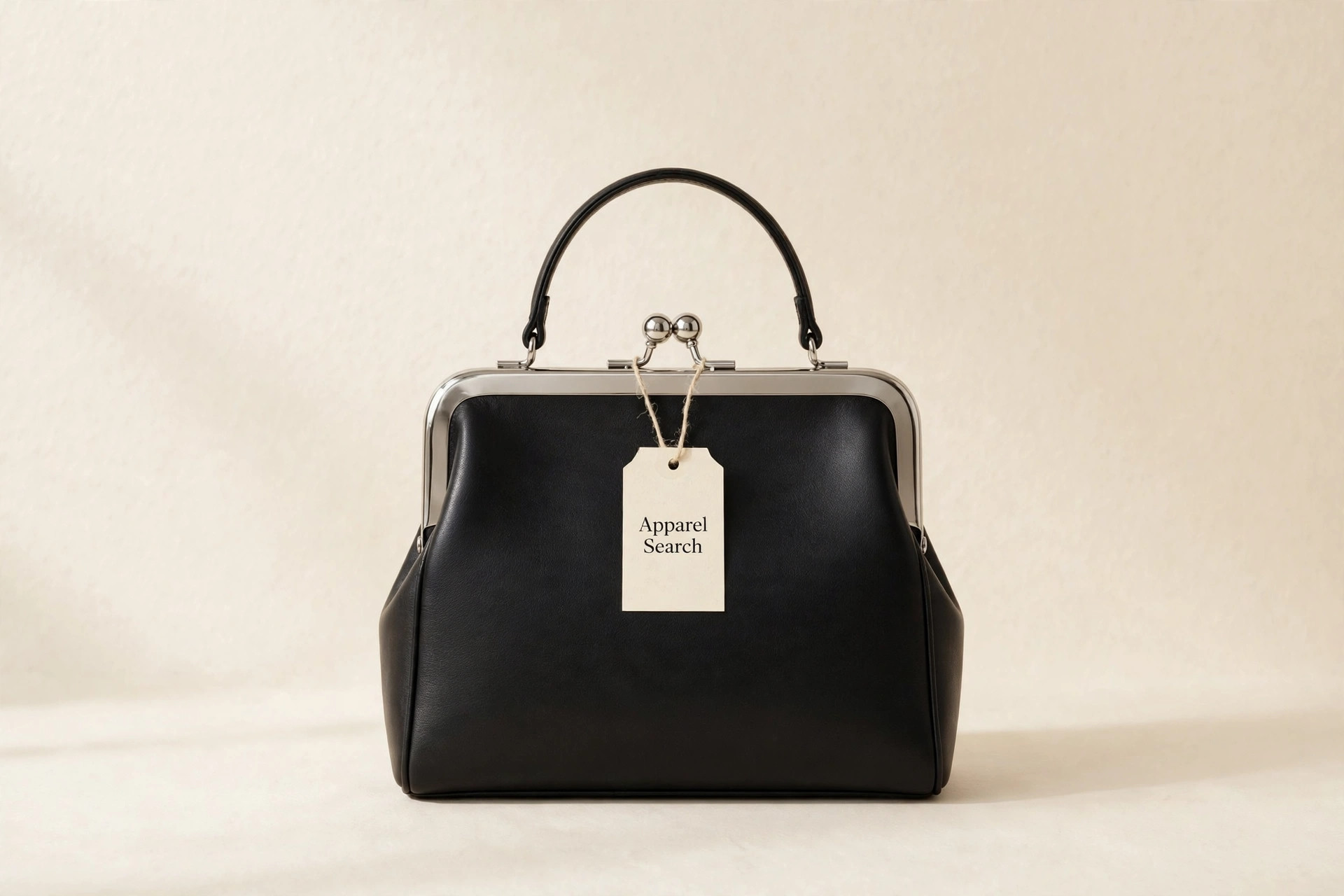
A frame bag is a handbag whose opening is a rigid metal frame — the fabric or leather body is attached to the frame, and the bag closes with a clasp built into it, most famously the kiss-lock: two knobs that press together (or twist) to lock. The frame gives the bag its crisp mouth, its structure and its click. Frame bags range from small evening clutches to full-size day bags with handles mounted on the frame.
01 / Anatomy of a Frame Bag
Anatomy of a Frame Bag
The frame is a shaped metal channel — brass, steel or alloy, plated in gold, silver, gunmetal or antique finishes — that forms the bag's entire top edge. The body is glued, stitched or crimped into the channel, which is why the mouth holds a perfect, even line that no zip can match. At the center sits the clasp: the ball-and-socket kiss-lock, a twist turn-lock, or a spring latch. Many frames integrate handle mounts or chain loops, so the same bag works as a clutch, a hand-carry or a chain-strap shoulder bag.
Bodies divide by register. Evening frames carry satin, brocade, beaded or velvet bodies — the frame is the jewelry of the bag. Day frames carry leather bodies in structured shapes, reviving the polished mid-century look. Capacity is the type's honest limit: the mouth opens only as wide as the frame allows and the body below is usually a single compartment, so a frame bag carries a curated set — phone, card case, keys, lipstick, compact — rather than a day's freight.
02 / From Coin Purse to Catwalk
From Coin Purse to Catwalk
The frame clasp began small: nineteenth-century coin purses and reticules closed with metal frames and ball clasps, the direct ancestors of the kiss-lock. As handbags grew in the early twentieth century, the frame grew with them, and by the mid-century the frame bag — leather-bodied, clasp-topped, carried by a short handle or chain — was the standard of dressed-up polish. It retreated when zips and soft bags took over daily life, surviving in evening wear, and returns in cycles whenever fashion re-embraces structure and vintage reference. The kiss-lock's click is the sound of that whole history.
03 / Carrying & Styling a Frame Bag
Carrying & Styling a Frame Bag
Frame bags are finishers: they complete an outfit rather than accompany it. Evening versions pair with dresses and tailored evening separates, their metal frame doing the work of jewelry — match the frame's metal to your other metals and let it be the shine. Day versions in leather bring instant composure to coats, suits and knit dresses, and a vintage frame bag remains the easiest way to give a simple modern outfit a deliberate, dressed note.
Mind the silhouette's proportions: a dainty frame drowns against oversize layers, and a large frame bag needs the outfit's lines to stay clean so the bag's own line can show. Carry it in the hand, on the elbow, or by its chain — and resist overfilling, since a frame bag's outline, once bulged, loses the crispness that is its entire point.
04 / Choosing Well: Frame & Clasp Checks
Choosing Well: Frame & Clasp Checks
Test the clasp the way you will use it: open and close it twenty times. A good kiss-lock meets with a clean, certain click and no sideways play; a tired one closes mushily and pops open under a squeeze — the classic failure of cheap and worn frames alike. Run a finger along the frame channel where the body enters it: the attachment should be even, with no gaps, glue squeeze-out or lifting edges, because re-attaching a body to its frame is specialist work. Check that the frame is true — the two sides level, the bag sitting flat. On chain-strap versions, confirm the chain attaches to reinforced loops on the frame, not to the body fabric.
05 / Care & Storage
Care & Storage
Frames dislike two things: moisture and being sat on. Keep the bag dry, wipe the frame with a soft cloth to lift fingerprints and skin oils from the plating, and never force a clasp that resists — resistance means misalignment or a foreign object in the channel, and forcing bends the frame. Store the bag stuffed lightly, standing or lying in its dust bag, clasp closed. If a kiss-lock loosens over years, a handbag repairer can often adjust the tension — worth doing for a good bag, since the frame is its skeleton and its value.
Shop Frame Bags
Ready to shop? Product links are kept in one place on the Apparel Search shopping guide:
Shop Frame Bags on AmazonThis link opens the Apparel Search shopping guide for Amazon, where the product links are kept in one place.
Questions
Common Questions
What is a kiss-lock?
A kiss-lock is the classic frame-bag clasp: two metal knobs or balls on the frame's two halves that press together — the 'kiss' — and lock, opening when you pull or twist them apart. It is named for the way the two sides meet, and its firm click is the quality test of any frame bag.
Are frame bags only for evening?
No. Evening frames in satin and brocade are the famous ones, but leather-bodied frame bags were a mid-century day standard and remain a polished day option with tailored clothing. The register is set by the body material and size, not by the frame itself.
What fits in a frame bag?
A curated set: phone, card case or small wallet, keys, lipstick and compact in most sizes — the mouth opens only to the frame's width and the body is one compartment. If your daily carry is larger, choose a bigger day frame or a different type; frame bags punish overfilling by losing their shape.
Can a loose frame clasp be repaired?
Often, yes: a bag repairer can adjust a kiss-lock's tension or replace a clasp spring on many frames. What is harder to save is a bent frame or a body detached from its channel — inspect those two things closely when buying vintage or second-hand.
More to Explore
Back to the Handbag Types & Styles Guide
The full accessories map — every named handbag shape defined in brief, with the deep-dive guides for each type.