The Short Answer
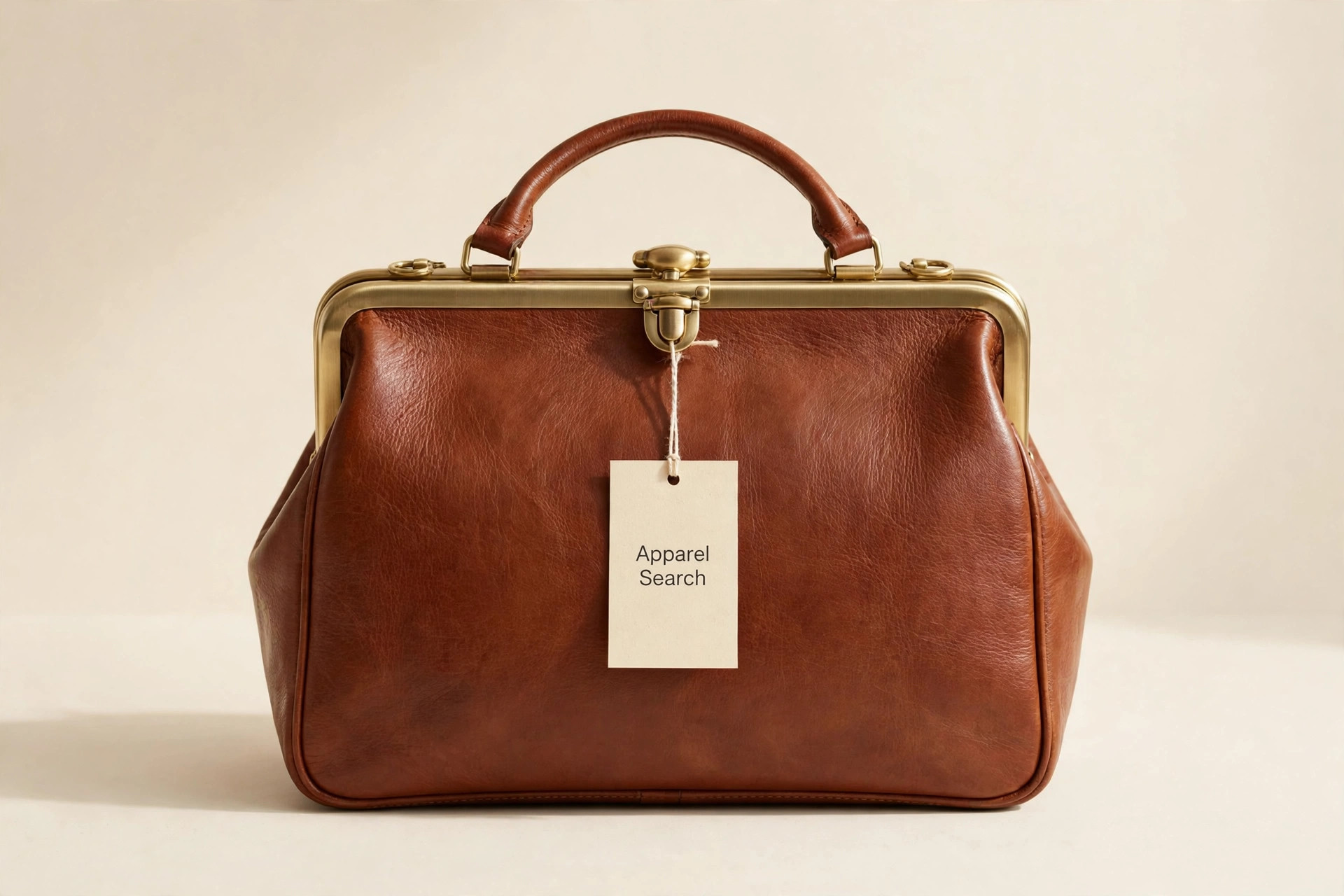
A doctor bag is a structured handbag built on a hinged metal frame at the top, so the mouth opens wide and stays open — the defining construction of the Gladstone-style bag physicians once carried. It has a roomy, usually single main compartment, a short top handle mounted on the frame, and a clasp, lock or latch at the center of the frame. In fashion use it ranges from mini evening versions to large, near-duffel carryalls.
01 / Anatomy of a Doctor Bag
Anatomy of a Doctor Bag
Everything about the type descends from its frame: two metal rails hinged at the ends, forming the bag's mouth. Open, the rails swing apart and the bag gapes to its full width — you can see and reach everything inside, the original point of the design. Closed, a clasp, latch or lock at the center snaps the rails together. The body below is typically leather, deep and softly structured: firm enough to stand, soft enough to bulge slightly when full, often with gusseted ends that fold as the frame closes. A short handle mounts on or beside the frame; many fashion versions add a detachable shoulder strap.
Inside, the classic layout is one generous chamber, sometimes with a zip pocket in the lining. That single-chamber design is the type's pleasure and its discipline: capacity is excellent and access is unmatched, but small items roam — most owners tame it with pouches. Sizes run from the mini (an evening novelty with a working frame) through the medium everyday bag to large versions that function as weekending carryalls.
02 / From House Calls to Handbags
From House Calls to Handbags
The original is Victorian: the Gladstone bag — named for the British prime minister — was a leather case on a hinged frame that opened into two equal halves, built for travel and adopted by physicians for house calls because it opened flat and displayed its contents. The 'doctor bag' name stuck to the silhouette. Fashion borrowed it repeatedly through the twentieth century whenever structured bags came round, shrinking the case into a handbag while keeping the frame mouth, the central clasp and the deep single chamber. The borrow is honest: a fashion doctor bag really is the medical bag's direct descendant, not a loose inspiration.
03 / Carrying & Styling a Doctor Bag
Carrying & Styling a Doctor Bag
The doctor bag carries presence: it is a characterful, slightly vintage silhouette that anchors an outfit rather than blending into it. It suits tailored and classic dressing — coats, blazers, knit dresses, boots — and reads especially well in autumn registers: cognac, oxblood, black and deep green leather, brass hardware. In the hand or elbow it is formal-leaning; on the optional shoulder strap it relaxes into a characterful everyday bag. The mini versions are pure punctuation — an evening bag whose opening draws a small crowd.
Capacity styling matters: because the body bulges when overfilled, the silhouette is at its best loaded to about three-quarters, contents pouched and ordered. A doctor bag carried stuffed loses its clean outline and gains a luggage look — charming in the large travel sizes, sloppy in the mediums.
04 / Choosing Well: Frame & Hinge Checks
Choosing Well: Frame & Hinge Checks
The frame is the bag, so test the frame. Open and close it a dozen times: the action should be smooth, the rails meeting evenly along their whole length, the clasp snapping shut with a positive click and no side-play. Check the hinges for stiffness or grinding — they are the wear point that decides the bag's lifespan, and they are rarely repairable on fashion versions. Examine where the leather meets the frame: the covering should be tight and even, since gaps there widen with use. Lift the loaded bag by its handle and watch the frame for flex. Finally, weigh it: metal frames add real weight, and a large doctor bag in thick leather can be heavy before anything goes inside it.
05 / Care & Storage
Care & Storage
Store the bag closed but unlatched if it will sit for months, so the clasp spring rests; stuff the chamber lightly to support the body, and stand it upright rather than hanging it by the handle. Keep the frame dry — moisture at the hinges invites stiffness and, on lesser metal, corrosion — and work the hinge occasionally during long storage so it does not seize. Leather care is standard: dry-cloth wipes, occasional conditioning kept away from the frame's covering seam, and prompt drying, away from heat, if the bag is caught in rain.
Shop Doctor Bags
Ready to shop? Product links are kept in one place on the Apparel Search shopping guide:
Shop Doctor Bags on AmazonThis link opens the Apparel Search shopping guide for Amazon, where the product links are kept in one place.
Questions
Common Questions
Why is it called a doctor bag?
Because its construction — a leather body on a hinged metal frame that opens wide — is the Gladstone-style case physicians carried on house calls, when a bag that opened fully and displayed its contents was a working tool. Fashion versions keep the frame, the clasp and the deep single compartment.
What fits in a doctor bag?
More than its footprint suggests: the deep single chamber swallows a wallet, phone, cosmetics pouch, water bottle, paperback and a folded scarf in a medium. The trade-off is organization — use pouches for small items, because everything shares one space.
Is a doctor bag comfortable to carry all day?
In medium sizes with reasonable loads, yes, though hand and elbow carry always tires sooner than a shoulder strap — many fashion versions include one. The frame adds weight, so check the empty weight and prefer the size that matches your actual load rather than the largest silhouette you admire.
How can you tell a good doctor bag frame?
Open and close it repeatedly: smooth travel, rails meeting flush, a clasp that clicks positively, hinges that move without grinding or wobble, and leather covering the frame tightly with no gaps. The frame and hinges are where these bags live or die, and they are the hardest parts to repair.
More to Explore
Back to the Handbag Types & Styles Guide
The full accessories map — every named handbag shape defined in brief, with the deep-dive guides for each type.