Handbag
Clothing Definitions — definitions of garments and clothing terms from Apparel Search
Search Apparel Search
At a Glance
Definition: A handbag is a bag carried in the hand or on the shoulder for personal items, larger than a coin purse and sized for the objects its owner needs through the day.
Also known as: Purse (in American usage)
Category: Clothing Definitions
Word Origin
Handbag is a plain compound — the bag carried in the hand. Purse is the older word: it comes from Old English purs, from Latin bursa, a hide or leather bag, and it originally named only the small bag that held coins — the sense British English still keeps.
A handbag is a bag carried in the hand or on the shoulder to hold the objects its owner needs through the day — purse, keys, phone, make-up, files and diary. It is the defining fashion accessory: useful enough to be carried daily, visible enough to be a statement, and varied enough that the category splits by carry, by shape and by occasion. This page explains the naming — including the genuine transatlantic confusion between handbag and purse — the main types, and how handbags are made. Our handbag categories guide sorts the current styles.
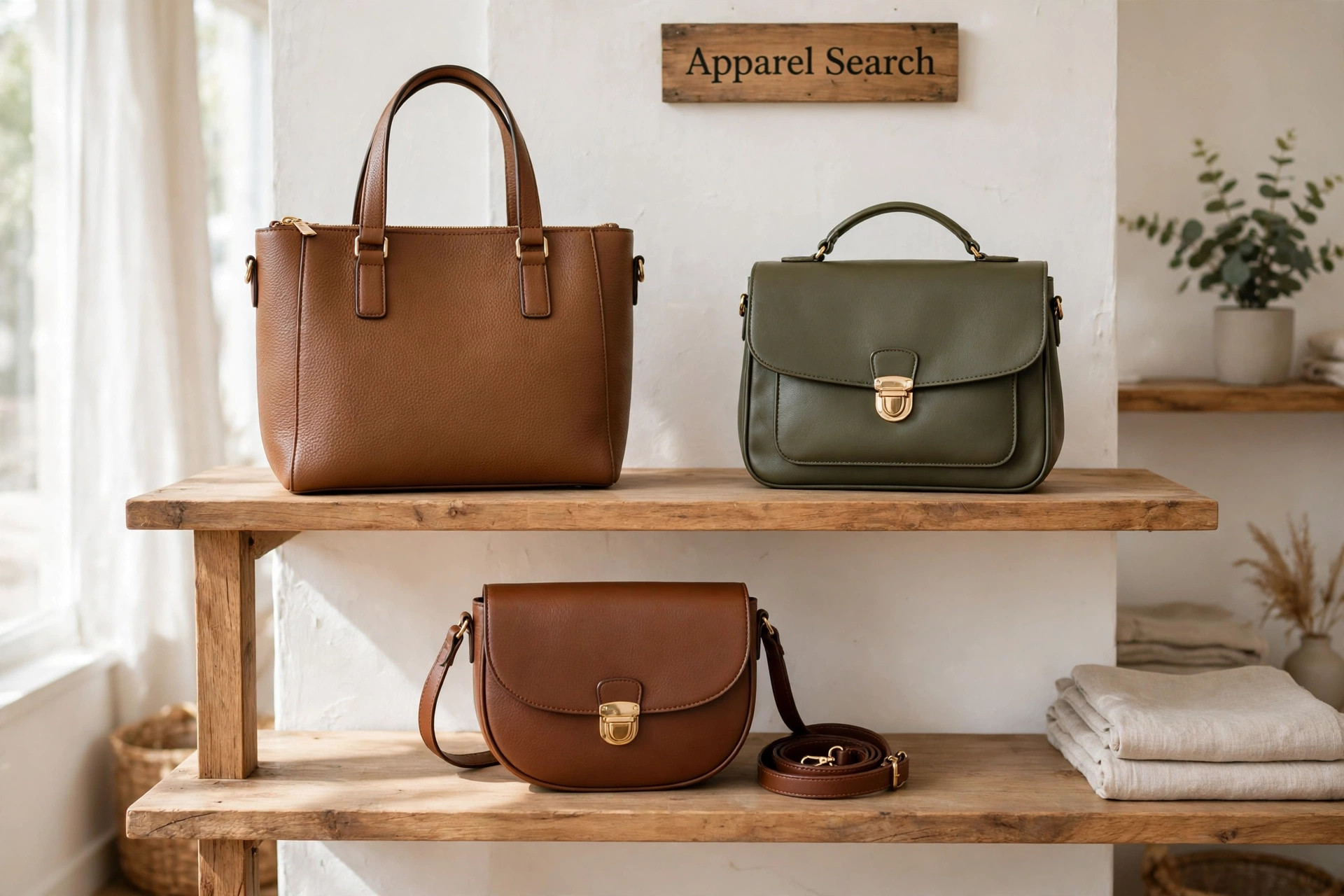
Carried How: The Four Carries
Handbags are categorised first by how they are carried. Hand-held bags have short handles and are carried in the hand or hooked over the forearm — the carry the word handbag itself records. Shoulder bags hang from a strap on one shoulder, the everyday default. Cross-body bags use a long strap worn diagonally across the body so the bag rests at the opposite hip and both hands stay free: see our crossbody bag definition. Clutch bags have no strap at all and are held in the hand, usually as smaller evening bags where capacity matters less than the line of an outfit.
The carry decides more than comfort. It fixes the size that is practical — a clutch can only hold what a hand can grip — the security of the bag, and the occasions it suits. Retailers therefore sort handbags by carrying method, size and occasion as well as by shape, and a single bag can sit in several categories at once: a medium satchel with a detachable long strap is a hand-held bag, a shoulder bag and a crossbody in one.
Shapes: Tote, Satchel, Hobo and More
Shape gives the second set of categories. The tote is an open-topped bag with two parallel handles, the straightforward carrier of the group. The satchel is structured, with a flap over the top and a fastening. The hobo is soft and slouching, its crescent shape collapsing against the body. Around those staples sit the named forms: the drawstring-gathered bucket bag, the rounded-flap saddle bag borrowed from horse tack, the small soft pouch bag, the woven summer straw bag, and the domed, structured bowler bag, named for the sports bag it was miniaturised from. Backpack and messenger forms complete the usual retail list.
Designer handbags made several of these shapes famous in their own right, and houses such as Louis Vuitton built their names on luggage and bags before clothing. The shape vocabulary is stable even as fashion rotates through it: each season revives a form — the bucket, the saddle, the oversized tote — and retires another, but the underlying categories a buyer chooses between change very little.
Materials and Construction
Materials and construction decide price and use. Leather is the traditional handbag material, valued because it withstands daily carrying, holds a structured shape and improves with wear. Fabric bags in canvas and synthetics are lighter and often washable, and nylon in particular is used for practical everyday and travel bags because it is light, tough and indifferent to rain. Straw, raffia and woven textiles mark the summer end of the category.
Construction follows the job. Closures run from zips and flap-and-clasp fastenings to open tops with a magnetic catch; straps and handles are reinforced at their anchor points, where a loaded bag concentrates its stress; and interiors are usually lined and divided into compartments and pockets so the contents the bag exists to carry can be found quickly. A handbag is defined less by any single shape than by that job: a personal carrying accessory, larger than a coin purse, organised for daily use.
Choosing and Shopping for a Handbag
Choose by carry and contents first. List what the bag must hold on an ordinary day, pick the carry that suits how the day is spent — hands-free crossbody for travel and transit, structured hand-held or shoulder styles for work — and only then choose the shape and material. Our consumer guide to the best handbags works through current buying choices, the handbag guide covers the women's category in depth, and the handbag posts on the Apparel Search blog follow new styles as they appear.
Shoppers who prefer the auction route can browse the handbags on eBay guide, where product listings live. Whatever the route, the checks are the same: stitching and hardware that will survive daily loading, a closure that suits how the bag will be carried, and an interior organised for the contents listed at the start.
Not to Be Confused With
In American English, purse and handbag are used interchangeably for the same carried bag. In British English they are different objects: a purse is the small pouch or wallet that holds coins and cards — the thing that goes inside the handbag — while the handbag is the larger bag itself. The confusion is purely regional: the same object is a purse in New York and a handbag in London, and a British purse would be called a coin purse or small wallet in the United States.
Common Questions
What is a handbag?
A handbag is a bag carried in the hand or on the shoulder to hold personal items such as a purse, keys, phone, make-up, files and diary. It is larger than a coin purse and is defined by its job: carrying the objects its owner needs through the day.
What is the difference between a handbag and a purse?
In American English the two words are interchangeable. In British English a purse is the small pouch for coins and cards that goes inside a handbag, while a handbag is the larger carried bag itself. A British purse would be called a coin purse or small wallet in the United States.
What are the main types of handbag?
By carry: hand-held bags, shoulder bags, crossbody bags worn diagonally and strap-free clutches. By shape: the open-topped tote, the structured flap-front satchel, the soft slouching hobo, and the bucket, saddle, bowler, pouch and straw forms. Many bags belong to several categories at once.