Women's Haute Couture Guide
Haute couture is a legally protected title, not a compliment: made-to-measure, hand-finished clothing from an official list of houses. What qualifies, how it began, and how it differs from ready-to-wear.
Shop Women's Haute Couture Now
Shop Women's Haute Couture on Amazon Shop Women's Haute Couture on eBayThe Amazon and eBay links on this page are affiliate links. If you make a purchase through them, Apparel Search may earn a commission.
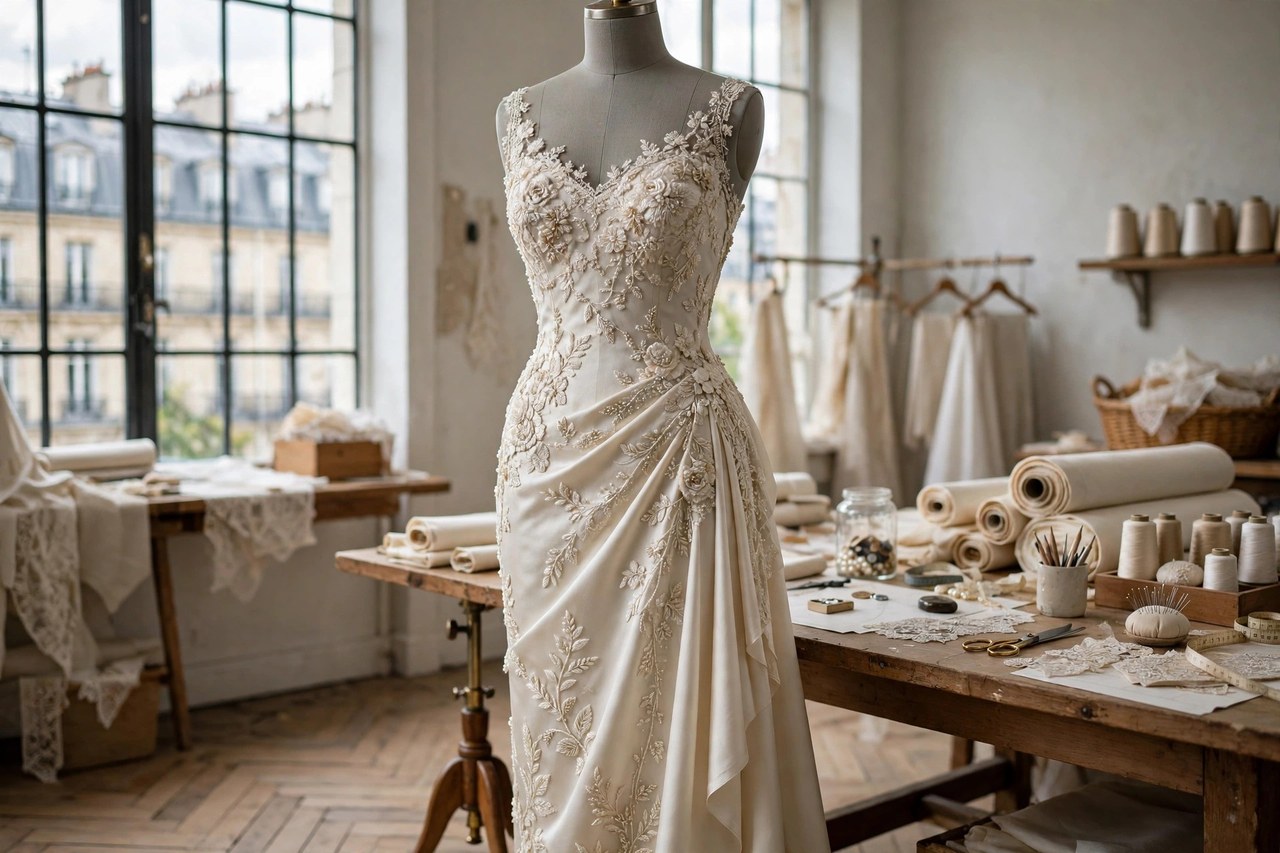
Can any talented designer produce haute couture? The blunt answer: sorry, the answer is no. Haute couture is not a style, a price point or a compliment paid to anything expensive and beautiful. It is a legally protected French title, held by a short and very specific list of fashion houses, for clothing that is relatively expensive and highly fashionable, produced by leading fashion houses to exacting, regulated standards. The words themselves are French: haute means high, and couture means dressmaking — sewing, needlework, fashion itself. High dressmaking: the name is the definition.
What follows is what the title actually requires: who grants it, what a house must do to keep it, how the system began, and why a couture gown is made the way it is. For most readers couture is something to understand and admire rather than to buy — which makes understanding it properly all the more worthwhile.
What Qualifies: The Chambre Syndicale Rules
In France, the term haute couture is protected by law and defined under the Chambre de commerce et d'industrie de Paris. The Chambre Syndicale de la Haute Couture is the regulating commission that determines which fashion houses are eligible to be true haute couture houses — today working within the Fédération de la Haute Couture et de la Mode.
The rule itself is exact: only those companies mentioned on the list drawn up each year by a commission domiciled at the Ministry for Industry are entitled to use the label. In practice, listed houses must design made-to-measure clothing for private clients, maintain a Paris atelier with a minimum staff of specialist artisans, and present collections of original designs each season. Houses outside Paris, however brilliant, show as guests or correspondents — the title itself stays Parisian and official.
Made-to-Measure and Hand Finishing
A couture garment begins with one client. She is measured, a toile — a trial version in plain cloth — is made and fitted to her body, and only then is the fashion fabric cut. Multiple fittings follow as the garment is built, and the finished piece fits one person in the world. Exclusive custom-fitted clothing is not a marketing phrase here; it is the legal and practical core of the craft.
The making matches the fitting. Haute couture is constructed by hand from start to finish, in high-quality, expensive, often unusual fabric, sewn with extreme attention to detail and finished by the most experienced and capable sewers, often using time-consuming, hand-executed techniques — hand-rolled hems, hand-set zips, embroidery and beading by specialist ateliers that can take hundreds of hours on a single gown. The price, famously into five and six figures, is mostly hours: skilled human hours that no machine has yet learned to replace.
A Short History and the Great Houses
The system begins with Charles Frederick Worth, the English couturier who set up in Paris in 1858 and invented much of the modern arrangement: clothes designed by a named creator, shown on live models, labelled with the house's name, and ordered made-to-measure by clients who came to him. The Chambre Syndicale itself was founded in 1868 to represent and regulate the Paris houses, and the legal protection of the couture title followed in the twentieth century.
The houses that define the tradition read as fashion's roll of honour — Chanel, Dior, Givenchy, Balenciaga, Schiaparelli, Valentino and Jean Paul Gaultier among the historic names, with the official list reviewed and published each season. A few thousand clients worldwide buy couture regularly. The collections matter far beyond them: couture is where houses test the silhouettes, fabrics and embroideries that, diluted and translated, become the following years' ready-to-wear and, eventually, the high street.
Couture vs Ready-to-Wear
The contrast is total. Ready-to-wear — prêt-à-porter, in the federation's full name, the Fédération française de la couture, du prêt-à-porter des couturiers et des créateurs de mode — is designed for a size range, made in quantity in factories, and bought off the rail to be worn that day. Couture is designed for one body, made by hand in an atelier over weeks or months, and exists in exactly one example. Demi-couture and made-to-measure services borrow pieces of the couture method without the title.
Why does the distinction matter to a reader who will never order a gown? Because couture is fashion's research laboratory and its memory: the place where hand skills — embroidery, pleating, tailoring, featherwork — are kept alive by being practised at the highest level, and where the silhouette of the next decade is usually visible first. Everything else in this guide, from a wedding dress to a prom gown, descends from decisions taken in the couture ateliers.
More Occasion & Style Guides
Photos

References & Further Reading
Looking for Women's Clothing Stores?
This guide helps you choose women's haute couture and how it is made. To browse where to buy, visit our women's clothing store directory, where you can find retailers that carry them.