Women's Knit Handbags Guide
A knitted bag has texture no leather or canvas can copy, and one honest weakness: yarn stretches. Good knit handbags solve that with lining, interfacing and a firm base.
Shop Women's Knit Handbags Now
Shop Women's Knit Handbags on Amazon Shop Women's Knit Handbags on eBayThe Amazon and eBay links on this page are affiliate links. If you make a purchase through them, Apparel Search may earn a commission.
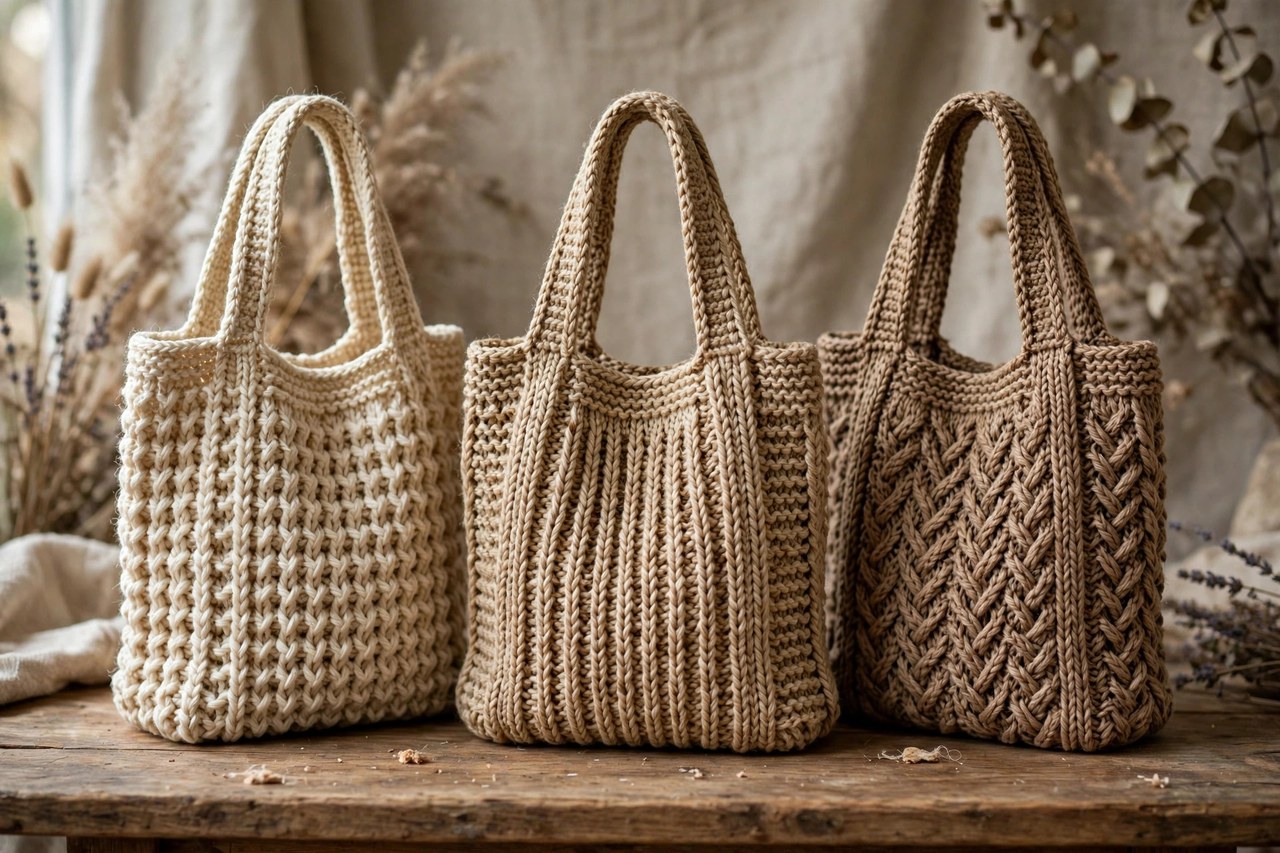
A knit handbag is a bag whose body is knitted or made to look knitted, including the closely related crochet-look styles that share the same yarn, texture and construction issues. The appeal is easy to see. Yarn gives a bag a handmade warmth, deep texture and color blending that flat fabrics cannot match, and a knit bag folds into the soft, relaxed side of a wardrobe where structured leather can feel too formal. Totes, market bags, clutches and shoulder bags all appear in knitted versions, from rustic natural cotton to fine, tightly worked evening pieces.
The challenge is equally clear, and honest guides should name it at the start: a bag must carry weight, hold a shape and protect its contents, and yarn on its own does none of those reliably. Knitted fabric stretches under load, opens between stitches and sags at the base. Everything that separates a knit bag you will use for years from one that disappoints in a month is a solution to that problem, and most of those solutions sit inside the bag where you have to know to look for them.
The Structure Problem and Its Fixes
The first fix is a lining. A woven fabric lining carries the load that the knit cannot, stops keys and pens from poking through the stitches, and gives the bag interior pockets and a clean finish. The best linings are attached at the base as well as the top edge, so the two layers move as one. The second fix is interfacing, a stiffening layer fused or sewn between knit and lining that helps walls stand up and keeps a clutch or structured tote from collapsing into a heap when you set it down.
The third fix sits underneath. A base board or firm, flat insert spreads the weight of books, a water bottle or a tablet across the whole bottom instead of letting it pull the center into a point. Handles deserve the same scrutiny: knitted handles stretch, so look for handles reinforced with webbing, cord or a woven core inside the knit, and for stitching that anchors them through the lining rather than only through the yarn. Before buying, put something heavy inside and carry the bag for a minute; a good knit bag should hold its outline, not lengthen.
Fibers, Stretch and Sag
Yarn fiber decides how much a bag will grow. Cotton yarn is the most common choice for knit and crochet-look bags because it is strong, holds stitch definition and stretches less than wool, though it can still relax under a heavy load. Linen blends are crisper still and soften attractively with use. Wool is a poor structural choice for a large bag, since it stretches and can felt with friction and moisture, but it appears in small felted bags, where the felting itself creates a dense, almost woven firmness that solves the stretch problem in a different way.
Synthetic yarns, including acrylic and recycled blends, resist water and fading and keep market bags and beach totes easy to wash, but a loosely worked acrylic will sag if it is not lined. Whatever the fiber, stitch density is your friend: a tight gauge with small stitches stretches far less than an open, lacy pattern. If you love an openwork design, choose it in a smaller bag, carry less in it, and make sure the lining is opaque and firmly sewn, since the lining, not the lace, will be doing the real work.
Styles and Care
The tote is the workhorse style, best with a lined body, a reinforced base and handles that can go over the shoulder. The market bag leans into stretch on purpose, expanding for groceries or a beach towel, and is the one style where an unlined, open knit is a feature rather than a flaw, as long as small items go in a pouch first. Clutches and small evening bags need the most internal structure, often a frame or firm interfacing, because their whole effect depends on a crisp outline. Bucket and hobo shapes sit between, structured at the base and soft above it.
Care for a knit bag as you would a knit garment, with one addition: empty it first and check the lining. Most lined bags should be spot cleaned or hand washed gently and dried flat or stuffed lightly with towels to hold the shape, never hung wet by the handles. Store knit bags stuffed softly and lying flat or standing on their bases, out of direct sun, which fades yarn faster than most fabrics. Rotate bags if you carry heavy loads daily, and a well-made knit handbag will keep its texture, and its shape, for a long time.
Related Women's Guides
Photos From Our Original Guide

More to Explore on Apparel Search
Looking for Women's Clothing Stores?
This guide helps you choose women's knit handbags. To browse where to buy, visit our women's clothing store directory, where you can find retailers that carry them.