Women's Knit Hats Guide
The beanie is a small garment doing serious work: a close knitted cap that traps warmth at the head, where fit, ribbing and fiber decide whether it stays comfortable all day.
Shop Women's Knit Hats Now
Shop Women's Knit Hats on Amazon Shop Women's Knit Hats on eBayThe Amazon and eBay links on this page are affiliate links. If you make a purchase through them, Apparel Search may earn a commission.
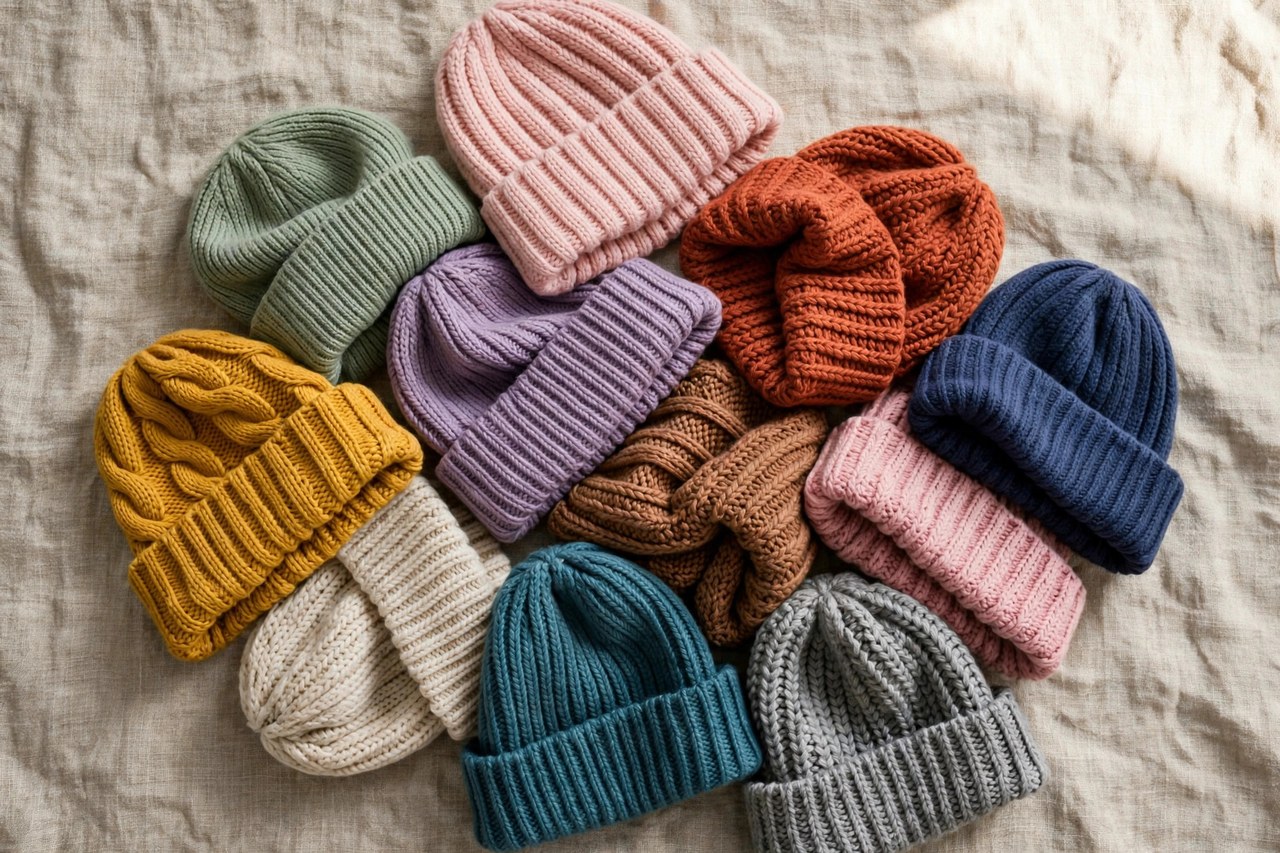
A knit hat is a soft cap made from knitted fabric, shaped to the head without a rigid structure, and the beanie is its best-known form: close-fitting, usually brimless, with a turned-up cuff that adds a double layer over the ears. Knit caps have been working garments for centuries, worn by sailors, laborers and soldiers long before they became a fashion staple, which makes sense given knitting's long history as a practical craft for turning yarn into warm, elastic clothing with simple tools.
That elasticity is the beanie's genius. A knitted cap stretches to fit, grips without fasteners, folds into a coat pocket and recovers its shape when you pull it out. But not all knit hats are equally warm, equally comfortable or equally good at staying on in wind. Fiber, stitch, ribbing and depth all change how a hat performs, and this guide explains each one so you can tell a genuinely warm cap from one that only looks the part in the shop.
Fibers: Wool Warmth, Acrylic and Cotton
Wool is the traditional warmth fiber for hats, and its reputation is earned. Wool fibers are naturally crimped, so the yarn traps air; wool absorbs moisture vapor without feeling wet, releases heat gently as it does so and keeps insulating in damp, cold air when many fibers give up. Merino wool adds softness that suits sensitive foreheads, while hardier wools make rugged, long-lived caps that may feel scratchy worn alone. A wool or wool-blend hat with a soft inner band is often the best of both, warm outside and gentle where it touches skin.
Acrylic is the common alternative: light, inexpensive, easy to wash and available in every color, but generally less warm for its weight and less breathable, so a head can feel clammy on a mild day. Cotton knit hats are the cool-weather rather than cold-weather choice, comfortable in spring and autumn and for women who find wool too hot, but cotton absorbs water, stays wet and offers little insulation once damp. Alpaca deserves a mention for exceptional warmth and softness, though it stretches more than wool and benefits from being blended with it. Read the fiber label as seriously on a hat as on a sweater.
Ribbing, Fit and Slouch
Ribbing is the vertical ridged stitch that gives most beanie cuffs their grip. Because rib contracts strongly and stretches back, a ribbed band holds the hat in place, seals the gap where wind enters and keeps the cuff from curling. A wide, folded cuff doubles the ribbing over the ears, which is where warmth is won or lost. The body above the cuff may be smooth stockinette, textured cable or a loose stitch, but if the band is slack, the whole hat will creep, twist or blow off, so test the band's recovery before anything else.
Fit is about depth as much as circumference. A classic beanie ends just above the ears with the cuff folded over them; a slouch beanie carries extra length that drapes at the back, trading a little wind protection for a relaxed look and room for hair. Watch-cap styles sit short and neat. Whichever you choose, the hat should stay put when you turn your head and look down, without a pressure line across the forehead after ten minutes. Hair changes the equation, so try a hat with your hair as you actually wear it, not smoothed flat for the mirror.
Warmth, Brimmed Styles and Care
Warmth comes from construction as much as fiber. A double-layer cuff, a lined crown, a tight stitch and a wind-resistant outer yarn each add protection, while a loose, lacy stitch lets cold air straight through however pretty it looks. For serious cold, choose a close stitch, full ear coverage and wool or alpaca in the blend, and consider a fleece-lined band, which blocks wind at the forehead and ears. Brimmed knit hats add a small stiffened peak to the knit cap, shading the eyes and shedding light snow, a practical hybrid for bright winter days and dog walks in changeable weather.
Washing and blocking keep a knit hat in shape. Wash gently in cool water with mild detergent unless the label promises machine washing, press water out in a towel rather than wringing, and dry the hat over a bowl, a balloon or a hat form close to head size; that simple drying step is blocking, and it restores the crown's curve and the cuff's width. Never hang a wet knit hat by its edge, which stretches a point into it. Store hats clean, flat or lightly stuffed, and a good beanie will be ready, winter after winter, the moment the first cold morning arrives.
Related Women's Guides
Photos


More to Explore on Apparel Search
Looking for Women's Clothing Stores?
This guide helps you choose women's knit hats. To browse where to buy, visit our women's clothing store directory, where you can find retailers that carry them.