Women's Handkerchiefs Guide
A square of fine cloth with more jobs than any accessory its size: practical hankie, pocket square, vintage flourish and collectible. Cotton, linen and silk, care, and the bandana distinction.
Shop Women's Handkerchiefs Now
Shop Women's Handkerchiefs on Amazon Shop Women's Handkerchiefs on eBayThe Amazon and eBay links on this page are affiliate links. If you make a purchase through them, Apparel Search may earn a commission.
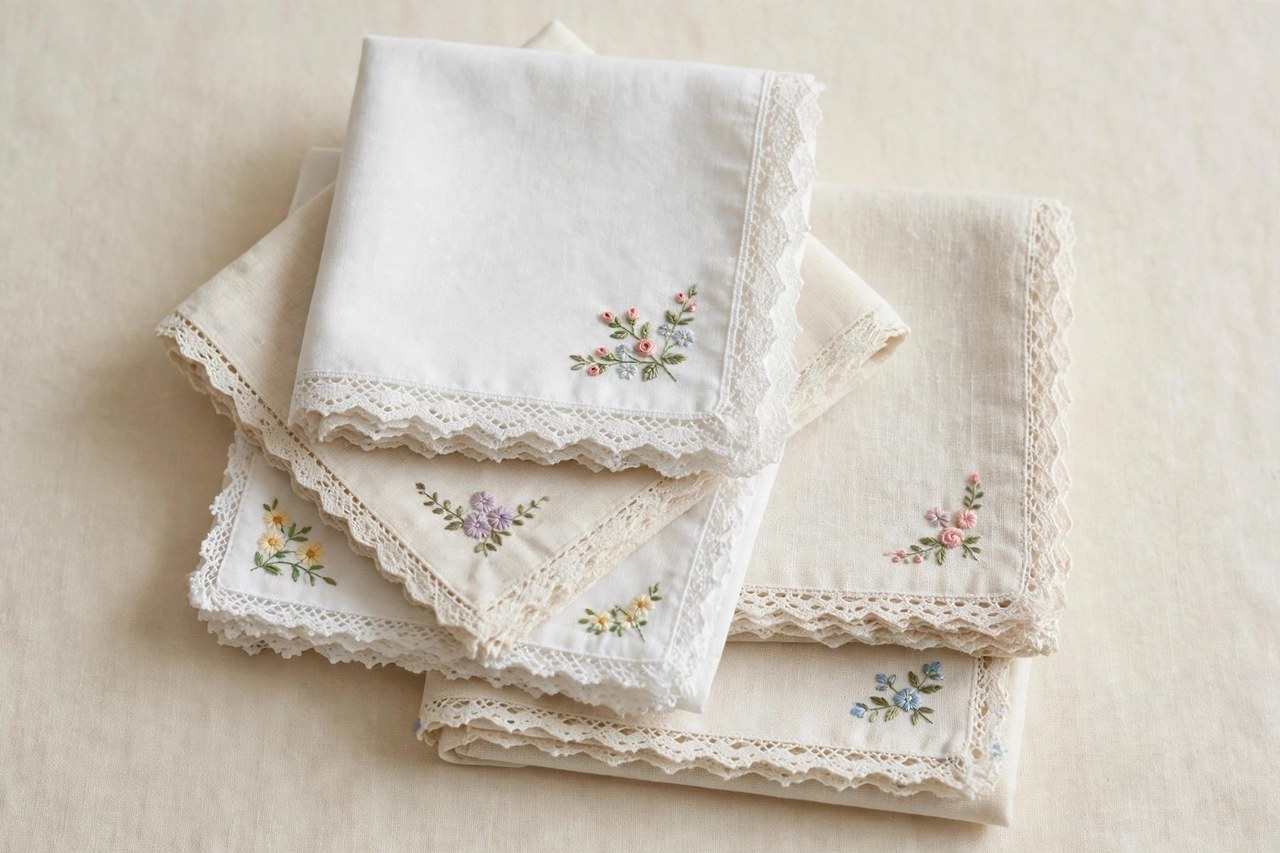
Handkerchiefs are not gender specific — this page sits in the women's section, so it treats the finer, often lace-edged and embroidered square as a women's handkerchief, but the cloth itself belongs to everyone. The definition is plain: a square of finely woven material, typically carried in one's pocket and intended for blowing or wiping one's nose — though they can be utilised for other purposes as well, including as a fashion accessory.
That double life is the subject of this guide. The handkerchief is at once the most practical square in the wardrobe and one of its most decorative: printed, monogrammed, edged in lace and, in vintage form, collected like small works of textile art. No other accessory so small does so many jobs.
Fabrics: Cotton, Linen and Silk
Cotton is the working handkerchief: soft, absorbent, cheap enough to own by the half-dozen, and improved by washing, since cotton softens with every launder. Fine cotton lawn and batiste make the prettier everyday hankie, often with a rolled hem or a crocheted edge. Cotton is the right default for the bag, the pocket and the desk drawer.
Linen is the connoisseur's handkerchief: stronger than cotton, naturally smooth, and increasingly supple with age, which is why vintage linen hankies survive in such numbers. Silk is the decorative end — lustrous, pocket-square weight, chosen for show rather than use, and the fabric of the printed silk square worn in a blazer or tied at a bag handle. Blends split the differences; the care label, as ever, follows the most delicate fibre present.
Uses: Practical, Pocket Square and Accessory
The practical list is longer than the definition suggests. Beyond its original purpose, a handkerchief dabs tears and lipstick, blots a brow, cleans glasses and phone screens, wraps a small fragile object, and stands in as an emergency napkin, coaster or bandage — a cloth multi-tool that takes no room. Carried daily and washed often, it is also the reusable answer to a pocketful of disposable tissues.
The decorative list is fashion history in miniature. Folded, a crisp white or monogrammed square becomes a pocket square; printed and knotted, it ties at a handbag handle, a ponytail or a wrist; vintage floral hankies surface as framed art, bunting and quilt squares. Brides have carried heirloom hankies for generations — something old, woven small — and a hankie passed down with a grandmother's embroidery is among the most personal hand-me-downs a wardrobe holds.
Handkerchief vs Bandana, and Care
The distinction is simple once seen. A bandana is larger — typically around 20 inches square against the handkerchief's 8 to 14 — made of sturdier printed cotton, usually in paisley, and designed to be worn visibly: tied on the head, around the neck or as a covering. A handkerchief is smaller and finer, made to be carried in a pocket or bag and used as cloth first, however decorative its edge.
Care is gentle laundering. Wash cotton and linen hankies warm, separately the first times if printed, iron while just damp for the crisp finish that makes them satisfying to fold, and treat silk as silk — cool hand wash and shade drying. Stains respond best to soaking before washing rather than heat after. Stored flat in a drawer, ideally scented in the old way with lavender, a set of hankies asks almost nothing and lasts for decades.
Collecting Vintage Handkerchiefs
Vintage handkerchiefs are among the most collectible small textiles because they were made to be given: souvenir hankies printed with maps and landmarks, novelty prints of flowers, animals and holidays, designer-signed squares, and hand-embroidered and lace-edged pieces whose making would now cost many times their antique price. Condition, handwork and a printed designer's name are what collectors price first.
Start a collection the forgiving way: buy the prettiest examples cheaply at estate sales and vintage shops, wash them gently, and use the common ones — a collection that only sits in a drawer misses the hankie's point. The rarities will announce themselves by their handwork. Few collections cost less to build, store in less space, or connect their owner so directly to the everyday elegance of the women who carried them first.
More Small Accessory Guides
Photos

Looking for Women's Clothing Stores?
This guide helps you choose women's handkerchiefs in cotton, linen and silk. To browse where to buy, visit our women's clothing store directory, where you can find retailers that carry them.