Women's Sandals Guide
A sandal is a sole held to the foot by straps — and that simple definition covers everything from a flat thong to a heeled dress sandal.
Shop Women's Sandals Now
Shop Women's Sandals on Amazon Shop Women's Sandals on eBayThe Amazon and eBay links on this page are affiliate links. If you make a purchase through them, Apparel Search may earn a commission.
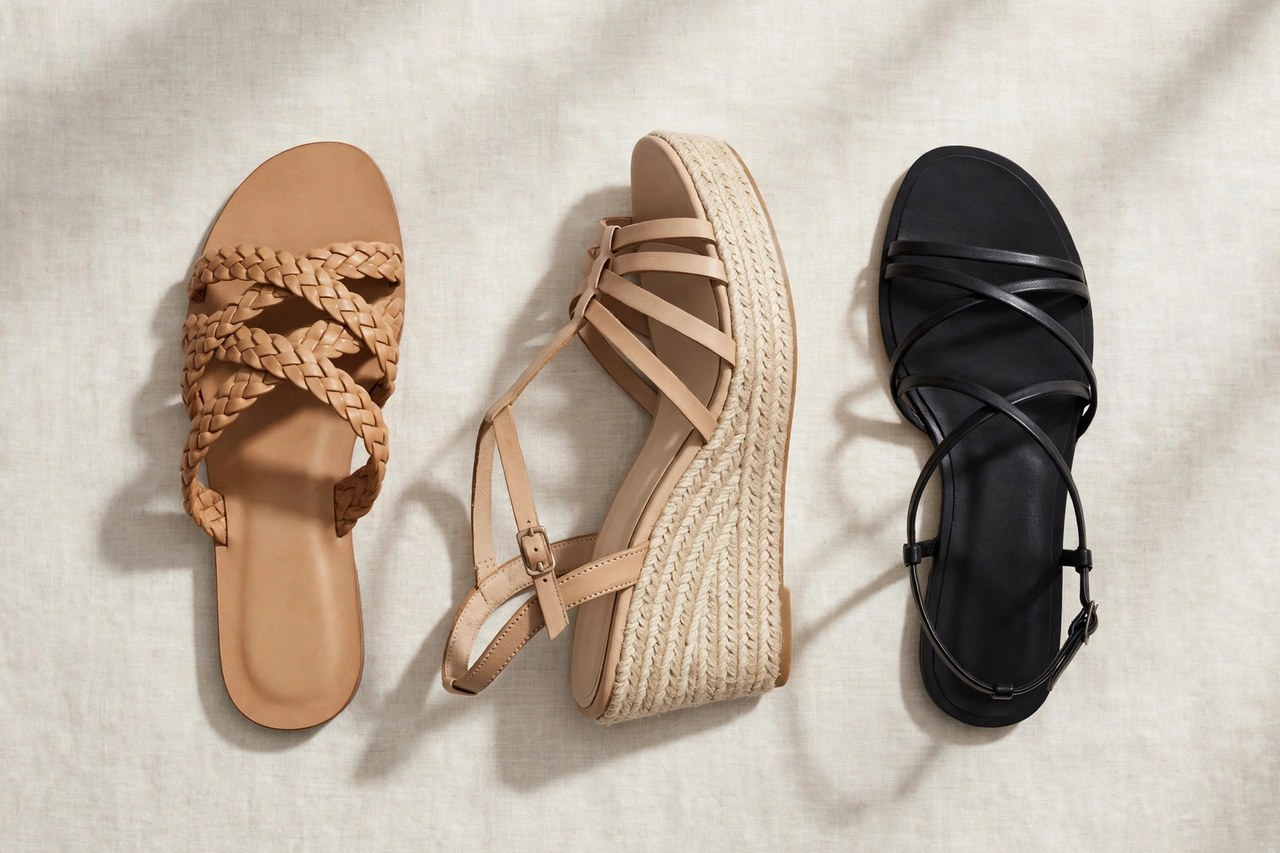
In summary, sandals are a light shoe with either an openwork upper or straps attaching the sole to the foot. More fully, a sandal is an open type of footwear consisting of a sole held to the wearer's foot by straps going over the instep and around the ankle, and sandals can also have a heel. The distinction between sandals and other footwear can be a blurry line; the common understanding is that a sandal leaves all or most of the foot exposed.
Women typically wear sandals in warmer climates or during warmer parts of the year to keep their feet cool and dry, but they are worn for a wide assortment of reasons and occasions throughout the year. This guide is the category overview: how straps attach, which soles suit which surfaces, and how to fit a shoe with almost no upper. Specialist pages cover slides, slingbacks and strappy styles in their own detail.
How a Sandal Stays On: Thongs, Straps and Latchets
A women's sandal may have the sole held to the foot by a narrow thong that generally passes between the first and second toe, or by a strap or lace, variously called a latchet, sabot strap or sandal strap, that passes over the arch of the foot or around the ankle. Thong construction is lightest and coolest but asks your toes to help hold the shoe; multi-strap and ankle-strap designs distribute that work and stay secure for walking.
Judge attachment by your day, not the mirror. A single decorative strap may be fine for a short evening, while a day of sightseeing wants at least two secure points and preferably an ankle or heel strap. Adjustable buckles and hook-and-loop closures earn their place because feet swell in heat. If you must grip with your toes to keep a sandal on, it will tire your feet and change your stride long before the day ends.
Soles and Materials
A sandal may have a sole made from rubber, leather, wood, tatami, rope or other materials, and the upper straps share much of that list, plus fabric and synthetics. Rubber soles grip wet pavement and pool decks; leather soles look refined but are slippery until scuffed and dislike water; cork and molded footbeds support longer walks; rope and jute soles belong to dry-weather espadrille styles and should be kept away from rain and puddles.
Heel form changes the category more than height alone. A flat sandal, a wedge that supports the whole foot, a platform that adds height without pitch, and a heeled dress sandal are four different tools. Choose by surface as much as outfit: wedges and platforms handle lawns and cobbles, thin heels do not, and a completely smooth sole is a poor choice on wet stone, boat decks or polished station floors at any height.
Fit: The Open-Shoe Rules
With so little upper, fit is visible: your heel should sit inside the back edge of the sole and your toes inside the front, with no overhang at either end. Straps should hold without digging, and the widest part of your foot should meet the widest part of the footbed. Try sandals in the afternoon, walk on a hard floor, and check that straps do not cross directly over a joint that bends with every step, a common source of rubbing.
Break new sandals in at home before travel or an event. Leather straps soften and mold; synthetic straps change far less, so their first-day fit is close to their permanent fit. Between sizes, consider strap adjustability and footbed shape rather than length alone. A contoured footbed with modest arch support will usually out-walk a board-flat fashion sole, however pretty the straps, once the distance passes a mile or two in summer heat.
Care and Storage
Shake sand and grit out after every wear; grit under straps abrades both leather and skin. Wipe leather straps clean and condition them occasionally, rinse rubber and synthetic sandals and let them dry in shade, and keep tatami, rope and jute soles dry, brushing them clean instead of washing. Sunscreen and foot creams build up on footbeds and make them slippery, so a periodic gentle clean keeps the shoe safer as well as fresher.
Store sandals flat or on a rack, straps fastened to hold their shape, away from prolonged direct sun that fades and cracks materials. Resole leather dress sandals before the sole wears through at the ball of the foot, and replace worn heel tips promptly to protect the heel itself. A sandal has few parts, which makes each part matter: keep the straps supple, the sole intact and the fastenings sound, and the simplest shoe in your wardrobe will last for many summers.
Related Women's Guides
Photos

Looking for Women's Clothing Stores?
This guide helps you choose women's sandals. To browse where to buy, visit our women's clothing store directory, where you can find retailers that carry them.