Women's Slips Guide
A slip is an undergarment layer worn beneath a dress or skirt — a full slip from the shoulders, or a half slip from the waist — that helps outer garments hang smoothly.
Shop Women's Slips Now
Shop Women's Slips on Amazon Shop Women's Slips on eBayThe Amazon and eBay links on this page are affiliate links. If you make a purchase through them, Apparel Search may earn a commission.
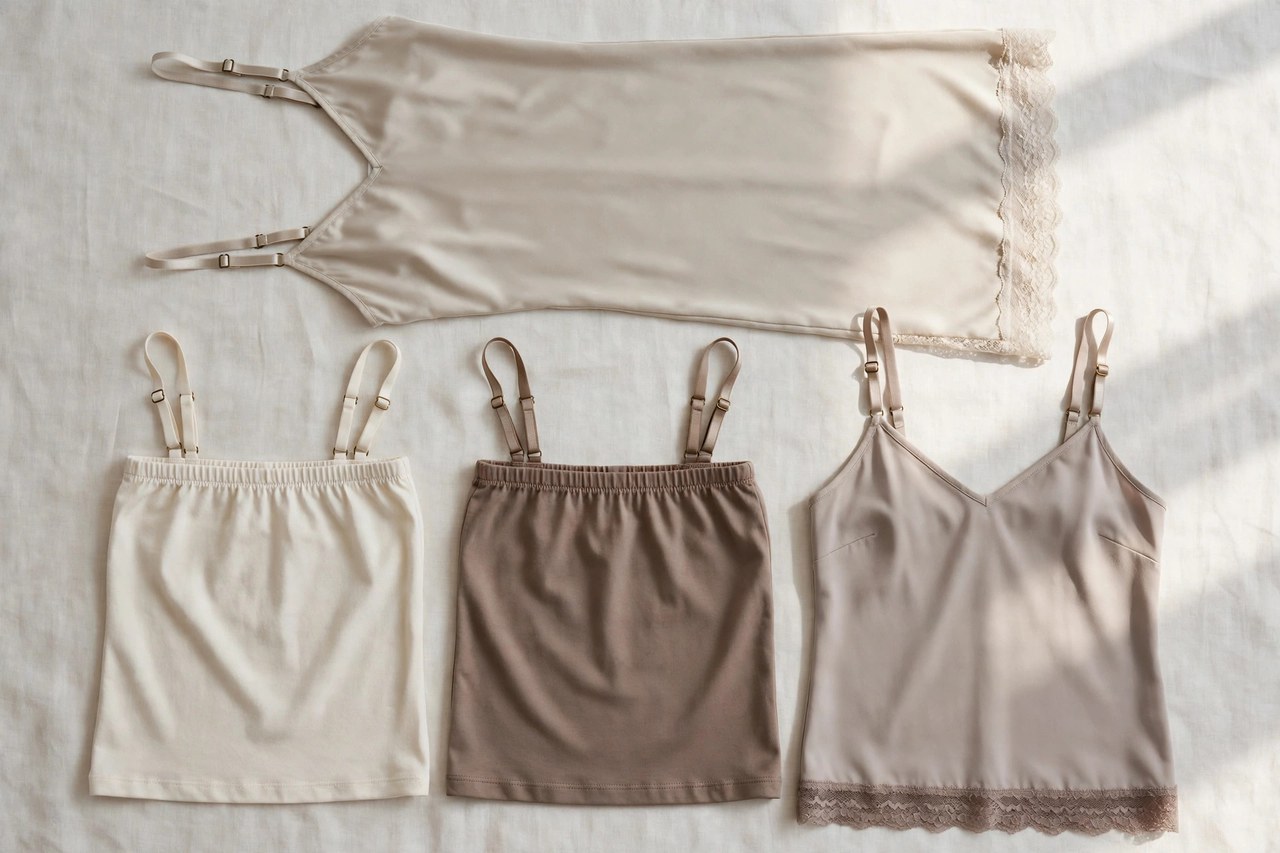
A slip is a woman's undergarment worn beneath a dress or skirt. It is a functional layer, chosen by length, fabric and fit, and worn entirely out of sight — the opposite job from the slip dress, which borrows this garment's shape to be seen. This guide treats slips strictly as the product they are: what the two forms are, which lengths exist, what they are made of, and how to match one to the garment it will be worn under.
The reasons for the layer are practical. A slip helps a dress or skirt hang properly, especially when static would otherwise make fabric wrap around the legs; it keeps a leg silhouette from showing through when standing against a bright light; it adds a thin warmth layer under lightweight dresses; and it protects skin from coarse fabrics such as wool while protecting fine outer fabrics from perspiration. Each job points to a fabric and length choice below.
Full Slips and Half Slips
A full slip hangs from the shoulders, usually by narrow adjustable straps, and extends from the bust to the fashionable skirt length of the dress it serves. It is the choice under dresses, especially sleeveless, thin-strapped or unlined ones, because it covers the whole line of the garment in one layer. A half slip, also called a waist slip, hangs from an elasticized waistband and serves skirts and the lower half of dresses; the word petticoat is also used for half slips.
Choose between them by the outer garment. A skirt needs only a half slip, and wearing a full slip under a separate top adds unnecessary layers at the waist. A dress with a fitted or thin bodice benefits from the full slip's continuous surface. Adjustable straps on a full slip and a comfortable, non-rolling elastic waistband on a half slip are the two construction details that decide whether the layer is forgotten within minutes, which is precisely what it is for.
Lengths: Mini, Knee, Formal and Maxi
Slips are sold by length because they must end above the hem they serve. Mini slips were first introduced in the 1960s to wear under the mini skirt, and short lengths still serve short hems. Mid lengths around the knee cover most everyday dresses and skirts. Waist slips extending to just above the ankle are called formal slips, or maxi slips, made for long dresses and evening skirts where a short layer would leave most of the garment unsupported.
Measure before buying: lay the dress or skirt flat, and choose a slip roughly two to five centimeters shorter than its hem, longer only if the outer garment has a slit, in which case the slip should end below the slit's top or have a side vent of its own. Many slips include vents or side slits at the hem for stride, a detail worth checking on longer lengths, since an unvented long slip restricts walking more than the dress over it does.
Fabrics and Finishes
Modern slips are commonly made of nylon, polyester, rayon, acetate, silk, cotton or blends of those fibers. Nylon is smooth and durable with a slight sheen; polyester can be even smoother, especially in charmeuse or satin weaves; silk is the premium natural option; cotton is the breathable choice for warm weather and for wearers who dislike synthetic glide. Historically many slips carried floral lace at the hem; most made since the late twentieth century are plain, with decoration largely absent.
Finish matters as much as fiber. Anti-static or anti-cling treatments are the single most useful modern feature, directly addressing the wrapping problem slips exist to solve, and worth choosing over untreated fabric at the same price. For the see-through problem, opacity and color do the work: a slip close to your own skin tone under light dresses, white under white only when the slip fabric is fully opaque, and black under dark garments.
Sizing and Care
Size a slip to skim, not to shape. It is not a control garment; a slip sized too small rides up, twists and creates the very lines it should hide, while a correct one hangs from shoulders or waist and moves with the dress. Full slips are usually bought by dress size and length together, half slips by waist size and length. If you sit between sizes, take the larger: the layer's whole purpose is an unbroken, unbunched surface.
Care is simple and worth doing properly, because a clean slip protects the dress above it and extends that garment's time between cleanings. Most nylon and polyester slips machine wash gently and dry quickly on a line; silk and acetate versions may need hand washing or dry cleaning, so check the label. Store slips folded or hung by their straps in a drawer, and replace elastic-waist half slips when the waistband loses recovery and begins to migrate during wear.
Related Women's Guides
Photos

Looking for Women's Clothing Stores?
This guide helps you choose women's slips. To browse where to buy, visit our women's clothing store directory, where you can find retailers that carry them.