Women's Column Dress Guide
One long, unbroken line from shoulder to hem — the column dress lengthens everything it touches, and asks only for good fabric and an honest fit.
Shop Women's Column Dresses Now
Shop Women's Column Dresses on Amazon Shop Women's Column Dresses on eBayThe Amazon and eBay links on this page are affiliate links. If you make a purchase through them, Apparel Search may earn a commission.
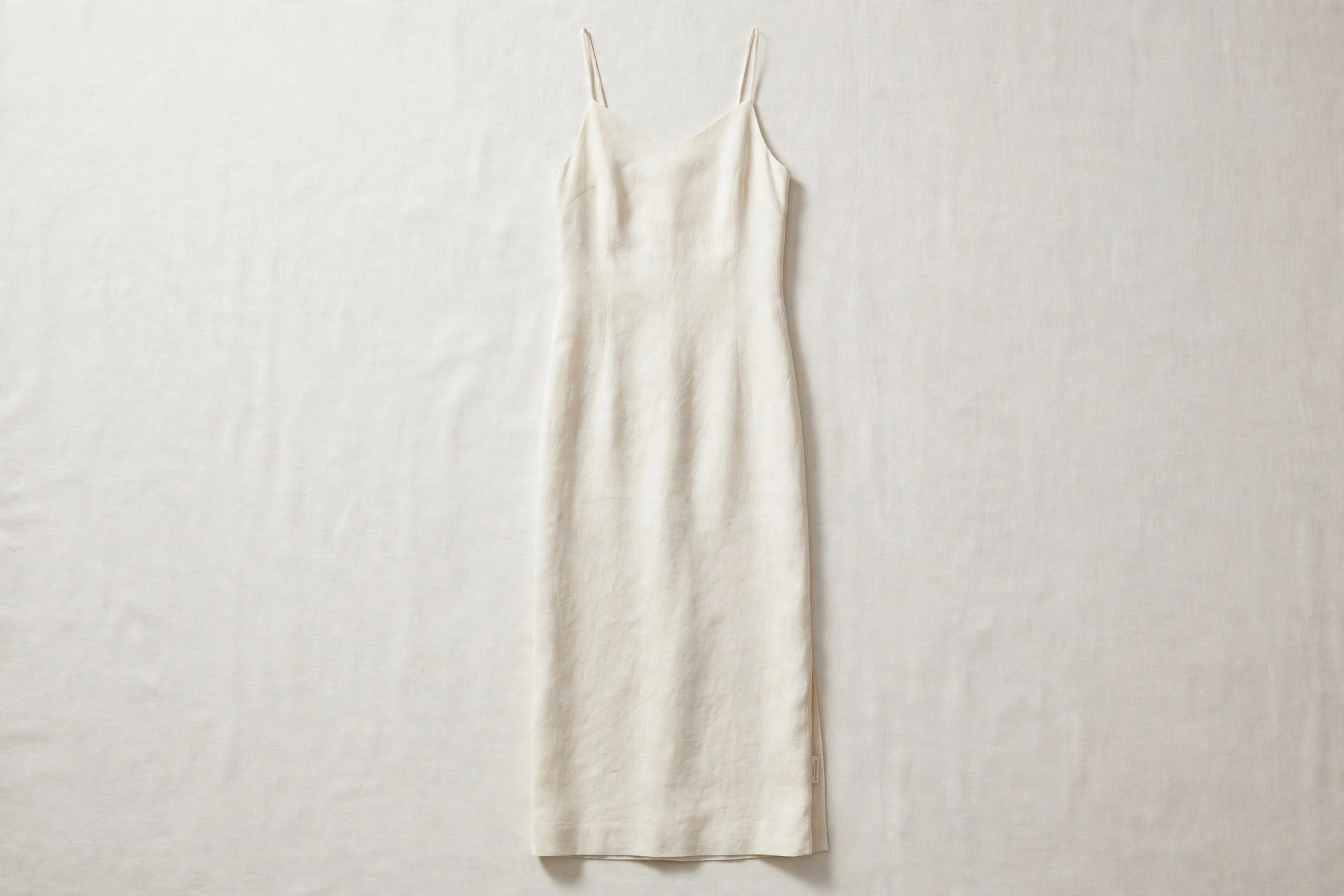
A column dress falls in a single straight line from the shoulders to the hem, neither nipped in nor flared out. It is named for architecture on purpose: like a column, it is one continuous vertical, and that unbroken line is the entire effect — the wearer reads taller, the outfit reads calmer, and the dress works at almost any level of formality depending on fabric. In this cluster of shaped and flared silhouettes, the column is the deliberate opposite: a dress that refuses to decorate the body's outline.
The confusion to clear first is the sheath. Our sheath dress guide covers the column's close cousin: a sheath is shaped — darted and seamed to follow bust, waist and hip closely. A column is straight — cut with only gentle ease, skimming rather than tracing. The sheath says tailoring; the column says line. Both are long and narrow, but they fit, move and flatter differently, and the distinction decides which one a given body enjoys wearing.
Who the Long Line Flatters
An unbroken vertical does the oldest trick in dressing: it lengthens. Petite wearers gain apparent height precisely because nothing — no waist seam, no flare, no horizontal break — interrupts the eye's travel. The shape is a natural home for a rectangle body shape, whose straight torso mirrors the dress's own geometry, and for an inverted triangle shape, where the column's even width from shoulder to hem keeps the frame in balance instead of emphasising the top.
Curvier bodies wear the column differently — as a skimming line rather than a traced one. The requirement is ease: the fabric must fall past the bust and hip without catching, which usually means a bias cut, a fluid knit, or a woven with a touch of stretch and enough weight to drop straight. A column that pulls horizontally at any point has stopped being a column; size for the widest point and let the rest fall. Belts, again, are not the fix — a sash worn loose at the hip is the one historical exception.
Fabric: The Whole Ballgame
With no seams doing visual work, fabric carries the column entirely. It needs weight and drape together: crepe, double-faced jersey, matte satin cut on the bias, and heavy viscose fall in the required unbroken sheet. Thin, clingy jersey shows every layer beneath and breaks the line at every seam of an undergarment. Very stiff fabrics stand away from the body and turn the column into a tube. Hold a candidate dress by the shoulders and watch it hang: you want a curtain, not a flag and not a cling-film.
Construction details worth checking: a long back vent or side slit is nearly essential in straight woven versions, or walking becomes a shuffle. Lining matters more than in flared dresses because there is nowhere for a lining's behaviour to hide. And because the silhouette is so plain, small quality signals — clean neckline finishing, matched seams, a properly weighted hem — are unusually visible. The column is minimal, never cheap-looking; the difference is entirely in execution.
Styling a Deliberate Blank Canvas
The column's plainness is an invitation: it is the silhouette that carries statement jewellery, a dramatic shoe, a textured clutch or a sculptural hairstyle without competition. For evening, a floor-length column in matte crepe with one strong accessory is a complete and very adult outfit. For daytime, ankle-length columns in knit fabrics pair with flat sandals or clean trainers and a long open layer — a duster or unbuttoned shirt — that continues the vertical rather than cutting it.
Neckline is the styling lever built into the dress itself. A high or boat neck keeps the column architectural; a deep V or a low scoop introduces a second, shorter vertical that opens the top of the line. Cold-shoulder and cut-out versions exist, but the purest columns let one decision — length, fabric or neckline — speak at a time. Fit check before anything else: raise your arms, sit, and stride. A column should permit all three without the hem migrating upward.
Common Questions
What is the difference between a column dress and a sheath dress?
Fit. A sheath is shaped with darts and seams to follow the bust, waist and hips closely. A column dress is cut straight with gentle ease, skimming the body in one unbroken vertical line. The sheath reads as tailoring, the column as a lengthening line — and a column needs a walking vent or slit where a sheath's shaping often allows more stride room.
Do column dresses suit petite women?
Very well, because the unbroken shoulder-to-hem line adds apparent height — nothing horizontal interrupts it. Keep the hem at or just above the ankle rather than pooling on the floor, choose fabrics that fall rather than stand away, and let the neckline sit open or high; both keep the vertical clean.
What fabric is best for a column dress?
A fabric with weight and drape together: crepe, heavy viscose, matte bias-cut satin or double-faced jersey. It should hang like a curtain when held by the shoulders. Avoid thin clingy jersey, which reveals everything beneath it, and very stiff cloth, which turns the straight cut into a rigid tube.
Dress & Skirt Silhouette Guides
Every dress and skirt silhouette guide in this cluster — the new guides plus the classic silhouettes already on Apparel Search — in alphabetical order:
- Women's Asymmetric Skirt
- Women's Bubble Dress
- Women's Circle Skirt
- Women's Cold Shoulder Dress
- Women's Empire Dress
- Women's Fit and Flare Dress
- Women's Prairie Dress
- Women's Prairie Skirt
- Women's Sheath Dress
- Women's Shift Dress
- Women's Skater Dress
- Women's Slip Dress
- Women's Surplice Dress
- Women's Swing Dress
- Women's Tea Length Dress
- Women's Tent Dress
- Women's Tiered Dress
- Women's Tiered Skirt
- Women's Tulip Skirt
- Women's Wrap Dress
- Women's Wrap Skirt
More to Explore on Apparel Search
Looking for Women's Clothing Stores?
This guide helps you choose women's column dresses. To browse where to buy, visit our womens clothing store directory, where you can find retailers that carry them.