Women's Wrap Dress Guide
A wrap dress is a dress that closes by wrapping one front panel across the other and tying at the waist or side, creating a V-neckline and an adjustable waist, in jersey and woven fabrics from day dresses to occasion styles.
Shop Women's Wrap Dress Now
Shop Women's Wrap Dress on Amazon Shop Women's Wrap Dress on eBayThe Amazon and eBay links on this page are affiliate links. If you make a purchase through them, Apparel Search may earn a commission.
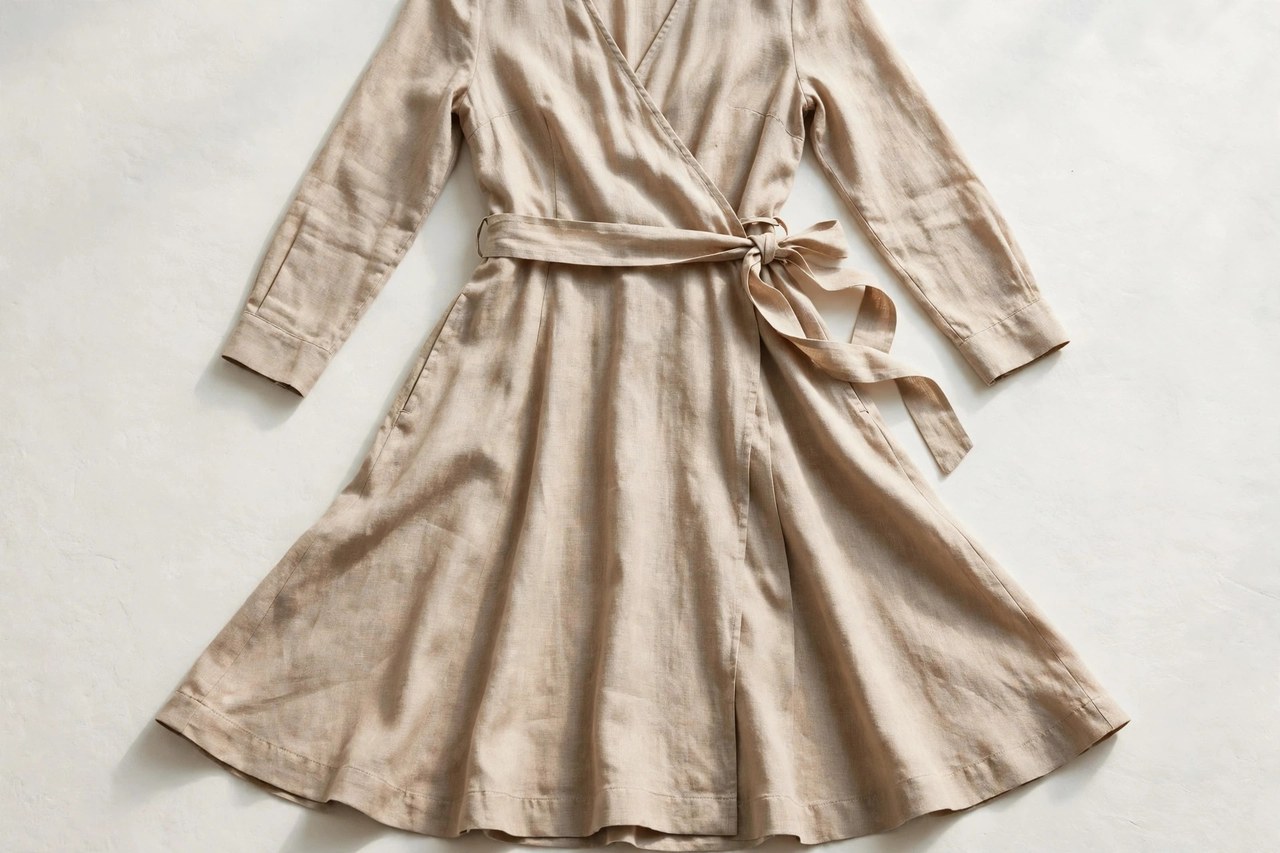
A wrap dress is a dress that closes by wrapping one front panel across the other and tying at the waist or side, creating a V-neckline and an adjustable waist, in jersey and woven fabrics from day dresses to occasion styles. The wrap dress is an adjustable garment, and this guide covers its mechanics: true wrap versus faux wrap construction, tie placement and security, neckline behaviour on different busts, and the fabrics that drape the wrap properly.
This guide covers wrap dress in the order a careful buyer needs it: what the product is made from, how it is constructed, how it should fit, how to choose it for real use, and how to care for it so it lasts. Apparel Search has published guides to women's clothing for decades, and this rebuilt page keeps the subject focused — measurable details, named materials and checks you can perform in a shop or on a parcel's arrival, rather than general fashion language.
Fabrics That Drape and Tie
Wrap garments live by drape: jersey knits (viscose, cotton, silk and synthetic) that flow and cling in measure, woven crepe and chiffon that float, soft cottons that hold a crisper line, and for shoulder wraps, wool, cashmere, silk and lace chosen by warmth and formality. The fabric is not one ingredient among many — in an unstructured or tie-closed garment it is most of the design.
Construction centres on the closure: ties of self fabric, their attachment points reinforced, edges finished to survive being pulled and knotted, and in true wraps a small inner fastening that anchors the underneath layer. A true wrap dress has no zip and opens completely flat — the fit is entirely the tie's work — while a faux wrap sews the crossover shut for the look without the adjustment; telling them apart in a listing saves returns. A wrap garment is only as good as its worst tie attachment — check the stitching where ties meet the garment before anything else.
Fit You Set Yourself
Wrap fit is adjustable by design, which moves the fitting question from size to setting: where the tie sits (natural waist versus hip), how firmly it is tied, and where the crossover falls on the bust. Fit it standing and seated, because a crossover that behaves standing can gape sitting, in woven fabrics especially.
Buy your regular size unless the design is deliberately fluid: the adjustability handles the fine tuning, but the shoulder, sleeve and length are cut to size and cannot be tied into place. Petite and tall wearers should check length and tie placement specifically — wraps forgive waist variation, not proportion.
Choosing True and Faux Wraps
Choose wrap dress in a fixed order: true versus faux construction (adjustability versus set-and-forget), fabric drape matched to occasion, tie security and neckline behaviour, and only then colour and print. In practice, rank these checks in the order your own use demands — frequency of wear first, then weather, washing facilities and budget — because that order differs by wardrobe, and it is the real reason two careful buyers can correctly choose differently from the same rail.
Judge price by fabric and finishing: a true wrap in quality jersey or crepe, with reinforced ties and clean edges, is a considered garment; a flimsy wrap whose ties tear at their stitching is a season's costume. The design is forgiving — the making should not need forgiveness.
Care for Draped Fabrics
Wash by the fibre: jerseys gently and dried flat or on padded hangers so the tie weight does not stretch them, woven crepes and silks by their labels. Store wraps folded or rolled rather than hung by their ties, which stretch under the garment's weight in the wardrobe.
Ties and edges are the maintenance points: press ties flat, re-stitch a loosening attachment early, and keep embellished or lace wraps in their own layer of the drawer. A wrap garment kept this way stays an adjustable, reliable piece for years.
Common Questions
What is the difference between a true wrap and a faux wrap dress?
A true wrap opens fully and fastens only with its ties, so the waist adjusts exactly and the dress doubles as a nursing- and travel-friendly design. A faux wrap is a fixed dress with a wrap-look front: it keeps its shape without retying but cannot be adjusted, and its neckline depth is fixed.
How do I keep a wrap dress's neckline secure?
Tie the waist firmly at your natural waist so the crossover is anchored, and choose a wrap point that suits your bust — deeper wraps need the tie higher. A small hidden snap or a camisole beneath are the standard fixes; jersey wraps sit closer than woven ones, which can gape when seated.
Which fabric makes the best wrap dress?
Fluid jersey is the classic: it drapes the crossover, moves with the tie adjustment and resists creasing, which is why the design became famous in jersey. Woven wraps in crepe or soft cotton give a crisper, more tailored line but less fit forgiveness.
Related Women's Guides
More to Explore on Apparel Search
Women’s Clothes Guide by Letter: Women's Clothes Directory T · Women's Fashion Directory U · Women's Clothes Directory V · Women's Clothing Directory X · Women's Clothes Directory Y · Women's Clothes Directory Z
Looking for Women's Clothing Stores?
This guide helps you choose women's wrap dress. To browse where to buy, visit our women's clothing store directory, where you can find retailers that carry them.