Women's Water Sports Shoes Guide
Women's water sports shoes are quick-draining footwear for kayaking, paddleboarding, sailing and shore sports: mesh or synthetic uppers that shed water, siped rubber outsoles that grip wet decks and rock, and secure fits that stay on in surf.
Shop Women's Water Sports Shoes Now
Shop Women's Water Sports Shoes on Amazon Shop Women's Water Sports Shoes on eBayThe Amazon and eBay links on this page are affiliate links. If you make a purchase through them, Apparel Search may earn a commission.
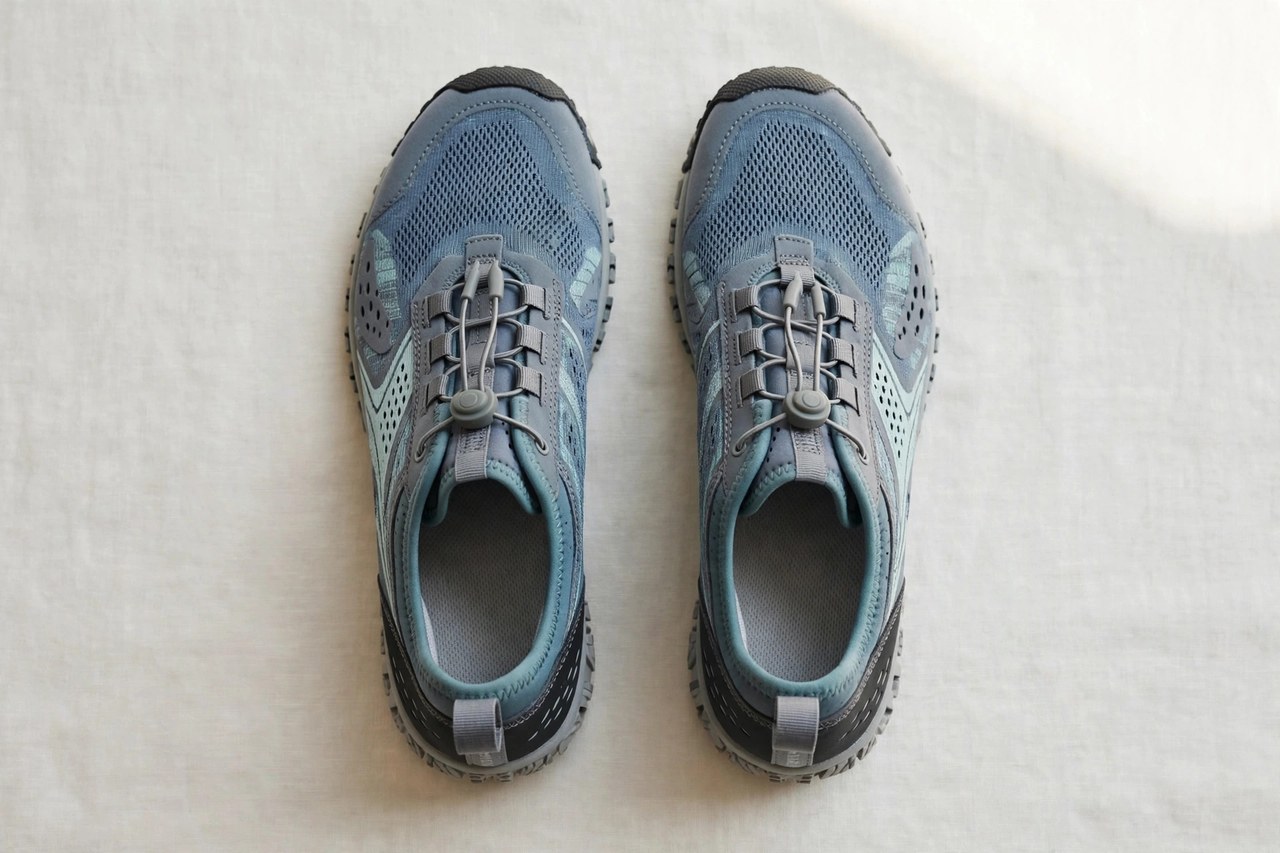
Women's water sports shoes are quick-draining footwear for kayaking, paddleboarding, sailing and shore sports: mesh or synthetic uppers that shed water, siped rubber outsoles that grip wet decks and rock, and secure fits that stay on in surf. Water rewrites the shoe rules — everything must drain, grip when soaked, and protect the sole from rock and shell — so this guide covers drainage ports, outsole siping, neoprene and mesh uppers, and the fit that keeps a shoe on in moving water.
This guide covers water sports shoes in the order a careful buyer needs it: what the product is made from, how it is constructed, how it should fit, how to choose it for real use, and how to care for it so it lasts. The focus here is on measurable details, named materials and checks you can perform in a shop or on a parcel's arrival, rather than general fashion language.
Materials That Work Wet
Water gear is built from materials chosen for behaviour when soaked: neoprene foam that insulates while wet, mesh and synthetic uppers that drain and dry, rubber outsoles cut with siping for wet grip, and hardware that will not rust. Cotton and ordinary foam are the enemies — both absorb water, stay heavy and degrade.
Construction is about water's paths: drainage ports placed where water pools, seams positioned away from flex points, closures that work with cold, wet hands. The outsole detail is siping: thin slits cut into the rubber that open under pressure and channel water away, the same principle as a boat shoe — a smooth-soled trainer on a wet deck is a fall waiting to happen. Judge water gear by holding it up to its working condition in your mind — every feature should answer the question of what happens in the water, not on the shelf.
Fit for the Water
Water gear fits closer than its dry-land equivalents, because water finds every gap: suits must seal without restricting breathing or circulation, and footwear must hold the foot when its materials are slick and the foot is wet. Fit in the state of use — wet, or over the socks and layers that will be worn.
Sizes run by measurement more honestly here than in fashion: torso length decides a suit more than dress size, and foot length in a water shoe matters with and without neoprene socks. Between sizes, water gear usually rewards the closer fit, within the limit of full movement and deep breaths.
Choosing by Water Temperature and Sport
Choose water sports shoes in a fixed order: the coldest water temperature honestly expected, the sport's demands (flexibility, abrasion, grip), fit and sealing, and only then colour and style. In practice, rank these checks in the order your own use demands — frequency of wear first, then weather, washing facilities and budget — because that order differs by wardrobe, and it is the real reason two careful buyers can correctly choose differently from the same rail.
Judge price by neoprene quality, seam construction and outsole compound: flexible, well-sealed gear costs more and works in colder water for more seasons. Cheap water gear fails in the direction of cold and lost footing — the two failures that matter in the water.
Rinsing, Drying and Storage
Rinse everything in fresh water after use: salt and chlorine degrade neoprene, rot stitching and corrode hardware. Dry in shade, inside out then right side out for suits, away from the sunlight that perishes rubber and neoprene alike.
Store suits hung on wide hangers or folded loosely, never compressed under weight, which creases neoprene permanently at the folds. Check seals, zips and drainage ports at the season's start; neoprene cement repairs small tears cheaply if they are caught before they run.
Common Questions
Can I just wear old trainers in the water?
Trainers absorb water, stay heavy, drain slowly and their foam midsoles degrade with repeated soaking; their tread is also designed for dry grip. A water shoe drains in seconds, grips wet surfaces with siped rubber, and protects the sole from sharp rock and shell — a different tool, not a marketing variant.
Should water shoes fit snugly?
Snugger than street shoes, because a loose shoe fills with water, shifts on the foot and pulls off in surf or mud. Look for a secure heel and an adjustable closure — bungee laces or a strap — and size for thin neoprene socks if you wear them.
How do I stop water shoes smelling?
Rinse them in fresh water after every use — salt and lake water grow odour fast — and dry them fully in air and shade before storage. A removable insole dries fastest; never seal wet water shoes in a bag or locker overnight.
Related Women's Guides
Photos

Looking for Women's Clothing Stores?
This guide helps you choose women's water sports shoes. To browse where to buy, visit our women's clothing store directory, where you can find retailers that carry them.