Women's Sports Sandals Guide
Sports sandals are open footwear built like equipment — adjustable straps, contoured footbeds and lugged soles made for trails, water and all-day walking.
Shop Women's Sports Sandals Now
Shop Women's Sports Sandals on Amazon Shop Women's Sports Sandals on eBayThe Amazon and eBay links on this page are affiliate links. If you make a purchase through them, Apparel Search may earn a commission.
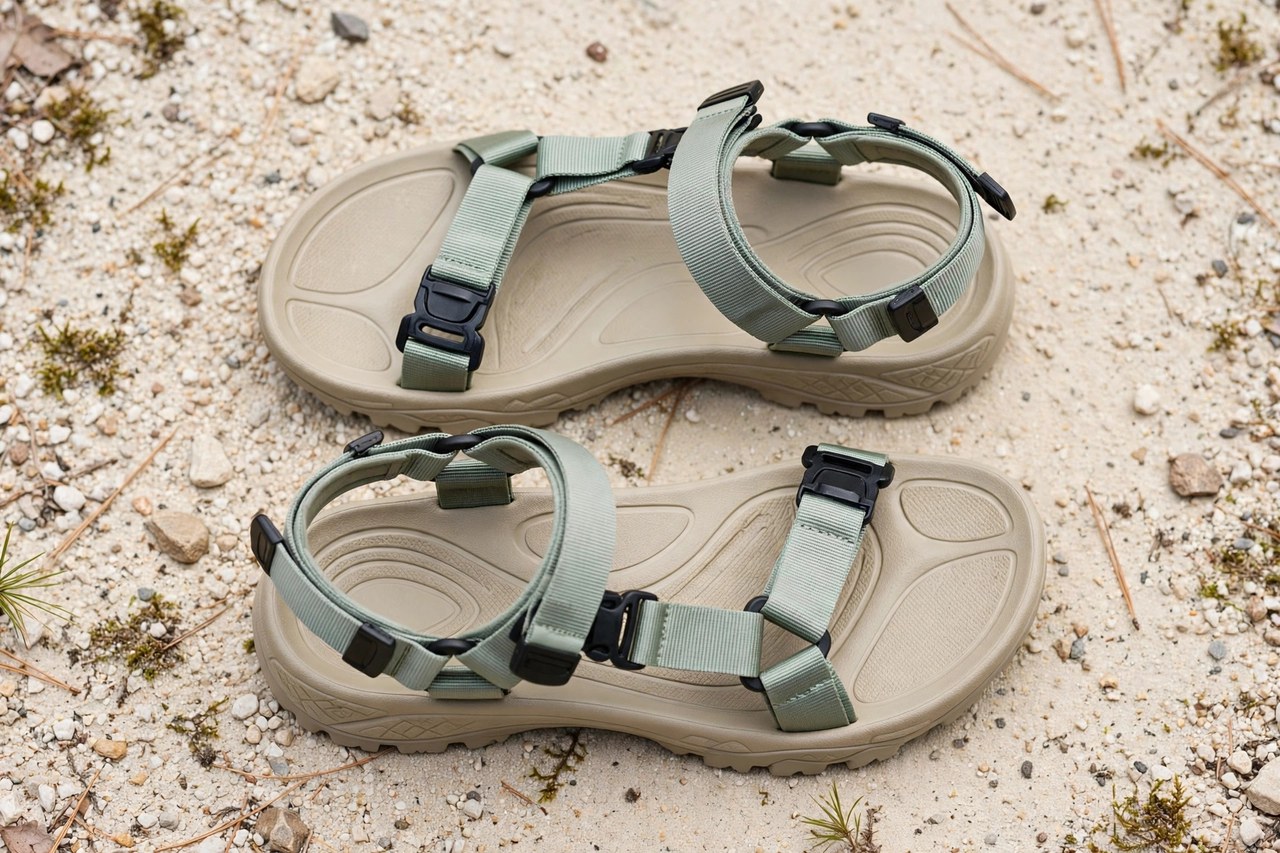
A sports sandal is an open shoe engineered the way a trainer is: multiple adjustable straps that lock the foot down, a contoured and cushioned footbed, and a rubber outsole with real tread. It exists for the days when a closed shoe is too hot and a fashion sandal is too fragile — hiking in summer, walking in and out of water, travel that mixes streets, shores and trails in a single afternoon.
This guide treats sports sandals as their own footwear category, distinct from both the dress sandal and the sports shoe. A good sports sandal is essentially a sports shoe with the upper replaced by a strap system. The questions here are how that strap system works, what footbed and sole features matter, and where the open design honestly reaches its limits.
The Strap System: How a Sandal Stays On
Everything depends on adjustment. A proper sports sandal adjusts at two or three points — across the toes, at the instep and around the heel — using hook-and-loop or buckle closures, so the sandal can be tuned to the foot rather than merely sized to it. A heel strap is non-negotiable for sport use: it is what stops the sandal sliding forward on descents and makes it safe for scrambling, cycling and water. Backless slides and toe-post styles, however rugged their soles, are camp and beach footwear, not sports sandals.
Strap materials split the range. Polyester or nylon webbing dries fast, resists stretching when wet and suits water sports; recycled webbing versions are now common. Leather straps look better and mold to the foot but suffer with repeated soaking. Padded strap linings prevent the webbing edge from sawing at skin on long walks. Test the system by adjusting it in the shop: if a strap cannot be tightened one-handed or its tail flaps loose, the design will annoy you daily.
Footbeds, Arches and Toe Protection
Footbeds range from flat EVA to deeply contoured anatomical footbeds with arch support, a heel cup and toe ridges that give the foot purchase inside the sandal. For all-day walking and travel, the contoured end of the range is worth its price: an open shoe offers no upper to stabilize the foot, so the footbed does the guiding. Cushioning compounds differ in feel — soft EVA for comfort, firmer foams for support on rock — and some sports sandals add a shank for torsional stiffness on uneven ground.
The front of the sandal is its own design debate. Open-toe sports sandals drain and dry fastest and feel freest in water. Closed-toe sports sandals add a rubber toe bumper that protects against rocks, roots and stubbing — the injury that ends hikes — and are the sensible choice for trails and for children-adjacent chaos. Hybrid water-shoe sandals blur into footwear for kayaking and canyoneering, where drainage ports, siped soles and total foot enclosure take the category to its technical extreme.
Soles, Water and Real-World Use
Outsoles borrow from hiking: lugged rubber for trail grip, with shallower, siped patterns — thin slits that channel water — on models meant for wet rock and boat decks. A sports sandal sole should flex at the ball and resist twisting; a sandal that folds in half lengthwise will exhaust your feet on a long walk. Traction ages visibly, so the sole is also the replacement clock: when the lugs are polished smooth, the sandal has retired whether the straps agree or not.
The honest limits deserve stating. Sports sandals expose skin to sun, grit and knocks; they are not for cold weather, formal settings or trails where ankle support and debris protection are genuinely needed. Grit under a strap is the category's everyday enemy — rinse feet and sandals at trail water stops. Within their territory, though — summer trails, rivers, beaches, hot cities, long travel days — a well-fitted sports sandal outperforms every closed shoe on comfort per gram carried.
Fit and Care
Fit a sports sandal with the straps doing their job: heel seated in the heel cup, toes clear of the front edge by a small margin, straps snug without marks. Walk stairs or a slope in the shop if you can; a sandal that creeps forward downhill will do it all day on a trail. Feet swell in heat, which is exactly this sandal's season, so afternoon fitting and adjustable straps both earn their keep. Size follows your trainer size in most brands, but the strap adjustment range matters more than the number.
Care is washing, mostly. Webbing sandals can be scrubbed with mild soap and water and air-dried; this also removes the sunscreen and grit that make straps abrasive. Machine washing is permitted by some makers in a mesh bag on gentle, but hand washing is always safe. Dry away from direct heat, store straps fastened so hook-and-loop does not collect lint, and deodorize footbeds with sun and air. Looked after this way, a good sports sandal is a multi-summer tool, re-soled by replacement only when its tread — its whole reason for existing — is finally gone.
Related Women's Guides
More to Explore on Apparel Search
- Women's Shoes
- Women's Footwear
- Fashion
- Clothing Retail Stores
- Fashion News
- Fashion Designers
- Popular Brands
- Apparel
- Women's Clothing Stores
- Women's Clothing Wholesalers
- Women's Fashion
- Women's Shoe Stores
- Women's Footwear Guide
- Women's Shoes
- Footwear Definitions
- Shoe Search
- Fashion Videos
- Fashion Calendar
- Celebrity Fashion
- Fashion Designer Directory
- Women's Athletic Shoes
- Women's Boots
- Women's Casual Shoes
- Women's Dress Shoes
- Women's Sandals
- Women's Trend Shoes
Women’s Clothes Guide by Letter: Women's Apparel Directory N · Women's Clothes Directory O · Women's Clothing Directory P · Women's Apparel Directory Q · Women's Fashion Directory R · Women's Clothes Directory T
Looking for Women's Clothing Stores?
This guide helps you choose women's sports sandals. To browse where to buy, visit our women's clothing store directory, where you can find retailers that carry them.