Women's Slingback Sandals Guide
A slingback sandal pairs an open sandal front with a strap that crosses only around the back and sides of the heel — warm-weather footwear that still stays on.
Shop Women's Slingback Sandals Now
Shop Women's Slingback Sandals on Amazon Shop Women's Slingback Sandals on eBayThe Amazon and eBay links on this page are affiliate links. If you make a purchase through them, Apparel Search may earn a commission.
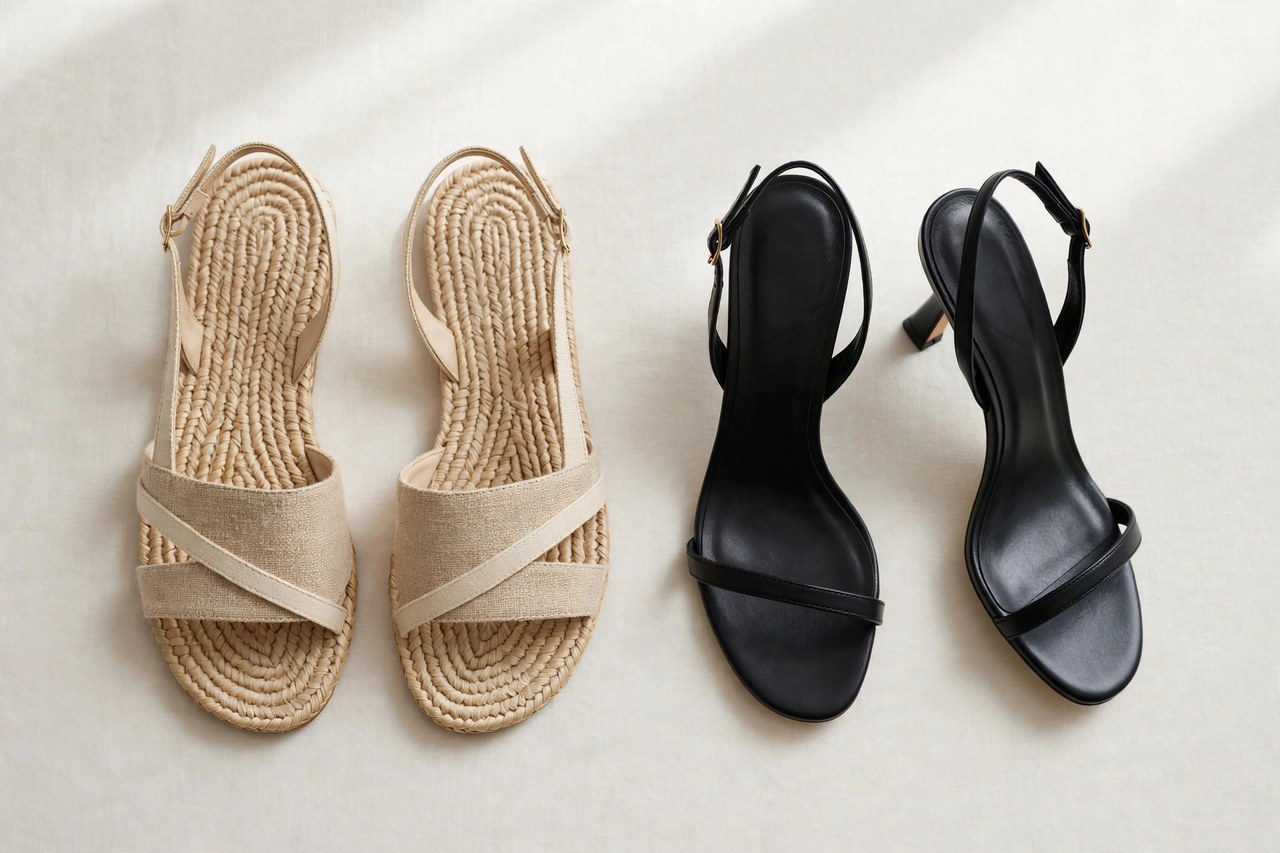
A slingback sandal starts from the sandal side of the family. A sandal is an open type of footwear, a sole held to the foot by straps over the instep and sometimes around the ankle, worn mostly in warmer climates or warmer parts of the year to keep feet cool and dry. Add the defining slingback strap — a strap that crosses only around the back and sides of the ankle and heel, rather than encircling the ankle completely — and you have the slingback sandal.
The result is an open, airy shoe with one practical advantage over slides and thongs: it is secured at the heel, so it walks like a shoe while ventilating like a sandal. This guide covers the open construction specifically. The closed-toe, pump-front version of the slingback has its own page on this site; here the focus is the sandal form, from flat everyday pairs to formal styles dressed up for occasions.
Open Fronts: Straps, Thongs and Slides With a Back
Slingback sandal fronts vary as much as ordinary sandals do. Strappy fronts with two or more bands suit dressier pairs and hold the forefoot well. Single-band fronts read minimal and modern. Thong and toe-post fronts with a heel strap added are the secure version of a flip-flop line, and peep-toe and open-toe closed vamps borrow from shoe design while keeping the sandal's open heel and light sole. Each front changes how much of the holding the heel strap must do.
Because the front is open, sizing shows immediately: toes should sit inside the footbed outline, neither spilling over the front edge nor leaving a long empty platform ahead of them. On strappy versions, check that straps lie over the foot without crossing a toe joint, the spot where a thin strap will saw during a long walk. Openness is the comfort promise of this category, and a strap in the wrong place quietly cancels it.
Heels for Sandal Wear: Flat, Wedge and Dressy
Flat slingback sandals are the everyday form, easy with dresses, cropped trousers and shorts. Wedges add height on a stable base that handles lawns and decks, and espadrille-wrapped wedges are a summer staple. Heeled slingback sandals are the formal end, ranging from subtle black designs to bright colors made for striking outfits; the styling advice is simple — color-block slingbacks with a black suit or a white dress, and keep the rest of the outfit simple to get the most out of the shoes.
Heel height changes the strap's job. On a heel, the foot slides forward and the slingback strap carries real tension, so heeled versions need a strap that sits high and firm on the heel, ideally adjustable. On flats, the strap is mostly a keeper, preventing the heel lift and slap of a backless shoe. Either way, an elastic insert or buckle on the strap is worth having: feet swell in heat, and this category is worn precisely in heat.
The Strap Itself: Fit, Buckles and Elastic
The slingback strap pulls back into an almost V-shape, similar to a slingshot — the comparison the companion shoe guide makes, and the source of the name. It crosses behind the heel and anchors at both sides of the foot. A good strap stays up without being tight: you should fit one finger behind it, and it should not slip down under the heel when you walk, the single most common complaint in this whole category.
Fixes are built into better pairs. Buckles give exact adjustment. Elastic sections give with each step and forgive swelling, though elastic tires with age and is the first part to check on an older pair. A strap lined in a soft material resists the rubbing that a bare edge causes at the Achilles. If a strap slips on a pair you own, a tailor or cobbler can shorten it slightly or add a heel grip pad inside it.
Care and When to Choose a Slingback Sandal
Choose a slingback sandal when you want a sandal's coolness with a shoe's security: warm-weather workplaces with open-shoe dress codes, events on grass where a backless slide wanders, travel days when one pair must handle walking and dinner. The closed slingback shoe, covered separately, is the cooler-weather and more formal sibling; the sandal owns the summer half of the idea entirely.
Care centers on the strap and the footbed. Wipe footbeds after wear, since open sandals collect dust and sunscreen directly against the sole; condition leather straps so they do not dry and crack at the fold behind the heel; and store pairs with the strap buckled loosely in shape rather than crushed in a pile. Check elastic inserts each spring. Looked after that way, the strap that defines the shoe will keep defining it for several summers.
Related Women's Guides
Photos

Looking for Women's Clothing Stores?
This guide helps you choose women's slingback sandals. To browse where to buy, visit our women's clothing store directory, where you can find retailers that carry them.