Women's Slingback Shoes Guide
A slingback shoe is a closed shoe at the front — typically a low-vamp pump — held at the back by a strap that crosses only behind the heel.
Shop Women's Slingback Shoes Now
Shop Women's Slingback Shoes on Amazon Shop Women's Slingback Shoes on eBayThe Amazon and eBay links on this page are affiliate links. If you make a purchase through them, Apparel Search may earn a commission.
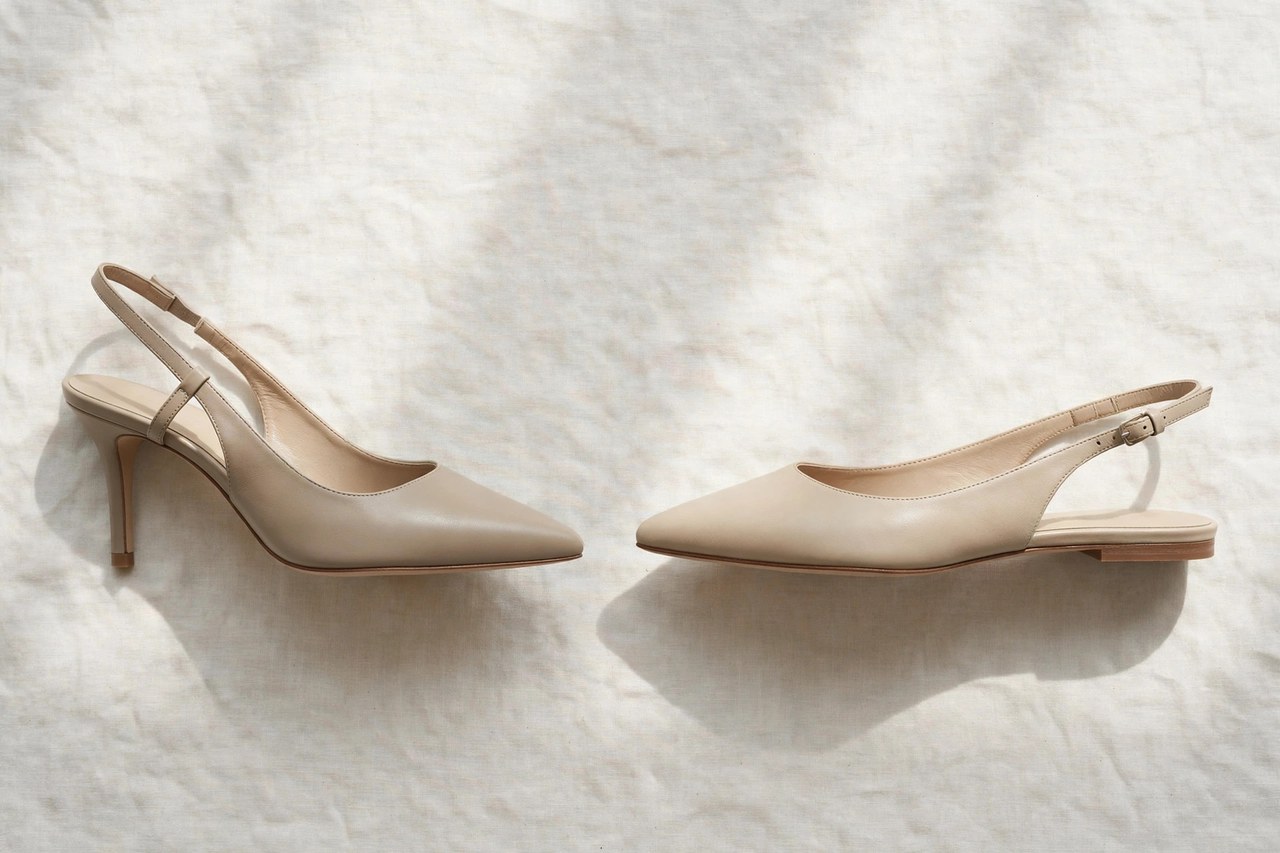
Where the slingback sandal is an open sandal that gained a heel strap, the slingback shoe is a shoe that lost its closed heel counter. The definition is precise: a slingback is footwear characterized by an ankle strap that crosses only around the back and sides of the ankle and heel, whereas a typical ankle strap completely encircles the ankle. It typically has a low vamp front similar to classic full shoe heels, which is why the category reads as a pump with an open back.
That combination — a covered, structured front and a strapped, open back — makes the slingback shoe the dressier and more season-spanning of the two slingback pages on this site. It suits offices and occasions where an open sandal is too exposed, while staying lighter and cooler than a fully closed pump. This guide covers the closed-front construction, heel forms, and the strap fitting that decides whether a pair is a pleasure or a nuisance.
Fronts: Pumps, Points and Flats
The classic front is the pump vamp: a low-cut, closed toe, pointed or almond in shape, with the clean line of a court shoe. Kitten-heel and mid-heel slingback pumps are the enduring work-and-occasion form. Pointed-toe flats carry the same idea at ground level and have become a warm-weather office staple, giving a polished front with no heel at all. Peep-toe slingbacks open just the front tip and sit between this page and the sandal page.
Two-tone cap-toe versions are the category's signature classic, with a contrasting toe cap on a plain body, but the construction underneath is what matters: a closed front means toe room, vamp height and width all fit like a shoe, not a sandal. Try slingback shoes late in the day, when feet are at full size, and check that the vamp does not cut across the toes — an open back forgives nothing at the front, because the foot can only move one way.
The Strap: Buckles, Elastic and the Slipping Problem
The strap on a slingback shoe may feature a buckle on the side of the foot, though many styles simply use a fixed or elasticated strap. It pulls back into almost a V-shape, like a slingshot, crossing over or beside the ankle bone on each side. On a closed shoe the strap is structural, not decorative: it is the only thing keeping the heel of the shoe with the heel of your foot at every step.
A slipping strap is this category's known fault, and it is usually a fit fault. The strap should sit above the heel bone's narrowest point and hold with one finger's ease. Too long, and it slides down and the shoe flops; too short, and it saws at the Achilles. Prefer buckled or otherwise adjustable straps when buying, choose elastic with some firmness left in it, and know that a cobbler can shorten a strap or add a padded heel grip cheaply — worth doing on a good pair.
Heels and Occasions
Heel forms run from the flat through the kitten heel to the stiletto and block heel. Block heels suit longer wear and less forgiving floors; stilettos are evening shoes. Because the back is open, a slingback heel feels less enclosing in summer heat than a closed pump at the same height, which is why the style returns every warm season for weddings, offices and events where bare sandals would underdress the outfit.
Slingbacks are often a dressy sandal or pump for a night out, and the shoe versions hold that role year-round. They pair with tailored trousers without swallowing the ankle, with dresses at any hem from knee to floor, and with suits where the open back keeps a formal outfit from looking heavy. In cool weather they bridge the gap between pumps and boots, though they offer no weather protection and are fair-weather footwear by design.
Fit Checks and Care
Walk a hard floor, not just carpet, when trying slingback shoes. Listen for the slap of a loose heel, watch whether the strap migrates downward within a dozen steps, and check that your toes are not being pushed against the closed front by the strap's forward pull. Between sizes, the strap's adjustment range usually settles it: buy the size whose strap fits mid-buckle, leaving room to tighten as leather relaxes.
Care for the strap as carefully as the upper. Store slingbacks with the strap loosely buckled and a shoe tree or tissue in the closed front, so neither half collapses. Keep elastic-strap pairs out of prolonged heat, which perishes elastic, and have worn heel tips replaced before the metal core shows. Treated as the two-part shoe it is — pump in front, strap behind — a slingback shoe keeps both halves working for years.
Related Women's Guides
Photos

More to Explore on Apparel Search
- Women's Dress Shoes Guide
- Women's Shoes
- Women's Footwear
- Fashion
- Fashion Designers
- Popular Brands
- Apparel
- Women's Clothing Stores
- Women's Clothing Wholesalers
- Women's Fashion
- Women's Shoe Stores
- Women's Footwear Guide
- Women's Shoes
- Footwear Definitions
- Women's Athletic Shoes
- Women's Boots
- Women's Casual Shoes
- Women's Sandals
- Women's Trend Shoes
Looking for Women's Clothing Stores?
This guide helps you choose women's slingback shoes. To browse where to buy, visit our women's clothing store directory, where you can find retailers that carry them.