Women's Sports Shoes Guide
Sports shoes are the general athletic footwear category — and the first rule of the category is that different sports load the foot in different directions.
Shop Women's Sports Shoes Now
Shop Women's Sports Shoes on Amazon Shop Women's Sports Shoes on eBayThe Amazon and eBay links on this page are affiliate links. If you make a purchase through them, Apparel Search may earn a commission.
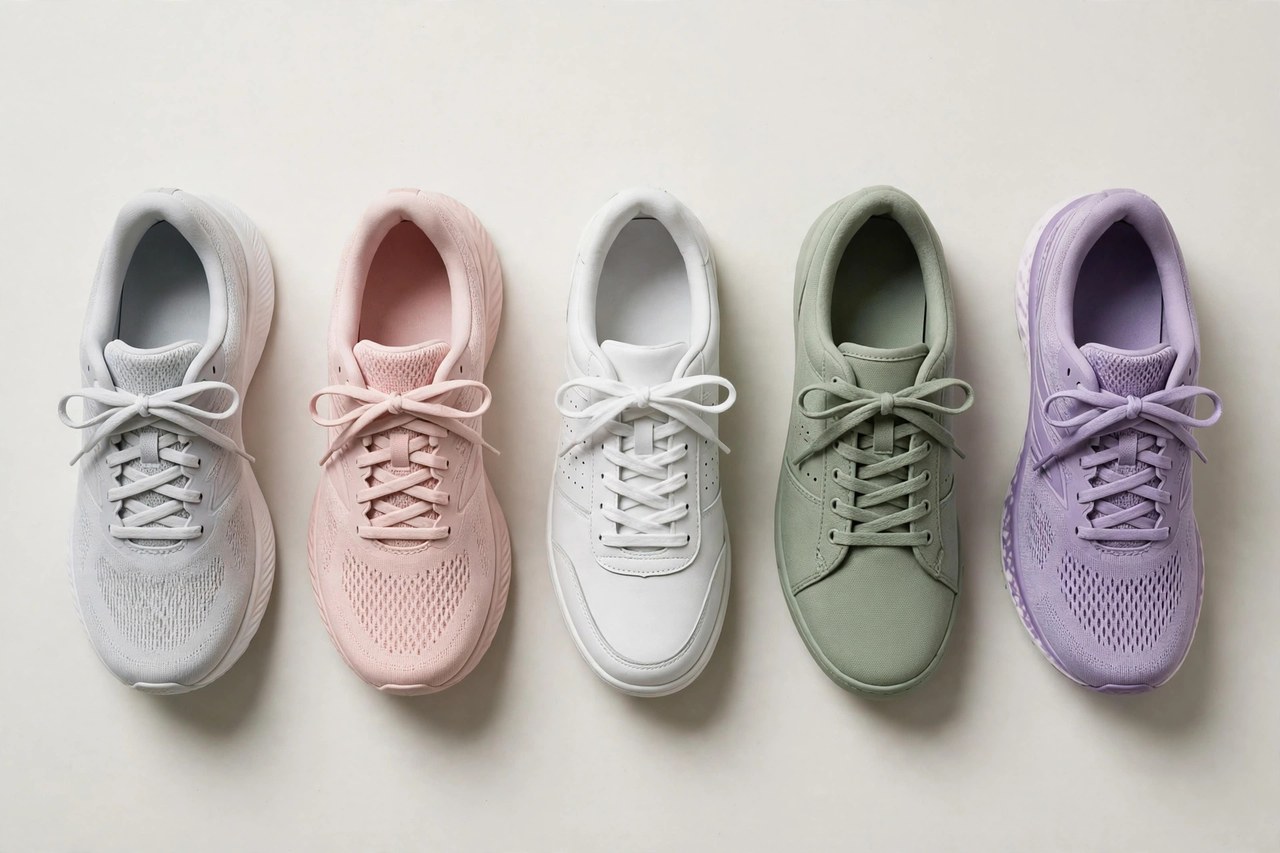
Sports shoes is the umbrella term for footwear built for athletic activity: trainers, runners, court shoes, cross-trainers and their many specialized descendants. This page works as a crossroads and an umbrella guide, pointing readers onward to sports sandals, to cleats, and — for those who prefer watching — to fan shoes, and explaining how the main families differ, and why using the right family's shoe is a safety matter, not a marketing one.
The governing fact is directional. Running moves the foot forward in a straight line; court sports slam it sideways; field sports add studs and uneven ground. A shoe's cushioning, support and sole are all arranged around one of those patterns. A great shoe for the wrong sport is not a neutral choice — it is an unsupported ankle or a worn-out knee waiting for its moment — so this category begins with matching shoe to sport.
The Main Families
Running shoes are built for forward motion: cushioned heels, flexible forefoots and a smooth roll from landing to toe-off, in neutral, stability and cushioned variants. They are poor at lateral work — their tall, soft heels can roll in side-to-side drills. Court shoes for tennis, volleyball and basketball invert the priorities: flatter, firmer soles, reinforced sides and durable toe drags for lateral movement and sudden stops, with ankle-height options in basketball.
Cross-trainers are the compromise family, moderately cushioned and moderately stable, made for gym variety — classes, machines, light lifting and short runs in one session. Walking shoes emphasize flexible cushioning at a slower rhythm. Beyond the gym, the category shades into cleats for field sports, approach and trail shoes for rough ground, and sport-specific designs for everything from weightlifting (flat, hard soles) to aerobics. Own the compromise if your training is genuinely mixed; own the specialist if one sport dominates your week.
Cushioning, Stability and the Sole
Inside every sports shoe, the midsole does the cushioning — foams of different densities that absorb impact and return a little energy — while the outsole provides grip patterned for the sport's surface. Stability features firm up the inner side of the shoe for feet that roll inward; motion-control and maximal cushioning mark the spectrum's ends. Heel-to-toe drop, the height difference between heel and forefoot, changes how the leg loads and is worth noting when switching between shoe types, since calves and Achilles tendons notice it before you do.
The upper has become engineering too: engineered mesh for breathability and fit, knit uppers that wrap the midfoot, and overlays placed to lock the heel in lateral movement. Judge a sports shoe by bending and twisting it: it should flex at the ball of the foot, resist twisting through the middle, and cup the heel firmly. A shoe that folds like a slipper offers a slipper's support, whatever its price tag or its colorway's fame.
Fit and Sizing for Sport
Athletic fit differs from street fit on purpose. Feet swell and slide forward during exercise, so sports shoes need a thumb's width of space in front of the longest toe, a heel that does not lift when you move, and width enough that the forefoot can spread under load. Women's sports shoes in better lines are lasted on a women's form — narrower heel, different arch geometry — rather than downsized from men's models, and the difference is most audible at mile six or set three.
Shop in the afternoon, in your training socks, and test both feet; most people have one foot measurably larger, and the shoe must fit that one. Match the shoe to the actual training surface as well as the sport — road, track, court and trail soles are not interchangeable. If you are starting a new, higher-impact program, new and correct shoes are the cheapest injury insurance in the whole endeavor, a fact coaches state plainly and orthopedists confirm expensively.
Rotation, Replacement and Care
Sports shoes wear out invisibly. Midsole foam compresses and loses its cushioning long before the upper looks tired, which is why runners track mileage — roughly 300–500 miles is the usual service life — and why gym shoes should be replaced when aches that used to be absent start arriving, or when the sole's tread and the shoe's stance look worn crooked. Rotating two pairs on alternate days lets each midsole recover between sessions and measurably extends both pairs' useful lives.
Care is restraint: untie rather than kick off, air dry away from heat, pull insoles out after wet sessions, and keep sports shoes out of the washing machine and dryer, which attack foams and glues. Wash mud off outsoles so tread keeps its design. And when a pair retires from sport, it retires honestly — demote it to gardening if you like, but do not let a dead trainer back into a workout because it still looks presentable. In this category, looks are the last thing to go and the least reliable guide.
Related Women's Guides
More to Explore on Apparel Search
- Women's Casual Shoes Guide
- Women's Shoes
- Women's Footwear
- Women's Shoe Stores
- Women's Footwear Guide
- Women's Shoes
- Footwear Definitions
- Shoe Search
- Women's Softball Cleats
- Fashion Videos
- Fashion Calendar
- Celebrity Fashion
- Women's cleats
- Fashion Designer Directory
- Women's Athletic Shoes
- Women's Boots
- Women's Dress Shoes
- Women's Sandals
- Women's Trend Shoes
Women’s Clothes Guide by Letter: Women's Apparel Directory N · Women's Clothes Directory O · Women's Clothing Directory P · Women's Apparel Directory Q · Women's Fashion Directory R · Women's Clothes Directory T
Looking for Women's Clothing Stores?
This guide helps you choose women's sports shoes. To browse where to buy, visit our women's clothing store directory, where you can find retailers that carry them.