Women's Slide Sandals Guide
A slide sandal is backless and open-toed — one or more straps over the front of the foot, nothing at the heel, and on or off in a second.
Shop Women's Slide Sandals Now
Shop Women's Slide Sandals on Amazon Shop Women's Slide Sandals on eBayThe Amazon and eBay links on this page are affiliate links. If you make a purchase through them, Apparel Search may earn a commission.
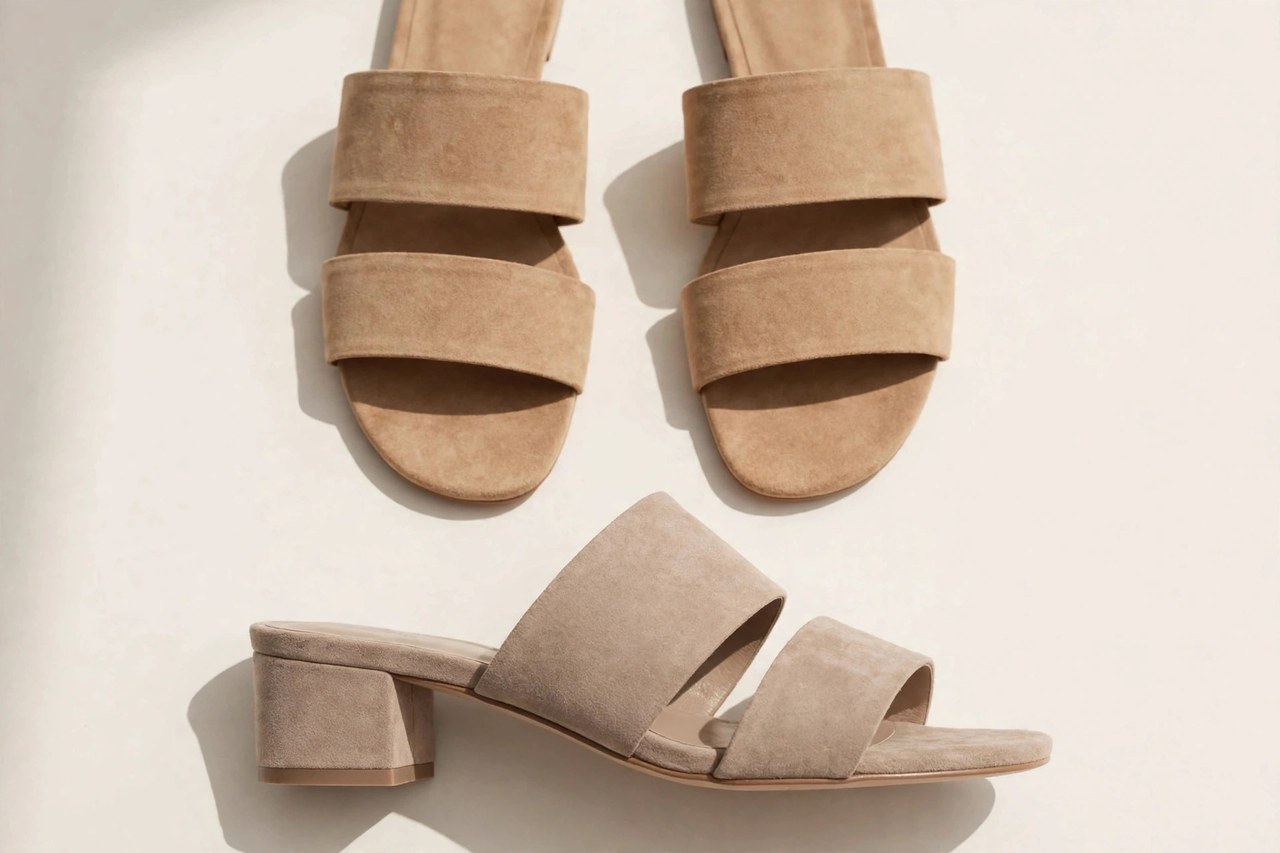
A slide sandal is defined by what it leaves out: the heel strap. Slides are backless and open-toed, held on by a single strap or a sequence of straps across the toes and the lower half of the foot. They are essentially an open-toed mule, and that comparison is exact — step in, and the shoe is on, with no buckle, lace or ankle fastening between you and the door.
That simplicity is the whole appeal, and also the whole fitting problem. Because nothing anchors the heel, a slide stays on only if its straps and footbed fit the front of your foot correctly. This guide covers slide construction, strap patterns, heel heights from flat to high, footbed shapes, and when a slide is the right sandal and when a secured style serves better.
Strap Patterns and How They Hold
The classic slide has one wide band across the forefoot, which distributes pressure and suits wider feet, though a band cut too high can rub the ankle bone when you walk. Two-strap slides split the hold between toes and instep and often add buckles or hook-and-loop adjusters, with a real convenience: adjustable straps let one pair fit both bare summer feet and feet in thin socks.
Other uppers include crisscross bands, woven straps, knotted fabric and a single narrow strap on dressier versions. Coverage varies widely — some slides cover nearly the entire foot from ankle to toe, others are a minimal pair of straps. More coverage means more hold and more sun protection; less coverage means a lighter, cooler shoe that asks more of your toes to keep it in place on stairs and slopes.
Heels, Footbeds and Soles
Slides are made flat-heeled, high-heeled and everywhere in between. Flat slides include the molded pool slide and the leather everyday slide; low block heels and kitten heels dress the shape up; heeled mules in slide form are an evening shoe. The heel choice changes the fit as much as the look, because a raised heel pitches weight forward onto the straps, so a heeled slide needs a slightly higher, firmer band than a flat one.
Footbeds range from dead flat to anatomically contoured, with a shaped arch, heel cup and toe ridge that give the foot something to settle into. Anatomical contours provide additional cushioning, and they also reduce the toe-gripping that makes flat slides tiring. For wet environments, choose a textured rubber outsole with real traction, since a smooth slide on a wet deck is a fall waiting to happen.
Materials and Where Slides Work Best
Slides come in leather, synthetic, fabric and molded rubber or EVA, in leather and synthetic options and a wide range of colors. Molded slides are the waterproof choice for pool, beach and garden, rinse clean, and forgive sunscreen. Leather slides mold to the foot over a week of wear and dress up well, but water darkens them and wet leather straps stretch, so keep them for dry ground.
Slides excel at short, flat, unhurried walking: resorts, errands, around the house, to and from the car. They are the wrong shoe for long sightseeing days, uneven trails or anywhere you might need to run, because the unsecured heel slaps, shifts and can step out entirely on a curb. Many walkers keep both: slides for ease, and a strapped sandal for distance. Knowing which day you are having is the entire selection skill.
Fit and Care
Fit a slide by the straps, not the length alone. Your heel should sit fully on the footbed without hanging off the back, the band should hold snugly without pinching, and you should be able to walk a carpeted lap without your toes clawing to keep the shoe on. If you shuffle, the straps are too loose or the footbed too flat; if the band leaves a deep mark in ten minutes, it is too tight or cut too low.
Care follows material. Rinse molded slides and let them air dry out of direct sun, which warps EVA. Wipe leather slides, condition the straps occasionally, and store slides flat rather than hanging them by a strap, which stretches the very part that holds them on. Check buckle and hook-and-loop closures each season, since on a slide the closure is not decoration — it is the whole fastening system the shoe has.
Related Women's Guides
Photos

Looking for Women's Clothing Stores?
This guide helps you choose women's slide sandals. To browse where to buy, visit our women's clothing store directory, where you can find retailers that carry them.