Women's Tent Dress Guide
Fitted only at the shoulders, then falling free in a widening triangle — the tent dress is the most forgiving silhouette in this cluster, and the airiest.
Shop Women's Tent Dresses Now
Shop Women's Tent Dresses on Amazon Shop Women's Tent Dresses on eBayThe Amazon and eBay links on this page are affiliate links. If you make a purchase through them, Apparel Search may earn a commission.
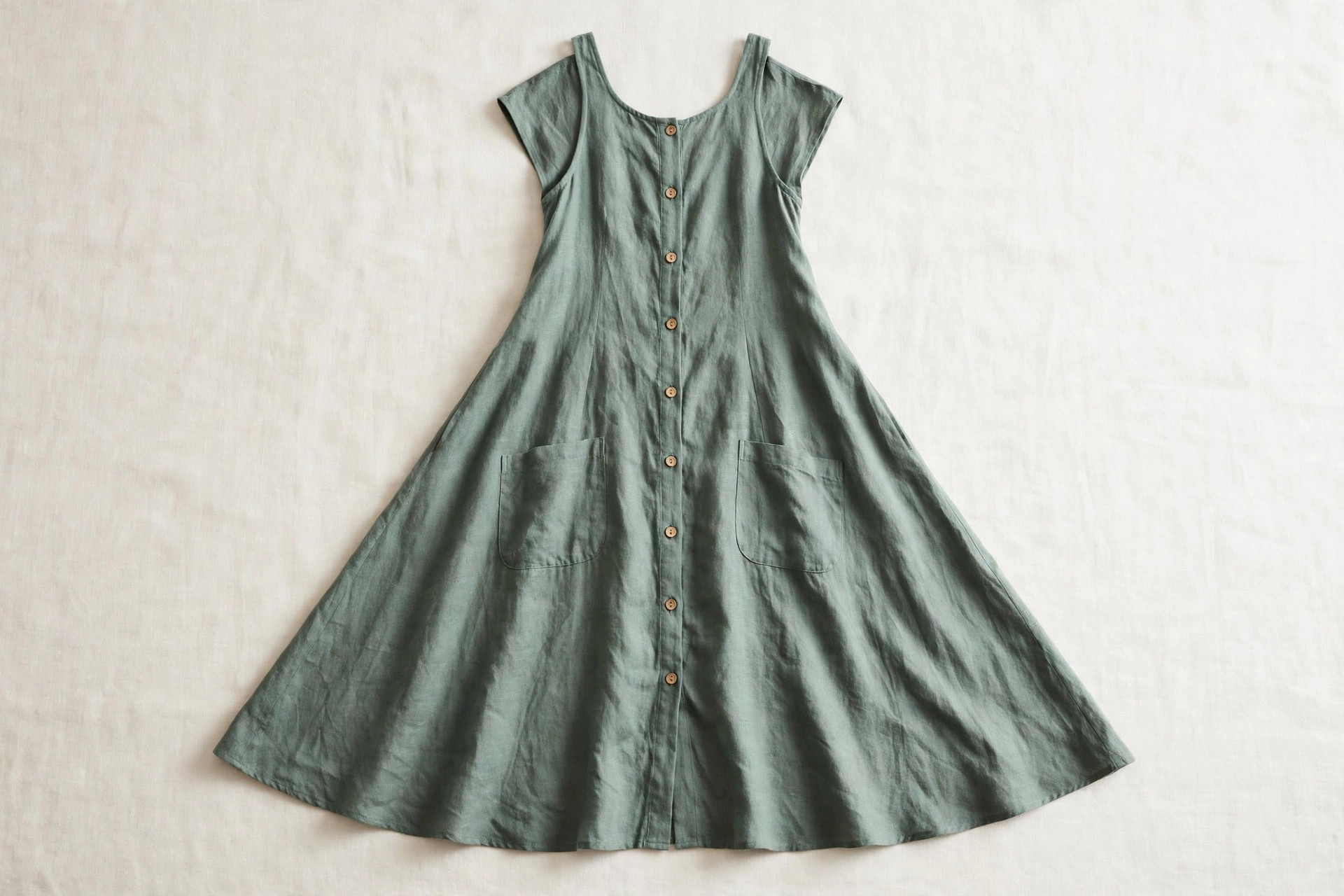
A tent dress hangs from the shoulders and touches almost nothing else. Narrow — sometimes fitted — across the shoulders and bust, it releases immediately into a widening triangle of cloth that stands away from the waist, hips and legs entirely, exactly like its namesake shelter. There is no waist seam, no belt line, no shaping below the yoke. Among all the silhouettes in this cluster, the tent is the purest expression of one idea: a dress as a shape worn around the body, not on it.
Its direct ancestor is the trapeze dress Yves Saint Laurent designed for Dior in 1958, building on Balenciaga's barrel and sack lines of the decade before. The trapeze and the tent are near-identical in cut — 'trapeze' is the couture name, 'tent' the plainer retail one. The shape resurfaces whenever fashion wants ease and air: 1960s minis, 1990s slip-adjacent versions, and today's long, swishing summer dresses are all the same triangle at different lengths.
Tent, Trapeze, Shift and Swing: Sorting the Loose Dresses
Four loose silhouettes get confused constantly. A shift falls fairly straight with modest ease — it suggests the body's line without touching it. A tent flares dramatically from high on the chest, far wider than a shift at the hem. A swing dress usually adds a waist seam or a fitted bodice before its full skirt — see our swing dress guide — so it defines the top half in a way a tent never does. The tell is always the same: find where the dress last touches the body. For a tent, that point is the shoulders.
Length decides whether a tent reads as a dress at all. Above the knee, the triangle shows enough leg to keep the proportion lively. At midi and maxi lengths the shape becomes a column of moving fabric — elegant in fluid cloth, but it needs the cloth to move: a stiff maxi tent can read as literal camping equipment. When in doubt, shorter or softer is the safer side of this silhouette.
Who Wears It Best
The tent's freedom is functional as well as visual. It skims an apple body shape without a waistband crossing the midsection, accommodates a changing or pregnant body gracefully, and creates no pressure points anywhere — a large part of its lasting appeal in hot climates. Because nothing is defined, the dress flatters by drape and movement rather than by fit, which suits anyone who prefers their clothes unconstructed.
Proportion is the one real risk. The triangle adds visual width at the hem and can swallow a petite frame or make a tall frame read monumental. Fixes are simple and effective: choose lengths above the knee or a cropped midi, prefer fabrics that collapse rather than stand out, and keep necklines open — a V or scoop at the top of the tent lets the eye find the person inside the shape. The body-shape styling guide covers this balancing logic in full.
Fabrics, Movement and Styling
A tent dress is a fabric decision before it is anything else. Fluid rayon, crepe, soft cotton voile and jersey make the triangle swing and settle — the dress should visibly move a second after you stop walking. Crisp poplin and linen make it architectural and summery, standing away in a clean A. Avoid very stiff cloth in long lengths, and check any fully lined version: a lining cut narrower than the shell will fight the flare and pull the hem out of shape.
Styling follows the geometry: the dress is wide, so everything else stays narrow — slim sandals or pointed flats, a small cross-body bag worn short, jewellery close to the neck and ears. Belts are the one forbidden shortcut; a belted tent is no longer a tent, just a badly-fitted dress with surplus cloth bunched at the waist. If you want waist definition, choose the swing or fit-and-flare silhouettes from this cluster, which are built for it.
Common Questions
What is a tent dress?
A dress fitted only at the shoulders that falls free in a widening triangle, touching neither waist nor hips. It descends from the 1958 trapeze dress — trapeze is the couture name for essentially the same cut. The hem is far wider than the top, and the silhouette is defined by drape and movement rather than fit.
What is the difference between a tent dress and a shift dress?
Degree of flare. A shift hangs fairly straight with gentle ease, loosely suggesting the body's shape. A tent dress releases high on the chest into a dramatic A-line triangle, much wider at the hem and touching only the shoulders. If the hem could shelter something, it is a tent; if it follows you at a distance, it is a shift.
Are tent dresses good for apple shapes?
Yes — they are one of the easiest silhouettes for an apple shape, because nothing crosses or defines the midsection and the fabric falls straight past it. Keep the length above the knee or in fluid fabric at longer lengths, and choose an open neckline so the width reads as airiness rather than bulk.
Dress & Skirt Silhouette Guides
Every dress and skirt silhouette guide in this cluster — the new guides plus the classic silhouettes already on Apparel Search — in alphabetical order:
- Women's Asymmetric Skirt
- Women's Bubble Dress
- Women's Circle Skirt
- Women's Cold Shoulder Dress
- Women's Column Dress
- Women's Empire Dress
- Women's Fit and Flare Dress
- Women's Prairie Dress
- Women's Prairie Skirt
- Women's Sheath Dress
- Women's Shift Dress
- Women's Skater Dress
- Women's Slip Dress
- Women's Surplice Dress
- Women's Swing Dress
- Women's Tea Length Dress
- Women's Tiered Dress
- Women's Tiered Skirt
- Women's Tulip Skirt
- Women's Wrap Dress
- Women's Wrap Skirt
More to Explore on Apparel Search
Looking for Women's Clothing Stores?
This guide helps you choose women's tent dresses. To browse where to buy, visit our womens clothing store directory, where you can find retailers that carry them.