Women's Skater Dress Guide
A fitted top, a high waist seam and a short circle skirt borrowed from ice-skating costumes — the skater dress is the fit and flare at its youngest and most wearable.
Shop Women's Skater Dresses Now
Shop Women's Skater Dresses on Amazon Shop Women's Skater Dresses on eBayThe Amazon and eBay links on this page are affiliate links. If you make a purchase through them, Apparel Search may earn a commission.
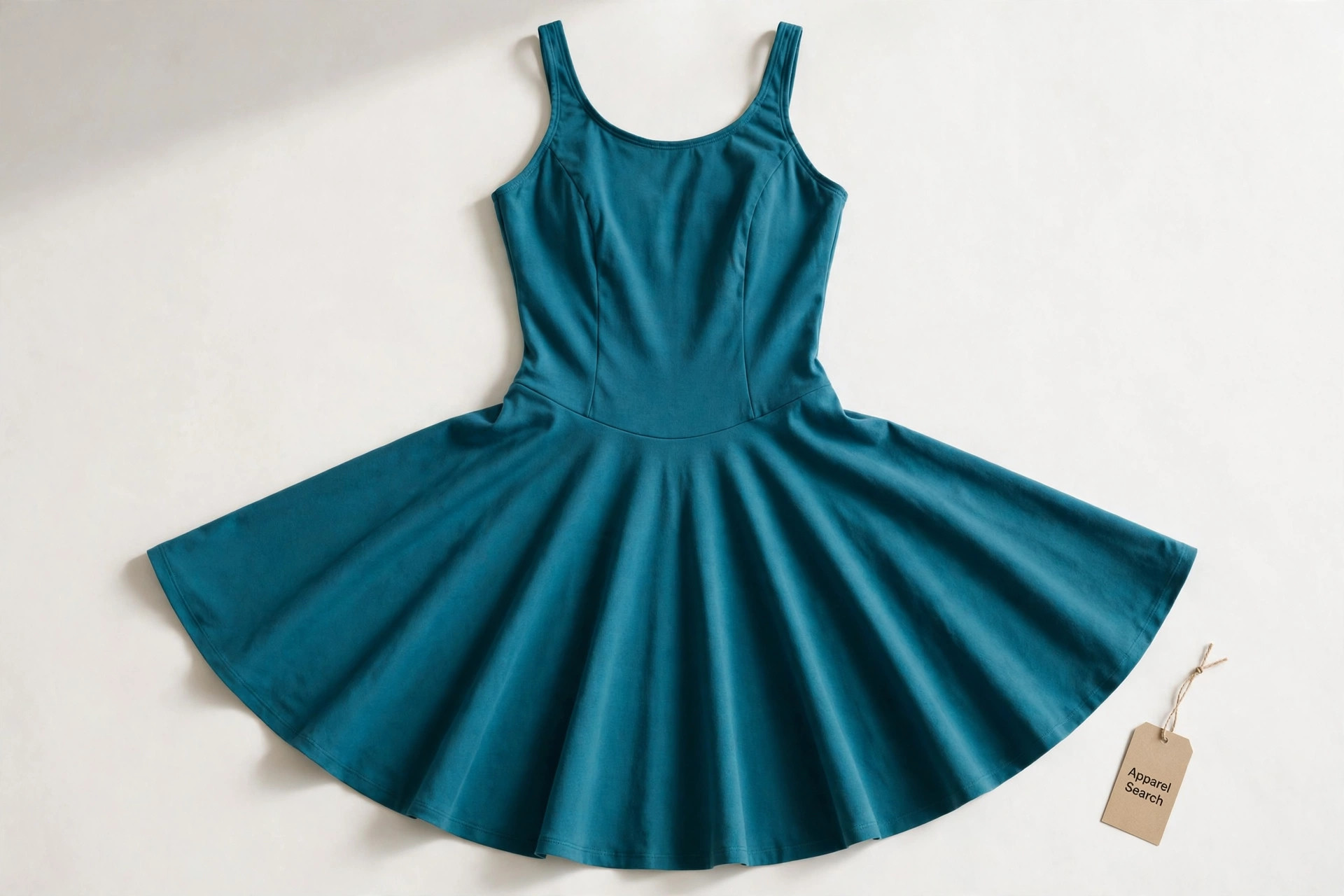
A skater dress is a short fit and flare: a close-fitting bodice, a seam at the natural waist, and a flared skirt cut as a half or full circle that ends above the knee — most often mid-thigh to just above the knee. The name comes from figure skating, where competition dresses pair a secure fitted top with a short, free skirt that moves with spins without impeding them. Fashion borrowed the costume wholesale in the early 2010s and never gave it back.
The reason it stayed is practical. The skater is the easiest one-piece dress in the modern wardrobe: no tailoring appointments, no special underpinnings, usually in a knit that pulls on over the head, and the silhouette flatters by construction — waist marked, hips unmeasured, legs shown. It is the gateway silhouette of this whole cluster: the dress women buy first, from which the longer fit and flare, swing and circle-skirt styles follow naturally.
The Circle Skirt Does the Work
A skater skirt is cut as a true circle (or half circle) with a hole at the centre for the waist, which is why it falls in even, rippling folds and lifts into a full disc when you turn. That geometry creates the fit checks unique to this dress: the hem should ripple evenly all the way around, the skirt should not pull toward any seam, and the waist seam must sit level — a circle skirt attached crookedly spirals as it hangs and never sits straight on the body.
Length is the skater's defining variable and its one real risk. Mid-thigh versions are the sporty classic; just-above-the-knee versions read noticeably more polished and suit more settings. Because a circle skirt lifts as it flares, length that looks modest standing still shortens in motion and in a seated position — the fitting-room rule is to sit, cross your legs, and bend before judging. Any skater intended for work or formal settings should pass all three tests with margin.
Who It Flatters
The skater's waist seam and forgiving skirt make it the cluster's most diplomatic dress. On a pear body shape the skirt floats over the hip while the fitted top keeps the proportions tidy. On a rectangle body shape the contrast between bodice and circle manufactures a waist. Petite frames benefit most of all: the short length shows leg, the proportions stay compact, and nothing about the dress overwhelms. Our guide to picking clothes for your body shape places the skater among the most reliable all-rounders.
Bust and shoulder variations tune the fit further. Cap sleeves and boat necks widen the top line to balance fuller hips; racerback and sleeveless versions keep it athletic; long-sleeved skaters in ponte carry the silhouette through winter with tights and boots. The one body note: because the waist is genuinely fitted, very stretch-dependent versions can read casual — a structured ponte or scuba skater holds a shape closer to the tailored end of the family.
Fabrics and Styling, Day to Evening
Skater dresses live in knit fabrics: jersey for the soft everyday version, ponte for structure, scuba and neoprene for the sculptural party version that stands out from the leg in sculpted folds. Velvet skaters own the winter party season. Woven versions exist but need zips and precise waist fitting, losing the pull-on ease that defines the style — check which you are buying, because the care and fit expectations differ completely.
Styling is a study in one dress, many registers. Trainers and a denim jacket make it a weekend uniform; ankle boots and tights take it through autumn; heeled pumps, a clutch and one piece of jewellery make the ponte version evening-legal. Belts are rarely needed — the waist seam is already the emphasis — but a narrow belt can sharpen a jersey version. Compare the slip dress for the opposite evening strategy: bias and fluidity instead of structure and flare.
Common Questions
Why is it called a skater dress?
Because the silhouette comes from figure-skating costumes: a secure, fitted bodice and waist with a short circle skirt that flares freely during spins and jumps. Fashion adopted the shape in the early 2010s as an everyday dress, keeping the fitted top and short flaring skirt but using ordinary dress fabrics like jersey, ponte and scuba.
What is the difference between a skater dress and a fit and flare dress?
Length, fabric and register. A skater dress is the short version — above the knee, usually in stretch knits, casual to smart-casual in feel. Fit and flare is the parent category, covering longer lengths, structured wovens and formal versions. Every skater dress is a fit and flare; not every fit and flare is a skater dress.
How long should a skater dress be?
Anywhere from mid-thigh to just above the knee — and the right point depends on use. Because the circle skirt lifts in motion, judge length seated and bending, not just standing. Just-above-the-knee lengths suit work and formal settings; mid-thigh lengths are the sporty, casual classic.
Dress & Skirt Silhouette Guides
Every dress and skirt silhouette guide in this cluster — the new guides plus the classic silhouettes already on Apparel Search — in alphabetical order:
- Women's Asymmetric Skirt
- Women's Bubble Dress
- Women's Circle Skirt
- Women's Cold Shoulder Dress
- Women's Column Dress
- Women's Empire Dress
- Women's Fit and Flare Dress
- Women's Prairie Dress
- Women's Prairie Skirt
- Women's Sheath Dress
- Women's Shift Dress
- Women's Slip Dress
- Women's Surplice Dress
- Women's Swing Dress
- Women's Tea Length Dress
- Women's Tent Dress
- Women's Tiered Dress
- Women's Tiered Skirt
- Women's Tulip Skirt
- Women's Wrap Dress
- Women's Wrap Skirt
More to Explore on Apparel Search
Looking for Women's Clothing Stores?
This guide helps you choose women's skater dresses. To browse where to buy, visit our womens clothing store directory, where you can find retailers that carry them.