Apple Body Shape: How to Dress It
Fullness carried through the bust and middle, with a less defined waist and often slimmer legs: how to recognize an apple shape and dress it with length, drape and clean lines.
Shop Apple Body Shape Clothing
Shop on Amazon Shop on eBayThe Amazon and eBay links on this page are affiliate links. If you make a purchase through them, Apparel Search may earn a commission.
What an Apple Shape Is
An apple body shape — also called an oval or round shape — carries its fullness through the torso: a fuller bust, a rounded stomach and a waist that is as wide as, or wider than, the hips. The hips are often comparatively narrow, the seat flatter, and the legs frequently slim and well shaped. People with an apple shape tend to gain weight in the abdominal area first, as our original body shape guide noted, and many apples say their best features are their bust, shoulders and legs — the dressing strategy below is built around exactly those.
Be careful with older advice that calls the apple an inverted triangle; an earlier version of our own umbrella page used the terms interchangeably, and they are not the same. An inverted triangle is broad at the shoulders with a comparatively defined waist and narrow hips, and it can take structured, fitted tops that an apple usually finds uncomfortable. Apple dressing is about skimming the middle, not cinching it.
How to Identify and Measure for It
Measure your bust, natural waist and hips. You are likely an apple if your waist measurement is equal to or larger than your bust and hips, or if there is very little difference between waist and hips and your fullness sits high, around the stomach rather than the hips. In the fitting room, the tell-tale sign is tops and dresses that fit the bust but pull or strain across the stomach, while trousers fit the hips but need more room at the waistband.
Shop tops and dresses by your bust and midsection measurements rather than the size you wear in trousers — many apples wear a size larger on top than on the bottom. Look for size charts that list a waist measurement for tops, and prefer brands whose waist grading is generous. When you measure your waist, measure at the fullest part of your stomach as well as at the natural waist; the larger of the two is the number a fitted garment actually has to clear.
What to Wear: Features That Flatter
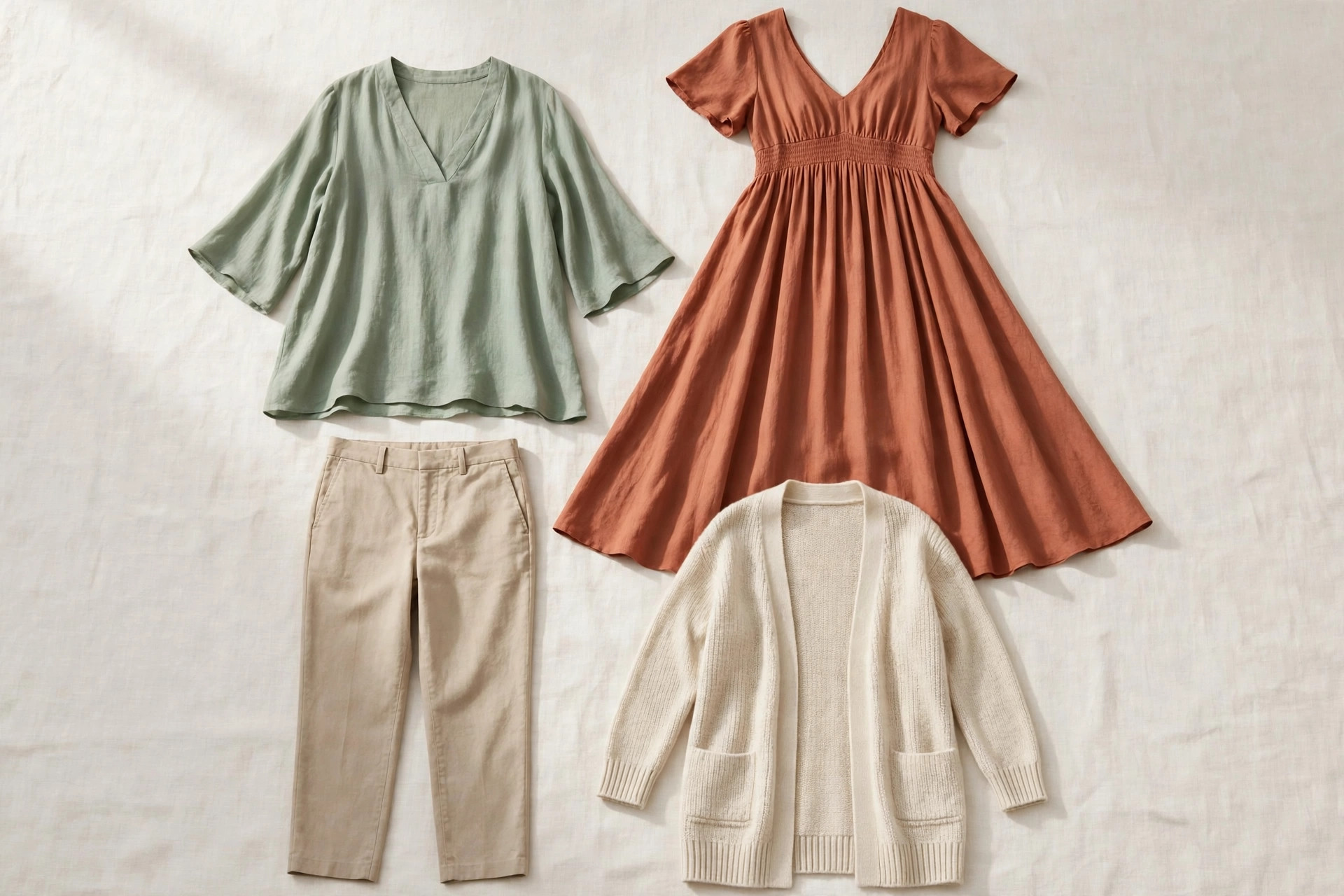
Focus on clothes that skim the body rather than cling to it — the core advice from our original guide, and still the right one. Flowy tops and dresses, empire lines that fall from just under the bust, A-line tunics, wrap tops worn looser rather than tied tight, and tops with ruching or soft draping across the stomach all create a long, unbroken line through the middle. V-necklines and open necks lengthen the torso and draw attention to the face and shoulders; our original guide also suggested drawing attention to the shoulders, and a well-cut shoulder line does more for an apple than any detail at the waist.
Structure helps when it sits in the right places: a blazer or long cardigan worn open creates two vertical lines that frame the torso and visually narrow it, and layering in general builds a flattering silhouette for this shape. On the bottom half, straight-leg and slim trousers that show off slimmer legs, worn with a top that ends below the stomach, keep proportions in balance. Belts and scarves, suggested in our original guide to create the illusion of a waist, work best worn loosely at the high waist or used at the neck and hips — a tight belt at the widest point of the stomach does the opposite of its job.
Denim, Dresses and Swim for Apple Figures
In denim, choose a mid or high rise with a wide, comfortable waistband and some stretch, in straight-leg or slim fits that show your legs; a higher rise worn under flowing tops gives a smooth base. Compare rises in the women's denim fits guide below. For dresses, empire-waist and A-line styles that fall from the bust, and shift dresses in fabrics with body, are the reliable shapes. For swim, look for ruching, draping and wrap-front one-pieces, tankinis with flowing tops, and shirring that creates texture across the middle rather than a flat, shiny surface.
What to Wear
- Empire-waist and A-line dresses that fall from under the bust
- Flowing V-neck tunics and tops with ruching or soft drape at the stomach
- Long open cardigans and blazers that frame the torso in vertical lines
- Straight-leg and slim trousers that show slimmer legs
- Mid and high-rise jeans with wide, stretch waistbands
- Detail at the neckline and shoulders; scarves worn at the neck
What to Avoid
- Tight belts and cinching at the widest point of the stomach
- Clingy, thin fabrics and shiny finishes across the midsection
- Boxy tops that end at the widest point and add width without length
- Low-rise trousers that sit under the stomach and create a break there
- Large pockets, pleats and bulky detail at the waist and stomach
Body Shape Guides
Related Apparel Search Guides
Common Questions
Is an apple shape the same as an inverted triangle?
No, although older pages sometimes confused them. An apple carries fullness through the bust and stomach with a waist as wide as the hips. An inverted triangle is broad at the shoulders and bust but narrower through the waist and hips. Apple dressing skims the middle; inverted triangle dressing adds volume at the hips.
Should an apple shape wear a belt?
A belt can work, but placement is everything. Wear it loosely at the high waist, under the bust, or over an open cardigan — never cinched tightly at the widest point of the stomach, which divides the torso at exactly the place you want one long line. Many apples do better with seams and drape than with belts at all.
What dress style suits an apple body shape best?
Empire-waist and A-line dresses that fit at the bust and fall freely from under it. They give the stomach room without adding bulk, and they show off the bust and legs. Wrap dresses worn with a softer, looser tie are another good option.
Body Shapes: Body Shapes Guide | Handbags for Body Types | Women's Clothes Guide