Women's Cover-Up Swimwear Guide
From pool to promenade — the layer that turns a swimsuit into an outfit.
Shop Women's Swim Cover-Ups Now
Shop Women's Swim Cover-Ups on Amazon Shop Women's Swim Cover-Ups on eBayThe Amazon and eBay links on this page are affiliate links. If you make a purchase through them, Apparel Search may earn a commission.
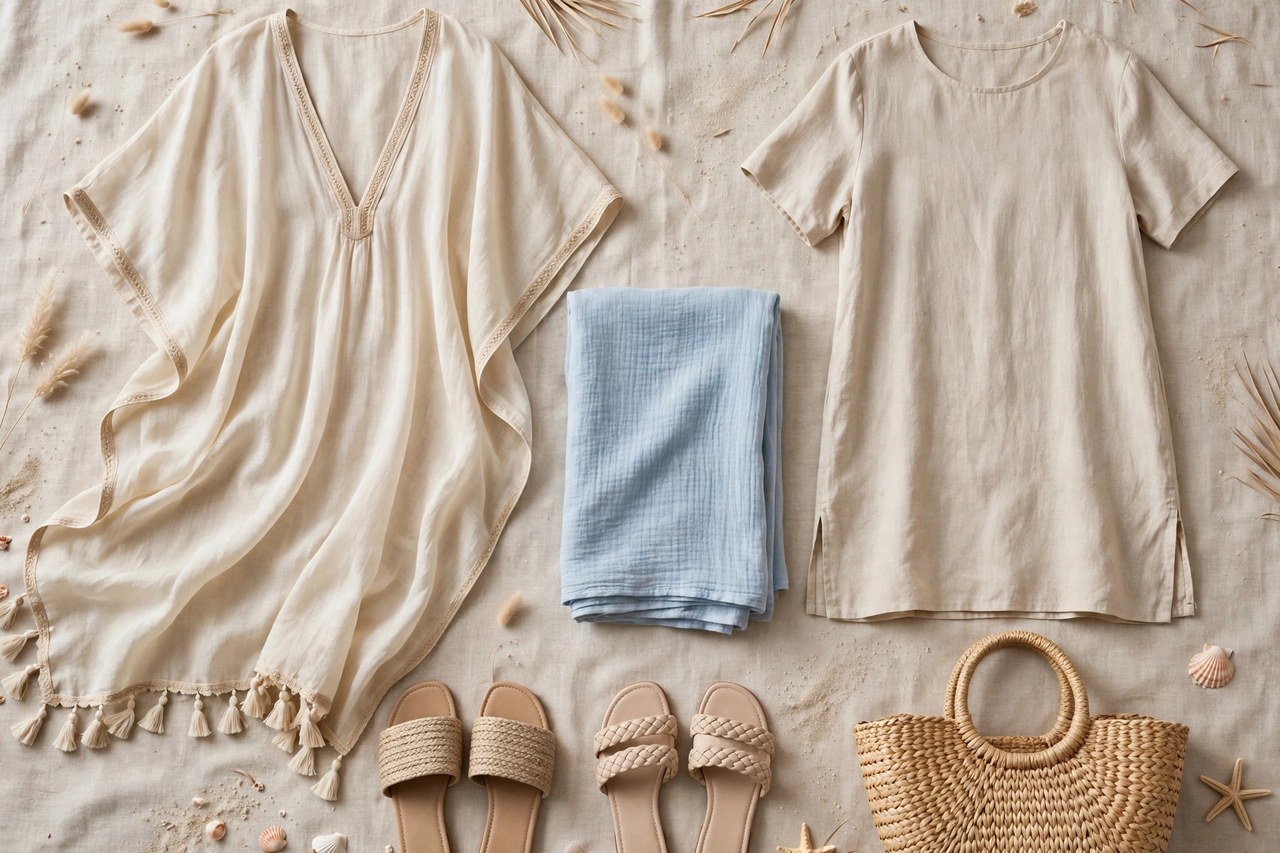
A swim cover-up is the hardest-working piece in a beach bag: it provides sun coverage and modesty over a swimsuit, dries quickly after a swim, and — chosen well — looks polished enough for a beach cafe, hotel lobby, or seaside stroll without a full change of clothes. The family includes wrap sarongs, flowing kaftans, neat tunics, shirt dresses, rompers, and purpose-made swim dresses, in fabrics from sheer chiffon to opaque cotton voile. Presented as products — folded kaftans, draped sarongs, tunics laid flat with sandals and a beach bag — they promise effortless transitions, and the right one delivers exactly that. The wrong one clings when wet, turns transparent unexpectedly, or looks like nightwear the moment you leave the sand. This guide compares the main styles, explains fabric behavior, and helps you pick coverage that matches how you actually spend a beach day.
Styles Compared: Sarong to Swim Dress
The sarong or pareo is the most versatile: a flat rectangle of fabric tied as a long or short skirt, a halter dress, or a wrap top, packing to almost nothing and drying fastest of all. Kaftans offer the most coverage and drama, with wide sleeves and ankle or knee lengths that suit resorts and sun protection; belted versions read as dresses in their own right. Tunics hit the practical middle — pull-on ease, hip to thigh length, often with side slits for movement — and work over both swimsuits and shorts. Shirt-dress cover-ups button through, so they double as light dresses away from the beach entirely. Rompers and shorts sets suit active beach days with cycling, volleyball, or long walks built in, while swim dresses — cover-ups cut like real dresses with shaping — flatter most and transition furthest, happily worn to lunch with proper sandals. Choose by transition distance: the further you roam from your towel, the more dress-like your cover-up should be.
Fabrics: Sheer, Opaque, and Quick-Dry
Fabric decides both look and honesty of coverage. Sheer chiffon, mesh, and open crochet-style knits are decorative layers: beautiful over a swimsuit at the pool, but they provide minimal sun protection and little modesty in bright light, and they should be bought as style pieces, not cover in the literal sense. Semi-sheer cotton voile, rayon challis, and linen blends offer the balanced middle — breathable, softly concealing, and quick to dry in a breeze. Opaque options in cotton gauze, terry, and jersey give full coverage: terry toweling cover-ups and hooded styles genuinely dry you as well as cover you, making them favorites for children-heavy beach days and cooler evenings, while jersey dresses feel like normal clothing. Quick-dry synthetics and swim-knit cover-ups can be worn into the water and shed it fast afterward. Check any fabric wet before a trip if coverage matters to you — many light fabrics turn noticeably more transparent damp, a surprise better discovered at home than at a resort.
Coverage, Sun Protection, and Comfort
Think about what you want covered and why. For sun protection, longer kaftans, sleeves, and denser weaves shield far more than sheer wraps, and some swim cover-ups carry a rated UPF finish — valuable for long, exposed days, especially over shoulders and backs where sunscreen application is imperfect. For warmth, a terry or jersey layer beats any sheer fabric when sea breezes pick up. For modesty in mixed settings — walking through hotels, visiting beach towns with dress expectations, sightseeing near the coast — opaque, knee-length styles with real closures are the reliable choice. Comfort details matter through a whole day: flat or covered elastic that does not dig when skin is warm, ties that stay tied, necklines that slip on easily over damp swimwear without dragging, and pockets, rarer than they should be, that hold a room key and phone securely. Try a cover-up over a swimsuit, not over day clothes, to judge its true behavior.
Styling From Beach to Boardwalk
A cover-up becomes an outfit through small completions. Matching or toning the cover-up to your swimsuit palette creates an intentional set — a white tunic over any suit is the classic, while a printed sarong can carry a plain suit into a full look. Add flat sandals that can handle sand and pavement, a woven or canvas tote sized for towel and book, and simple jewelry that tolerates water nearby; leave delicate pieces in the room. Belt a kaftan or add a woven belt to a shirt dress when heading to lunch, and swap wet swim bottoms for dry shorts under a tunic for town walks. Hair and sun hats complete the transition — a wide-brim hat with a kaftan is both protection and style. Many travelers pack two: one sheer for the pool deck, one opaque and dress-like for excursions.
Packing, Washing, and Care
Cover-ups are travel-friendly by nature, but fabric choice affects packing. Rayon and chiffon wrinkle and benefit from rolling rather than folding, then hanging in a steamy bathroom on arrival to release creases; cotton gauze embraces a crinkled texture and needs nothing; jersey and swim knits emerge ready to wear. After beach use, rinse or wash promptly: salt stiffens fibers, chlorine fades colors, and sunscreen can stain light fabrics permanently if left. Most cover-ups wash cool and gentle; hang dry in shade to protect color and elastic, and avoid tumble heat on embellished, beaded, or crochet pieces, whose decorations snag and loosen. Shake sand out once fabric is dry; do not store it damp. Cared for promptly, a good cover-up lasts many holidays and still looks right years later.
Related Women's Guides
Photos From Our Original Guide


More to Explore on Apparel Search
Looking for Women's Clothing Stores?
This guide helps you choose women's cover-up swimwear by style, fabric and fit. To browse where to buy, visit our women's clothing store directory, where you can find retailers that carry them.