Pear Body Shape: How to Dress It
Hips, thighs and seat fuller than the upper body, with a smaller waist and bust: how to recognize a pear shape and dress it by balancing the top half against the bottom.
Shop Pear Body Shape Clothing
Shop on Amazon Shop on eBayThe Amazon and eBay links on this page are affiliate links. If you make a purchase through them, Apparel Search may earn a commission.
What a Pear Shape Is
A pear body shape — tailors also call it a triangle shape — is characterized by a larger lower body, including hips, thighs and buttocks, relative to the size of the upper body. The waist is usually smaller and often well defined, the bust is smaller, and the shoulders are narrower than the hips, sloping rather than square. Weight, when it is gained, tends to settle on the hips and thighs first. It is one of the most common shapes, and it has a genuine advantage: a defined waist that many other shapes are trying to create with belts and seams.
Note the name carefully, because older advice pages — including an earlier version of our own umbrella guide — sometimes called the pear an inverted triangle. That is backwards. A pear is a triangle: narrow at the top, wider at the base. The inverted triangle is the opposite figure, and its dressing strategy is the reverse of yours, so following inverted-triangle advice would add volume exactly where you least want it.
How to Identify and Measure for It
Measure your shoulders, bust, natural waist and hips. You are likely a pear if your hip measurement is clearly the largest — commonly about 5 percent or more larger than your bust — and your waist is noticeably smaller than your hips. In clothing terms, many pears wear a size larger on the bottom than on the top, and find that trousers fit the hips but gape at the waist, or fit the waist and pull across the seat.
Shop bottoms by your hip measurement and have waistbands taken in or choose contoured waistbands; shop tops by your bust and shoulder. When you try trousers, sit down in them: pear figures need room through the seat and thigh, not just a waistband that closes standing up. Keep your four measurements written down — hip and waist especially — because the difference between them is what decides whether a brand's standard block will fit you or fight you.
What to Wear: Features That Flatter
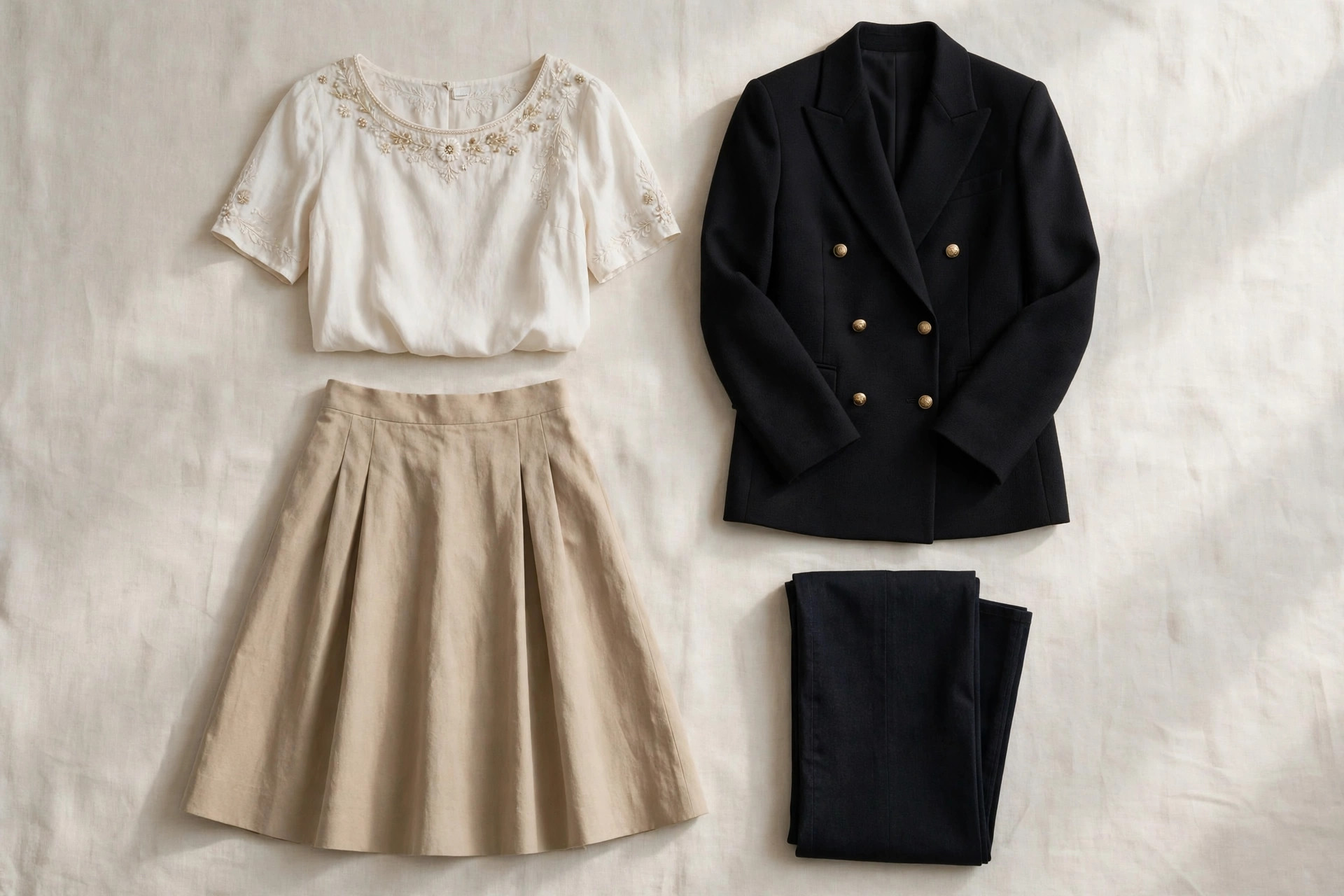
The strategy is to emphasize the upper body and draw attention upward, while keeping the lower half smooth and uncluttered. Our original guide recommended A-line skirts, empire-waist tops and blazers with shoulder padding for exactly this reason, and all three still work. Boat necks, wide scoop necks and off-the-shoulder necklines widen the shoulder line visually. Structured shoulders, short jackets that end above the hip, embellishment, pattern, lighter or brighter colors on top, and statement necklaces and earrings all pull the eye up.
On the bottom half, choose clean, darker, unbroken lines: A-line and flared skirts that skim the hips and fall from the widest point, straight-leg and bootcut trousers, and dresses that fit the shoulders and waist then float over the hips. High-waisted bottoms — a tip carried over from our original guide — use your smaller waist as the focal point and create a more balanced look. Fabrics on the bottom should drape rather than cling; a little structure helps a skirt hold its A-line away from the body.
Denim, Dresses and Swim for Pear Figures
In denim, bootcut and straight-leg fits balance the hip line, and a mid or high rise with a contoured waistband solves the gape-at-the-back problem; avoid heavy fading and whiskering across the thigh, which spotlights the widest point, and keep back-pocket detail simple. The women's denim fits guide below compares rises and leg shapes. For dresses, fit-and-flare and A-line silhouettes and empire lines that fall from under the bust are the reliable choices. For swim, bring the interest up: patterned, padded or ruffled tops with plain, darker bottoms, and skirted briefs or swim dresses if you prefer more coverage through the hips.
What to Wear
- Boat, wide scoop and off-the-shoulder necklines that broaden the shoulder line
- Structured blazers and short jackets ending above the hip
- Pattern, color and detail on top; darker, plainer fabrics below the waist
- A-line, fit-and-flare and empire-waist dresses and skirts
- Straight-leg and bootcut trousers with contoured, high or mid rises
- Necklaces, scarves and earrings that keep attention at face level
What to Avoid
- Pencil skirts and skinny cuts in stiff or shiny fabric that cling to the hips
- Tops and jackets that end right at the widest point of the hip
- Cargo pockets, large hip pockets and bold patterns on trousers and skirts
- Heavy fading, whiskering or embellishment across the thighs of jeans
- Very tapered, narrow ankle cuts that make the hip line look wider by contrast
Body Shape Guides
Related Apparel Search Guides
Common Questions
Is a pear shape the same as a triangle shape?
Yes. Pear and triangle are two names for the same proportions: hips wider than the bust and shoulders, with a smaller, defined waist. It is the opposite of the inverted triangle, where the shoulders and bust are the widest part.
What jeans are best for a pear body shape?
Bootcut and straight-leg jeans in a mid or high rise with a contoured waistband. The slight flare at the hem balances the hips, the darker uniform wash keeps the line smooth, and the contoured waistband closes the gap that straight waistbands leave at the back of a smaller waist.
Can a pear shape wear skinny jeans?
Yes, with balancing on top. Choose a dark, plain wash, then pair it with a structured or longer top with shoulder detail, or a tunic that ends past the widest point of the hip. The rule is proportion, not prohibition: slim below works when the top half carries equal visual weight.
Body Shapes: Body Shapes Guide | Handbags for Body Types | Women's Clothes Guide