Rectangle Body Shape: How to Dress It
Shoulders, waist and hips in a similar line, with little waist definition: how to recognize a rectangle shape and use belts, seams, tiers and volume to suggest curves.
Shop Rectangle Body Shape Clothing
Shop on Amazon Shop on eBayThe Amazon and eBay links on this page are affiliate links. If you make a purchase through them, Apparel Search may earn a commission.
What a Rectangle Shape Is
A rectangle body shape — also called a straight or banana shape — has a strong, fairly angular frame in which the shoulders, bust, waist and hips are all close in measurement, and the waist is only slightly smaller than the bust and hips, if at all. Many rectangles are athletic in build, with a flatter seat and straight hips, and weight, when gained, tends to distribute evenly. It is a very common shape: large sizing surveys often find it the most frequent of all, which makes the lack of dressing advice aimed at it surprising.
One clarification, because an earlier version of our own umbrella guide described the rectangle's waist as well-defined and its hips as wider than its shoulders — that description actually belongs to other shapes. The defining feature of a rectangle is the absence of a strong waist indentation. The good news inside that definition: because your proportions are even, you can create the impression of curves wherever you choose, by adding volume above the waist, below it, or both, and cinching between them.
How to Identify and Measure for It
Measure your shoulders, bust, natural waist and hips. You are likely a rectangle if all four measurements sit within about 5 percent of each other and your waist is less than roughly 25 percent smaller than your bust — in practice, if a straight-cut shirt hangs from your shoulders to your hips without pulling anywhere, and fitted dresses feel boxy rather than shaped on you, you are dressing a rectangle.
Shop by your largest measurement for fitted garments, and pay attention to waist placement rather than waist size: on a rectangle, a belt or seam only works if it sits exactly at your natural waist, because there is no indentation to hold it in place. When trying belted styles, move around and sit down — a belt that migrates up or down is telling you the garment's waist is not at yours. Keep your measurements handy for size charts, since rectangles often fall between the bust-based and waist-based sizes brands assume.
What to Wear: Features That Flatter
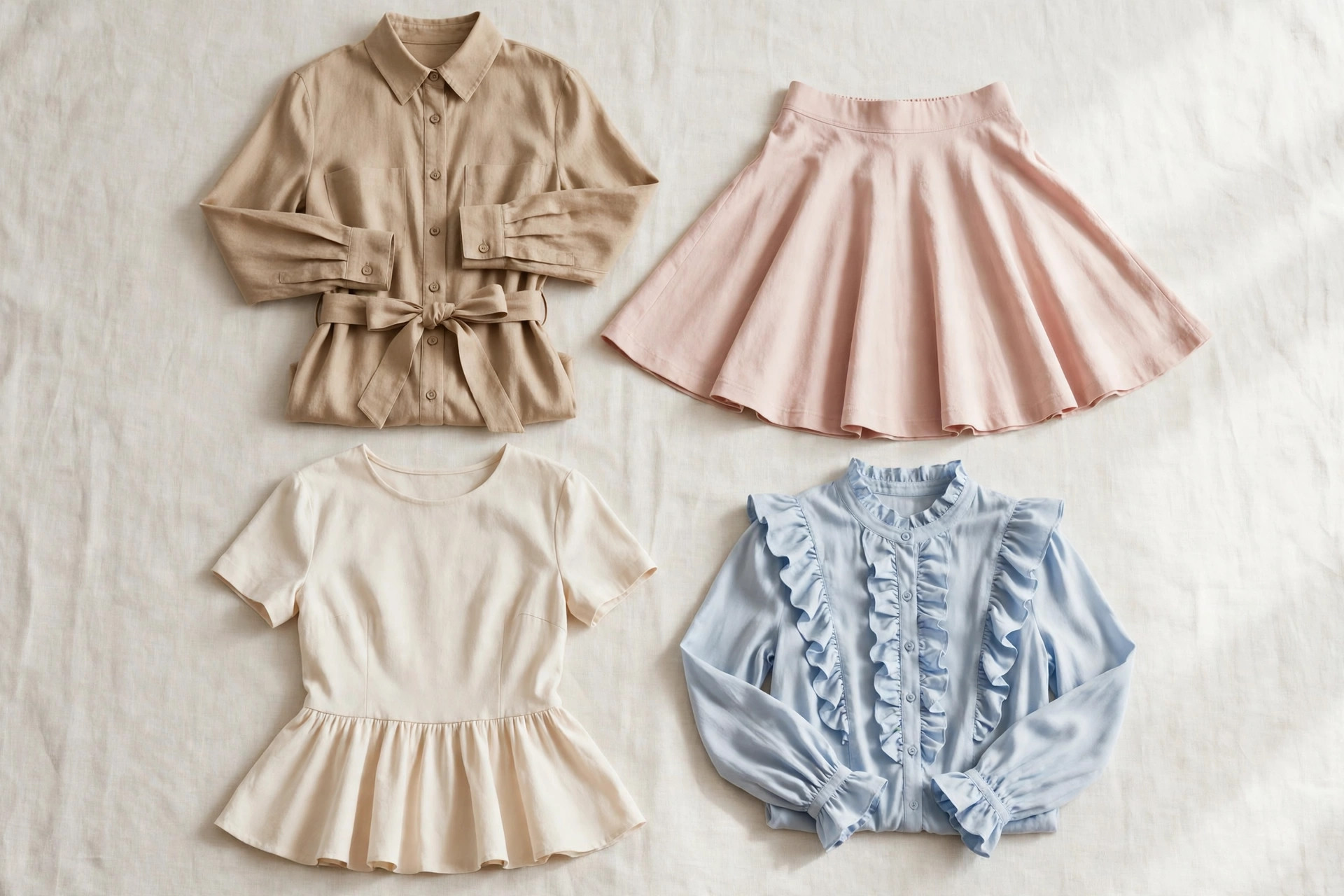
You will want to create the illusion of curves with your clothing — the opening advice of our original guide for this shape, and the whole strategy in one sentence. Pieces that cinch at the waist, like wrap dresses and belted blazers, were its specific recommendations, and flared skirts and A-line dresses complete the classic rectangle outfit: definition in the middle, movement and volume below it. Peplum tops, ruffles, tiers, pleats and gathered skirts add the volume; belts, color blocking and waist seams supply the cinch.
You have two directions to play with. To suggest an hourglass-style balance, add volume at both bust and hips — a ruffled or embellished top with a flared skirt and a belt between them. To keep a sleeker, more modern line, use shaping details instead of volume: princess seams, curved yokes, contoured color panels and belts in a contrasting color. Rectangles also carry off straight, tailored styles well — the original guide noted that straight lines and tailored fits flatter this frame — so a sharp, unbelted look is a legitimate choice when you want it, not a failure of the strategy. Necklines like scoop, sweetheart and off-the-shoulder add softness at the top.
Denim, Dresses and Swim for Rectangle Figures
In denim, almost every leg shape works; choose by the waist. Mid-rise jeans give a belt something to sit on, skinny and straight fits show an athletic leg, and bootcut or flared fits add the curve at the hem that the hip line does not supply — compare them in the women's denim fits guide below. Yoke and pocket detail on the seat adds shape at the back. For dresses, belted shirt dresses, wrap dresses and fit-and-flare styles build the waist in. For swim, look for ruffles, padding or bold prints on top, cut-outs and side detailing at the waist, and high-cut or tie-side briefs that create angles at the hip.
What to Wear
- Wrap dresses and belted blazers, shirt dresses and trench coats
- Peplum tops, ruffles, tiers and embellishment at the bust
- Flared, A-line and pleated skirts that add volume below the waist
- Belts in contrasting colors worn exactly at the natural waist
- Princess seams, curved panels and color blocking that draw a waist in
- Scoop, sweetheart and off-the-shoulder necklines
What to Avoid
- Straight, unbroken columns of fabric from shoulder to hem with no waist detail
- Very boxy, oversized tops worn with straight bottoms at the same width
- Drop-waist styles, which push the visual line down and lengthen the torso
- Shapeless sacks in stiff fabric that hide the frame instead of working with it
- Belts worn at the hip rather than the waist — they emphasize the straight line
Body Shape Guides
Related Apparel Search Guides
Common Questions
What is a rectangle body shape?
A rectangle (or straight) shape has shoulders, bust, waist and hips of similar measurement, with little natural waist definition. It is one of the most common shapes. Dressing it usually means creating the suggestion of curves with belts, seams, tiers and volume placed above or below the waist.
How can a rectangle shape create the look of curves?
Combine one cinching element with one volume element: a belt or waist seam, plus a flared skirt, peplum, ruffles or pleats. Adding volume at the bust and hips at the same time, with a defined waist between them, reads to the eye as an hourglass-style balance.
Can a rectangle shape wear straight-cut clothes?
Yes. Straight lines and tailored fits genuinely flatter a straight frame, and many rectangles prefer a clean, modern column of clothing to a cinched look. Waist definition is a tool for days you want curves, not a requirement for dressing well.
Body Shapes: Body Shapes Guide | Handbags for Body Types | Women's Clothes Guide