Women's Prairie Dress Guide
High neck, long sleeves, ruffled yoke and a tiered ankle-length skirt — the prairie dress turns pioneer workwear into fashion's most romantic silhouette.
Shop Women's Prairie Dresses Now
Shop Women's Prairie Dresses on Amazon Shop Women's Prairie Dresses on eBayThe Amazon and eBay links on this page are affiliate links. If you make a purchase through them, Apparel Search may earn a commission.
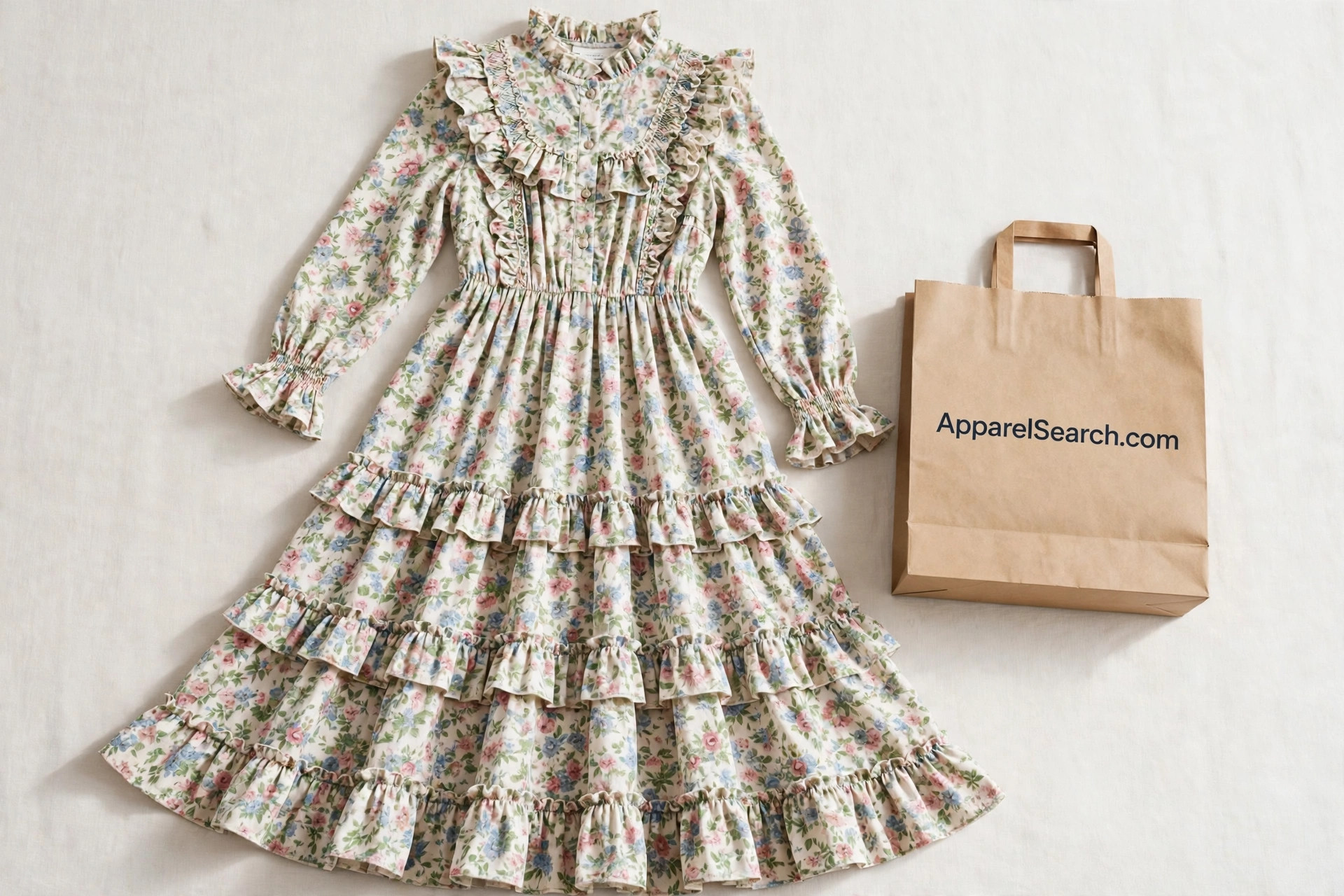
The prairie dress is the most detailed silhouette in this cluster: a high, often ruffled neckline, a yoke across the chest trimmed with lace or pin-tucks, long sleeves, and a long skirt built from gathered tiers, usually finished with a ruffle at the hem. Every element descends from the practical dresses of 19th-century American frontier women — high necks against sun and dust, washable cotton prints, skirts long enough for work — restyled as romance.
Fashion has claimed the look twice. In the 1970s, Jessica McClintock's Gunne Sax label made prairie dresses the era's defining romantic garment, all calico, lace and leg-of-mutton sleeves. In the late 2010s the style returned through cottagecore and labels like Batsheva and The Vampire's Wife, this time worn with deliberate irony and boots. Knowing both waves explains the modern version: historically detailed, but styled against its own sweetness.
The Anatomy: Yoke, Ruffles, Tiers
A prairie dress is identified by its parts, not its outline. The yoke — a flat or gathered panel across the upper chest, often in a contrast trim of lace, broderie anglaise or ribbon — is the signature. The neckline sits high, frequently with a ruffle or lace edge standing at the throat. Sleeves are long and usually gathered into a cuff. The skirt gains its fullness from tiers: horizontal gathered bands, each fuller than the one above, the same construction covered in our tiered dress guide, finished almost always with a deep hem ruffle.
Because the details do the work, the fit underneath stays simple: a relaxed bodice, a waist that is at most softly defined by a sash or a drawstring, and a skirt that needs no shaping at all. That combination — easy fit, elaborate surface — is why the dress reads romantic rather than tailored, and why removing any two of its elements (say, the yoke and the tiers) leaves a plain long dress instead of a prairie dress.
Who It Suits, Worn How
The full skirt and defined shoulder line balance a pear body shape elegantly: volume at the hem answers the hip, while the yoke draws the eye upward. The softly marked waist and romantic volume also flatter an hourglass shape without compressing it. The high neckline and long coverage make the style a natural modest-dressing choice, and its loose body means comfort is never the trade-off it can be in fitted vintage styles.
The modern way to wear it is with contrast: chunky boots, a leather belt over the sash, a denim or leather jacket — one grounded element that keeps the ruffles intentional. Head-to-toe sweetness, matching bonnets and baskets included, is costume unless the occasion actually is a period fair. Length is the other judgement call: true prairie length grazes the ankle, and that last ruffle should clear the ground by an inch, not sweep it.
Fabrics and Prints: Calico Is the Point
The authentic fabrics are light woven cottons: calico and ditsy floral prints, gingham, seersucker, chambray and broderie anglaise for summer versions; corduroy, brushed cotton and dark florals for winter. The print scale is part of the style — small, dense, repeating florals read prairie; large graphic prints pull the same pattern into a different dress entirely. Tiers and gathers need cloth that stays soft with washing, because a prairie dress is worn hard and washed often by design.
Care and buying checks: gathered tiers hide a multitude of construction sins, so inspect the yoke and cuff finishing, where cheap versions skimp. Check that tier gathers are distributed evenly around the skirt rather than bunched at the seams, and that button fronts — a common prairie feature — are backed well enough not to gape at the yoke. A good one should feel like the best kind of vintage find, except that it fits and the elastic is alive.
Common Questions
What makes a dress a prairie dress?
The combination of details: a high neckline (often ruffled or lace-trimmed), a yoke across the chest, long sleeves gathered into cuffs, and a long skirt built from gathered tiers with a hem ruffle, usually in a small floral calico or gingham. The elements descend from 19th-century frontier work dresses and were popularised by Gunne Sax in the 1970s.
How do you style a prairie dress without looking like a costume?
Add one grounded, modern contrast: chunky boots, a leather belt, or a denim or leather jacket. Keep hair, bag and other accessories contemporary. The dress supplies all the romance the outfit needs; styling everything else sweetly as well is what tips it into costume.
What is the difference between a prairie dress and a tiered dress?
A tiered dress is any dress whose skirt or body is built from gathered horizontal tiers. A prairie dress uses tiers in the skirt but adds its full signature set — high ruffled neck, yoke, long sleeves, calico prints and ankle length. Every prairie dress is tiered; most tiered dresses are not prairie dresses.
Dress & Skirt Silhouette Guides
Every dress and skirt silhouette guide in this cluster — the new guides plus the classic silhouettes already on Apparel Search — in alphabetical order:
- Women's Asymmetric Skirt
- Women's Bubble Dress
- Women's Circle Skirt
- Women's Cold Shoulder Dress
- Women's Column Dress
- Women's Empire Dress
- Women's Fit and Flare Dress
- Women's Prairie Skirt
- Women's Sheath Dress
- Women's Shift Dress
- Women's Skater Dress
- Women's Slip Dress
- Women's Surplice Dress
- Women's Swing Dress
- Women's Tea Length Dress
- Women's Tent Dress
- Women's Tiered Dress
- Women's Tiered Skirt
- Women's Tulip Skirt
- Women's Wrap Dress
- Women's Wrap Skirt
More to Explore on Apparel Search
Looking for Women's Clothing Stores?
This guide helps you choose women's prairie dresses. To browse where to buy, visit our womens clothing store directory, where you can find retailers that carry them.