Apparel Search » Fashion Styles and Subcultures » Cottagecore
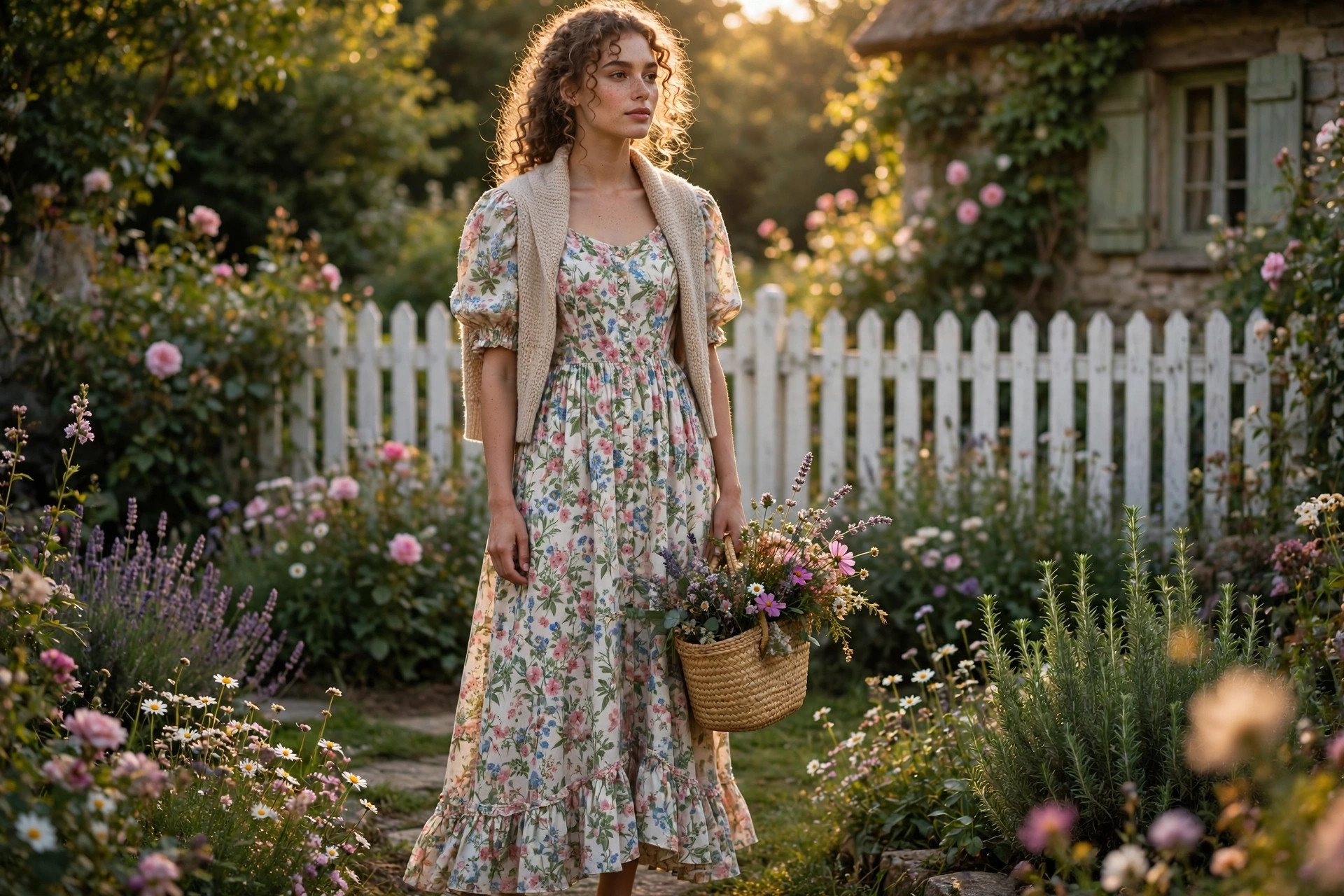
Cottagecore is a fashion and lifestyle aesthetic that romanticises simple rural life: flower gardens, cottage kitchens, slow mornings and clothes that look made to be lived in outdoors. In clothing terms it means long floral dresses, puff sleeves, lace trim, gingham, straw hats and baskets, and soft hand-knitted layers — pretty, practical pieces in faded, nature-led colours.
What Cottagecore Is
Cottagecore is less a set of rules than a mood. It imagines life in a countryside cottage — growing vegetables, baking bread, picking wildflowers, reading by a window — and dresses for that life even when the wearer actually lives in a city flat. The clothes are deliberately unhurried: nothing skin-tight, nothing glossy, nothing that looks like it was designed for a boardroom or a nightclub. Movement, comfort and a slightly handmade quality matter more than sharp tailoring.
That mood is why cottagecore overlaps so often with older, related styles. It borrows the long silhouettes and ditsy florals of the prairie dress, the free-spirited prints of bohemian style, and the nostalgia of vintage fashion. What makes it distinct is the domestic, garden-and-kitchen setting it evokes: cottagecore is boho that stayed home, planted herbs and learned to make jam.
Key Cottagecore Pieces
Start with the dress, because the dress is the whole outfit. The classic cottagecore dress is midi or maxi length, with a gathered or smocked bodice, puff or bracelet sleeves, and a skirt full enough to move in. Floral dresses in ditsy (tiny, scattered) prints are the signature, followed by gingham checks, broderie anglaise and plain washed linen. A milkmaid neckline — gathered, square and elasticated — is the other defining dress shape.
- Long floral midi or maxi prairie dresses with puff sleeves
- Milkmaid and smocked-bodice sundresses
- Chunky hand-knitted or crochet cardigans worn open
- Lace-trimmed blouses, aprons and broderie anglaise tops
- Straw hats, straw baskets and woven tote bags
- Gingham, ditsy floral, toile and faded stripe prints
- Flat sandals, Mary Janes, lace-up boots and clogs
Colours, Fabrics and Details
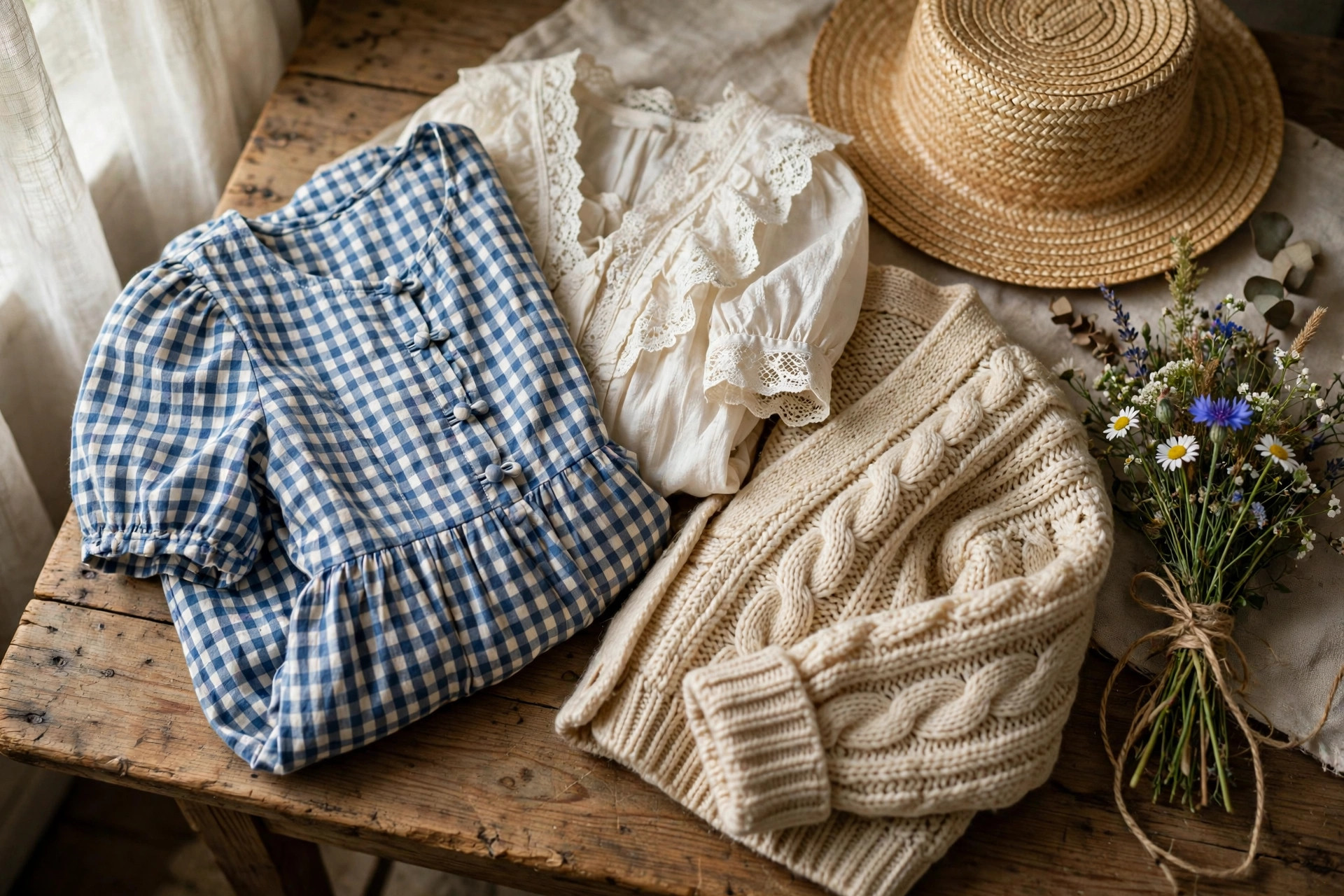
The palette comes straight from a cottage garden: cream, butter yellow, sage green, dusty rose, faded lavender, cornflower blue and soft brown, with white as the base. Prints are small and scattered rather than bold and graphic — tiny roses, sprigs, strawberries and checks. Anything that looks sun-faded rather than saturated is heading in the right direction.
Fabrics should look natural and a little imperfect: cotton voile, washed linen, seersucker, gingham cotton, wool knits and crochet. The details sell the handmade feeling — lace edging, ribbon ties, covered buttons, embroidery, patchwork and ruffles. Shiny synthetics, logos and neon colours break the spell immediately, which is why so much cottagecore clothing comes from vintage shops, small makers and home sewing patterns rather than high-street trend rails.
How to Wear Cottagecore
The simplest route is one dress plus one layer. Wear the floral dress as it is in summer with flat sandals and a straw basket; add a chunky cardigan and lace-up boots when the weather turns. Keep hair loose or in braids, make-up minimal, and jewellery small and sentimental — a locket, a pearl stud, a ring that looks inherited. The whole point is that nothing appears to have tried very hard.
To wear it without feeling like a costume, mix one cottagecore piece with plain modern basics: a puff-sleeve blouse with straight jeans, a gingham skirt with a plain white T-shirt, a crochet cardigan over a simple slip dress. Gardeners' details — an apron over a dress, a headscarf, clogs — read as charming in small doses and theatrical all at once, so choose one per outfit.
Where Cottagecore Came From
The aesthetic grew on Tumblr in the late 2010s and exploded during the lockdowns of 2020, when millions of people stuck indoors romanticised gardens, baking and rural escape. Its roots are older: the 1970s prairie revival of designers like Laura Ashley, the Arts and Crafts movement's love of handmade things, and a long literary tradition of idealised cottage life running from Jane Austen adaptations to storybook illustration.
Unlike faster micro-trends, cottagecore has settled into a durable style category. Dress brands built whole labels around it, sewing patterns for puff-sleeve dresses became bestsellers, and the look keeps resurfacing every spring. Its staying power is that it is genuinely wearable: comfortable, modest if you want it to be, available at every budget, and flattering in motion rather than only in photographs.
Cottagecore, Worn Your Way
The lasting lesson of cottagecore is that a dress can be a day's whole plan: garden, kitchen, walk, book. You do not need a cottage, a garden or a countryside postcode to wear it — the city version, a floral dress and cardigan on an ordinary street, carries the same softness into a different setting. Build the wardrobe slowly if you can: one good dress, one honest knit, one basket bag, found or made rather than chased. The aesthetic rewards patience, mending and wearing the same loved pieces for years, which may be the most radical thing about it.
Common Questions
- What is the cottagecore aesthetic in simple terms?
- Cottagecore is a style inspired by romanticised countryside life: long floral dresses, puff sleeves, lace, gingham, straw baskets and handmade knits in soft, faded colours. It values comfort, nature and a homemade feeling over sharp, modern or glamorous dressing.
- What is the difference between cottagecore and boho?
- Boho is traveller-inspired — layered, earthy, festival-linked, with global prints and jewellery. Cottagecore is home-inspired — gardens, kitchens and cottages, with ditsy florals, gingham and domestic details like aprons and lace trim. They overlap on loose silhouettes and natural fabrics.
- Can you wear cottagecore in winter?
- Yes. Swap the sundress for a long floral dress in a darker print, add a chunky cardigan or wool coat, lace-up boots and a knitted scarf. Heavier cottons, corduroy and wool keep the soft rural mood while actually keeping you warm.
- Is cottagecore only for young women?
- No. The silhouettes — midi dresses, cardigans, flat shoes — suit any age, and many wearers tone it down to one or two pieces mixed with everyday basics. The aesthetic is a mood, not a uniform with an age limit.
- Where can I find cottagecore clothing?
- Vintage and charity shops are the natural hunting ground, alongside small independent makers, sewing patterns for home dressmaking, and the floral and prairie dress rails of most clothing retailers each spring and summer.
More Fashion Aesthetics
This guide is part of the Apparel Search fashion aesthetics series, covering the style movements and subcultures that shape how people dress. Explore the related aesthetics below, or browse the full fashion styles and subcultures category.