Fashion Styles, Movements & Subcultures
Fashion Terms by Category — the looks, movements and tribes that give clothing its meaning, from vintage to the sixteen branches of punk.
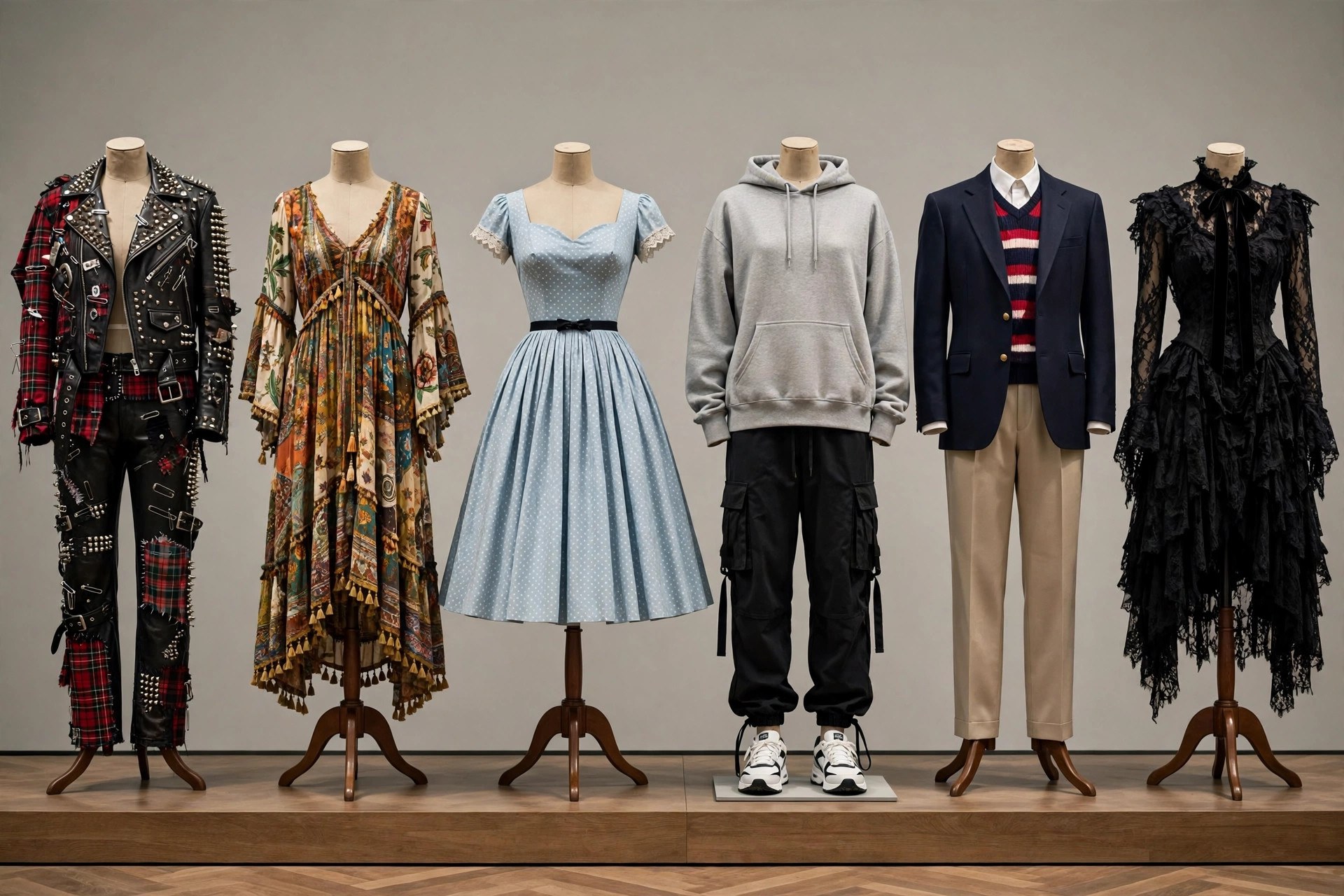
Some fashion words name garments, but just as many name looks — the style movements and subcultures that decide what those garments mean. A studded leather jacket is only clothing until punk gives it a message; a flowing printed dress reads differently once you know the word bohemian. This category gathers the Apparel Search glossary entries that define fashion by attitude, era and tribe rather than by pattern piece.
Style vocabulary is how the industry talks about identity. Designers mine these movements for collections, retailers use them to name departments and edits, and vintage sellers rely on them to date and describe pieces. The biggest family here is punk, whose local scenes splintered into more than a dozen named sub-styles — all sixteen of our punk subcategory pages are collected below alongside the wider movements.
Style Movements & Everyday Looks
These are the broad currents of modern dress: revivals like retro and vintage, simplicity movements like minimalism and normcore, dressed-up ease like preppy and glam, and newer blends like athleisure that moved gym clothes into everyday wardrobes. Casual wear and leisurewear describe the relaxed end of the spectrum that most modern wardrobes live in, western wear and bohemian looks carry regional and free-spirited roots, grunge turned thrifted flannel into a movement, and avant-garde names the deliberately experimental edge. Movements rise and fall, but few disappear entirely: most return on roughly twenty-year cycles, which is why vintage sellers and trend forecasters share so much of this vocabulary.
Dark, Romantic & Costume-Inspired Styles
A second family dresses in black lace and theatrical detail. Goth fashion and its Japanese offshoot Gothic Lolita, the frilled silhouettes of Lolita fashion, and the brass-and-corsetry world of steampunk all treat clothing as costume and identity at once — styles where the glossary definitions matter because each has strict internal rules its followers know by heart.
Street & Skate Culture
Style also rises from the sidewalk. Streetwear grew from skate, surf and hip-hop culture into the industry’s dominant casual language; street-inspired fashion borrows graffiti and city art; skater clothing names the durable, loose kit built for the board; and alternative apparel is the umbrella term for clothing that deliberately positions itself outside the mainstream mall. The pipeline runs both ways: skaters borrowed workwear and sportswear, made them a uniform, and then watched the fashion industry borrow the uniform back at runway prices — which is why authenticity is the most argued word in this whole family of styles.
Punk & Its Subcultures
Punk is the glossary’s most subdivided style. Starting from the original punk fashion of the 1970s, local scenes and musical offshoots each developed their own uniform — from anarcho and crust to ska, psychobilly and skate punk. Apparel Search maintains a dedicated page for each branch of the family tree, and they are all collected here in one place. Several of these pages began as sub-pages of our main punk entry; collecting them here reflects how the scenes actually relate — siblings rather than strangers, sharing venues, record labels and a do-it-yourself ethic while dressing very differently from one another.
- Anarcho Punk Fashion
- Celtic Punk Fashion
- Cowpunk Fashion
- Crust Punk Fashion
- Dance Punk Fashion
- Dark Cabaret / Gypsy Punk Fashion
- Droog Fashion
- Garage Punk Fashion
- Glam Punk Fashion
- Hardcore Punk Fashion
- Horror Punk / Deathrock Fashion
- Pop Punk Fashion
- Psychobilly Fashion
- Punk Fashion
- Ska Punk Fashion
- Skate Punk Fashion
- Street Punk Fashion (Oi!)
A note on boundaries: style categories overlap by nature. A single outfit can be vintage in origin, retro in styling and streetwear in context, and a GothLoli dress is simultaneously goth and Lolita. The groupings on this page follow each term’s primary identity; the definition pages themselves cross-reference the neighboring movements their followers like to argue about.
Styles are worn, but they are made of garments and fabrics: pair this category with Garment & Clothing Type Terms and Fabric, Fiber & Textile Terms for the full vocabulary of a look, or browse everything A–Z from the Fashion Terms hub.