Apparel Search » Fashion Styles and Subcultures » Dopamine Dressing
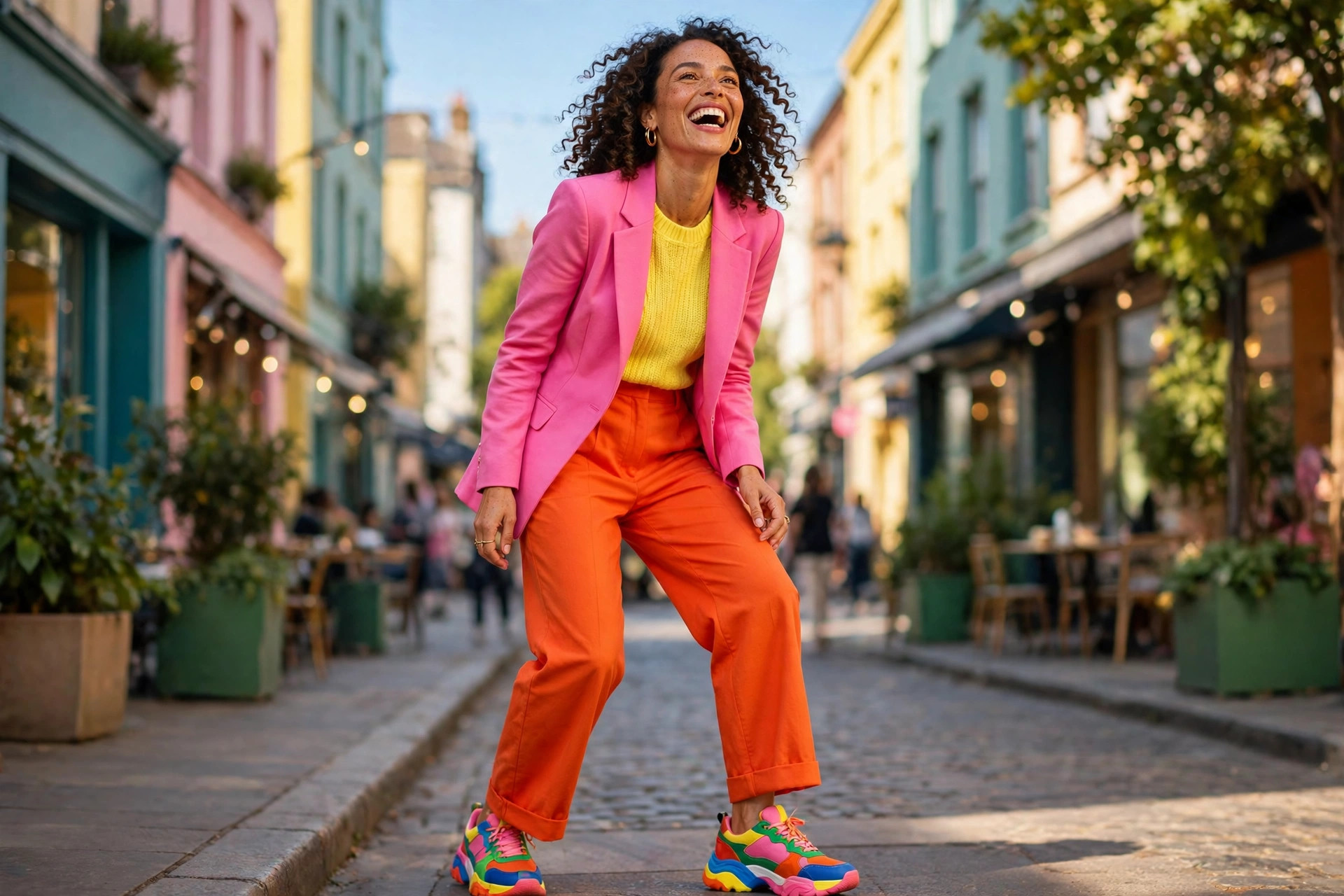
Dopamine dressing is the practice of wearing bright, saturated colours — and joyful prints, shine and texture — specifically because they lift your mood. Named for the brain's feel-good chemical, it treats colour as something you wear first for yourself: the pink coat is not for the photograph or the occasion, it is because Tuesday needed pink.
What Dopamine Dressing Is
The idea rests on a real and simple observation: what we wear affects how we feel. Psychologists call it enclothed cognition — clothing changes the wearer's own state, not just other people's impressions. Colour is the strongest lever clothing has: fashion colours carry associations — yellow with sunlight and energy, pink with playfulness, green with freshness — and surrounding yourself in a colour you love is a small, daily, wearable intervention in your own mood.
Honesty matters here: no coat secretes dopamine, and the name is a metaphor, not a medical claim. What research and ordinary experience both support is more modest — people consistently report feeling more confident, energetic and cheerful in colours they associate with happiness, and bright clothing reliably draws friendly responses from others, which lifts mood socially too. Dopamine dressing is that effect, used deliberately.
Key Dopamine Dressing Pieces
The wardrobe is built from saturated versions of ordinary pieces: a hot pink or tangerine coat, a cobalt trouser suit, a sunshine-yellow knit, an emerald dress, red shoes. Colour-blocked pieces and rainbow-order rails are the aesthetic's visual signature. Prints count when they are joyful — big florals, checks and stripes in bright colour — and so do shiny and tactile fabrics, which add pleasure for the wearer's hands and eyes, not just the camera.
- Bright coats in pink, orange, yellow or cobalt
- Colourful tailoring: saturated blazers and trouser suits
- Knitwear in sunshine yellow, emerald and fuchsia
- Bright dresses worn as everyday clothes, not occasion wear
- Coloured shoes, bags and scarves as entry-level pieces
- Joyful prints: bold florals, checks, stripes and spots
- Shiny and tactile fabrics: satin, sequins for day, faux fur
Colours, Combinations and Fabrics
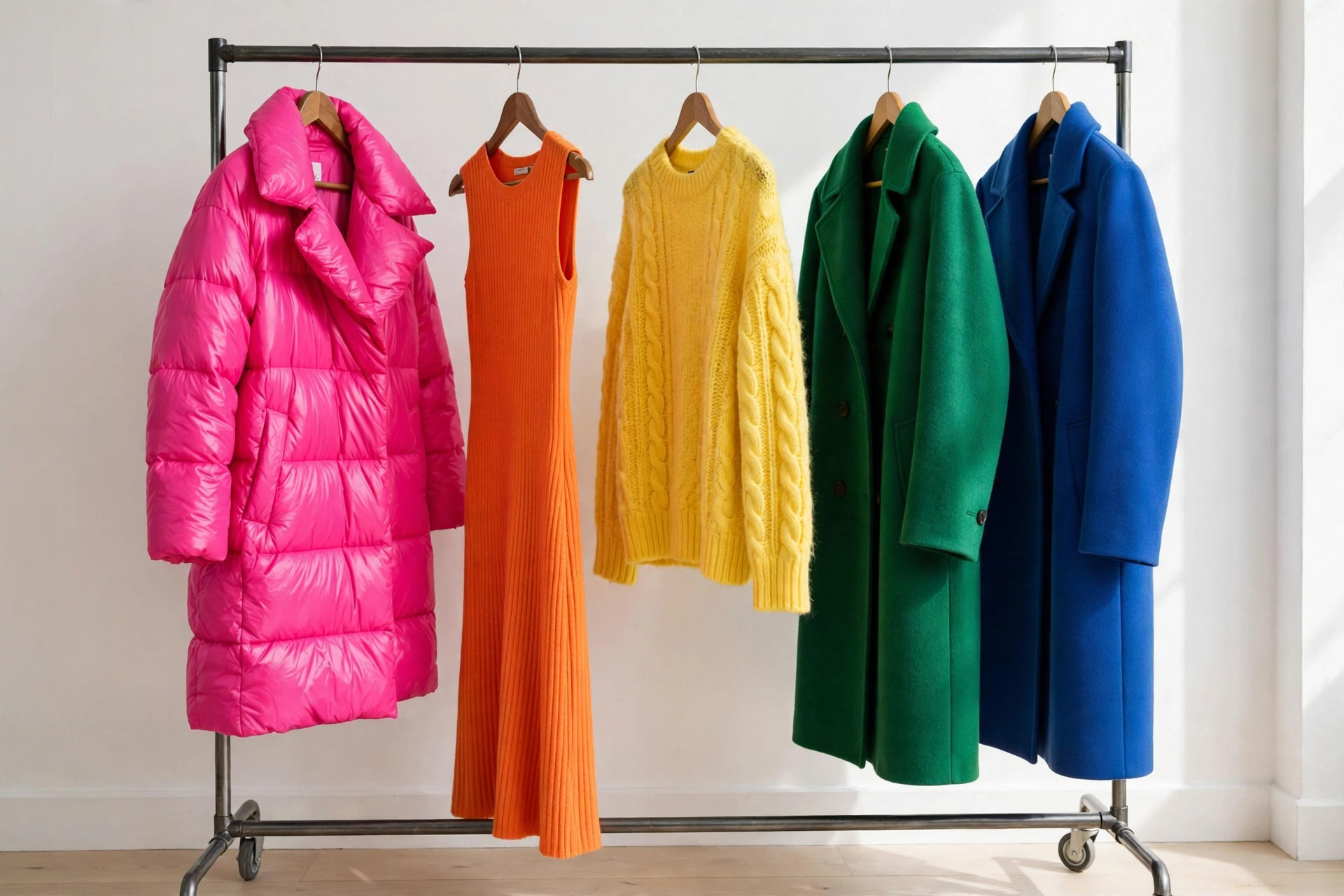
Any colour can be a dopamine colour if it is yours — the theory is personal, not prescriptive. That said, the aesthetic's working palette is the saturated shelf: hot pink, tangerine, marigold, emerald, cobalt, scarlet, violet and turquoise. Neutrals are not banned; they are demoted to supporting roles, the way a frame supports a picture. A bright coat over black is dopamine dressing; a beige coat over beige is not, however happy it makes someone else.
Combinations follow two routes. The harmonious route pairs neighbours — pink with red, orange with pink, blue with green — for a rich, blended brightness. The clashing route pairs opposites — cobalt with tangerine, fuchsia with emerald — for maximum energy, and is easier than it looks because saturated colours share an intensity that makes them agree. If a combination frightens you, wear it in smaller pieces first: our guide to fashion colour cues explains how colour signals mood and meaning.
How to Wear Dopamine Dressing
Start where your courage is. For the colour-shy, one bright piece against a familiar base — a yellow knit with jeans, pink shoes with a grey suit — delivers most of the effect with none of the exposure. Build from the piece that gets the compliment, because compliments are data: they tell you which colours your skin, hair and temperament carry best. Keep silhouettes simple, since colour is doing the work; a plain pink coat needs no further decoration.
The advanced version is head-to-toe colour — a saturated suit, a monochrome bright outfit, or a deliberate three-colour clash — and its secret is grooming and fit: bright clothing looks intentional when it fits well and is worn neatly, and chaotic when it does not. Keep one element grounded (plain shoes, simple hair) and the boldest outfits stay wearable to work, weddings and everywhere else colour has historically been rationed.
Where Dopamine Dressing Came From
The term entered fashion writing in the mid-2010s, linked to fashion psychology research, and exploded in 2021 as wardrobes reopened after lockdown: the 'revenge dressing' moment, when a public starved of occasions dressed brightly for ordinary days. Designers answered with saturated collections, and high-street rails filled with pink, orange and green tailoring aimed squarely at mood rather than formality.
Unlike most named trends, dopamine dressing describes a method rather than a look, which gives it unusual staying power: any season's colours can be worn this way, at any age, at any budget, including from the back of your own wardrobe. Its real legacy is permission — colour stopped being a risk to manage and became a tool to use, which is a change in how people dress, not just what they buy.
Dopamine Dressing, Worn Your Way
Begin tomorrow morning, with whatever you already own: find the brightest thing in your wardrobe, the one you save for holidays and good days, and wear it for an ordinary one. Notice what happens — to your mood in the mirror, to the strangers who smile, to the way the day feels at noon. That small experiment is the entire theory. Build from there, one loved colour at a time, and let the wardrobe turn into a rail of things that make you happy before you have even left the house. Few style rules are that simple, or that kind.
Common Questions
- What is dopamine dressing in simple terms?
- Dopamine dressing is wearing bright, saturated colours and joyful pieces specifically to lift your own mood. The name is a metaphor — clothes do not release dopamine — but people reliably feel more cheerful and confident in colours they love.
- Does dopamine dressing actually work?
- In the modest sense, yes: research on enclothed cognition shows clothing affects the wearer's mood and confidence, and bright colours draw positive reactions from others. It is not medicine and cures nothing, but as a daily mood lever it is cheap, safe and pleasant.
- What if bright colours do not suit me?
- Every colour family has a saturated version; find yours by testing pieces near your face and noting which make your skin look clearer. Start small — shoes, bags, scarves, knitwear — and remember the theory is personal: your dopamine colour is the one that lifts you.
- Can I wear dopamine dressing to work?
- Usually yes, with structure: a bright blazer or trouser suit in a tailored cut, a saturated knit under a neutral suit, or bright shoes with a plain outfit. Tailoring and neat grooming keep strong colour reading as intentional and professional.
- Is dopamine dressing just for women?
- No. The principle is universal and men's dressing adopted it quickly — bright knitwear, coloured tailoring, saturated trainers and coats. The method is about the wearer's mood, and it works in any wardrobe.
More Fashion Aesthetics
This guide is part of the Apparel Search fashion aesthetics series, covering the style movements and subcultures that shape how people dress. Explore the related aesthetics below, or browse the full fashion styles and subcultures category.