Apparel Search » Fashion Styles and Subcultures » Emo Fashion
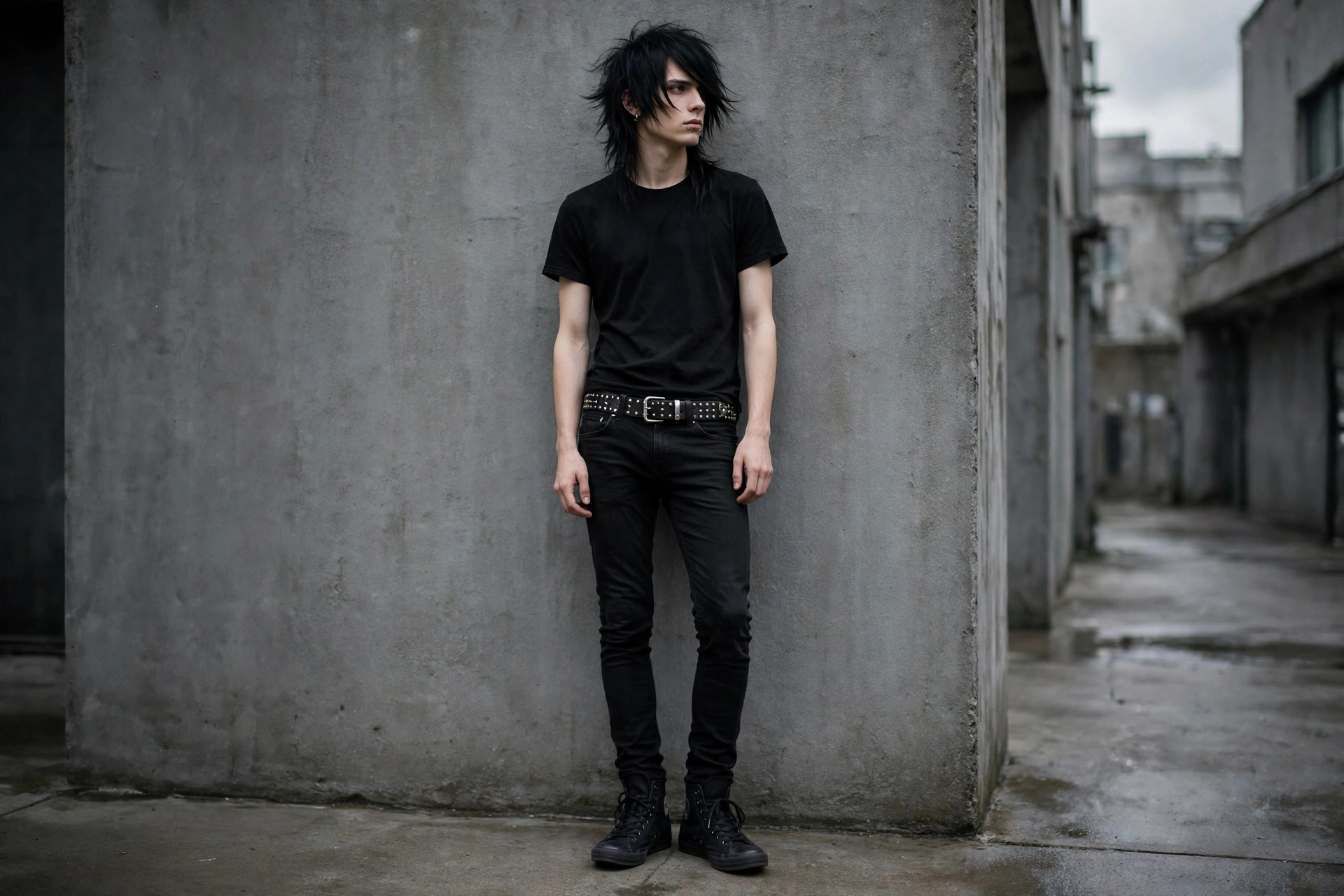
Emo fashion is the clothing style of the emo music scene: tight black skinny jeans, band T-shirts, studded belts, striped layers, hoodies, flat canvas shoes, heavy eyeliner and a long side-swept fringe. Emerging from hardcore punk in the 1980s and reaching its peak in the 2000s, it dressed emotional intensity in black — with the occasional shock of red, purple or checkerboard.
What Emo Fashion Is
Emo began as music — 'emotional hardcore', a branch of punk that turned the genre's energy inward toward feelings — and the fashion followed the music's logic. Where goth fashion dresses darkness as drama and romance, emo dressed it as everyday teenage sincerity: the uniform of the kid who felt everything, wrote it down, and wore the band that understood. It was never meant to be elegant; it was meant to be recognisable across a school corridor.
The silhouette is the giveaway: everything tight on the bottom half, layered on top. Skinny jeans so tight they were rumoured to be girls' jeans (often true), a T-shirt, maybe a striped long-sleeve underneath, a hoodie over that, and a studded belt worn because belts were jewellery. Hair and eyeliner did as much work as the clothes — emo is one of the few fashions where the haircut is a load-bearing element.
Key Emo Pieces
Black skinny jeans are the foundation — the 2000s skinny revolution started in this scene before conquering all fashion. Above them, the band T-shirt is both clothing and credential: it names your allegiance. Striped long-sleeve tops layered under T-shirts, zip-up hoodies and the occasional skinny tie over a T-shirt complete the standard kit, and the studded belt — black or white, pyramid studs — is the single most emo object ever manufactured.
- Black skinny jeans, as tight as possible
- Band T-shirts and graphic tees with emotional artwork
- Studded belts in black or white
- Striped long-sleeve tops layered under T-shirts
- Zip-up hoodies, often black, worn constantly
- Flat canvas shoes: Converse-style high-tops and checkerboard slip-ons
- Messenger bags, pin badges, wristbands and fingerless gloves
Colours, Patterns and Details
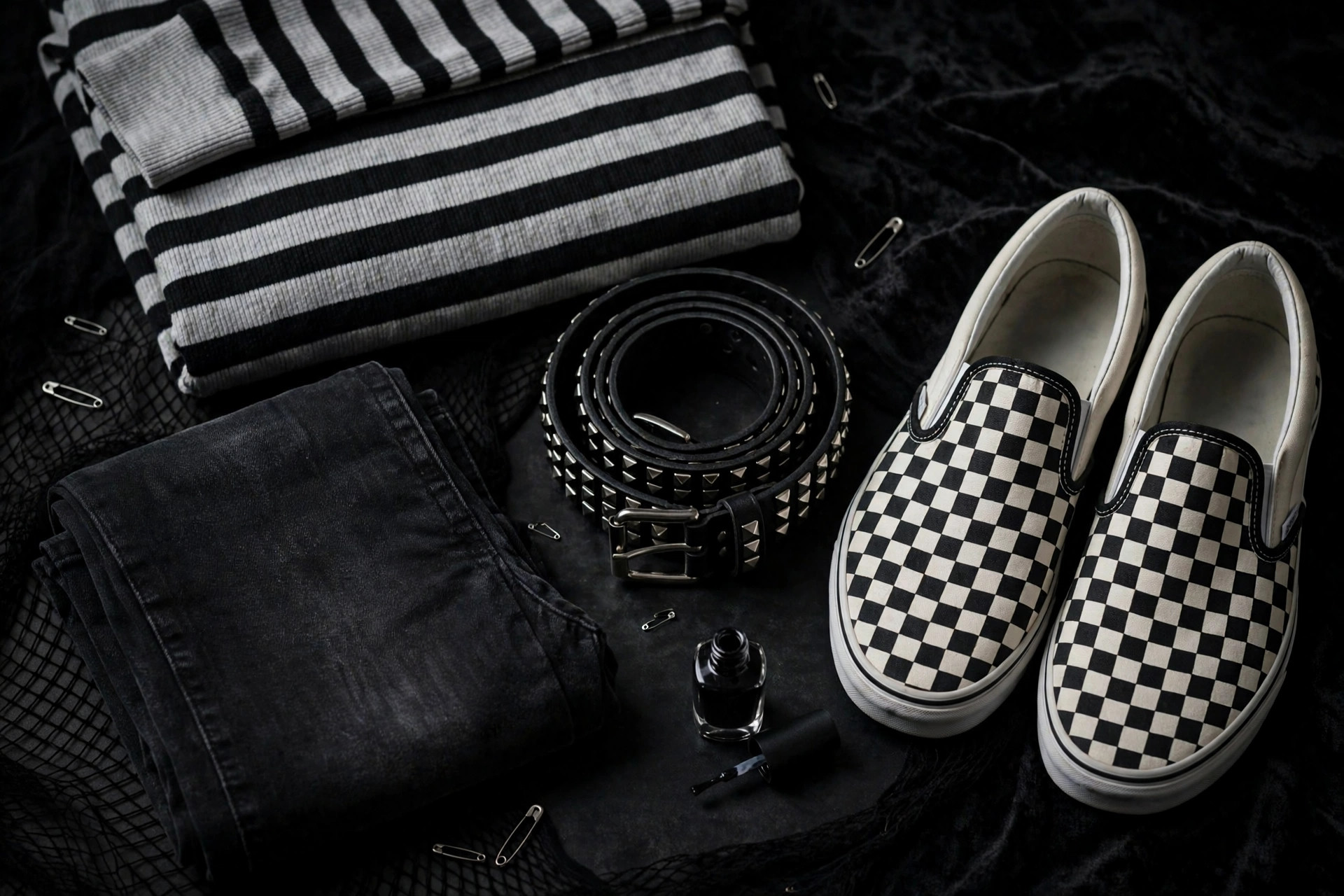
Black dominates to a degree few aesthetics attempt — black jeans, black tees, black hoodies, black eyeliner, black nail polish. Against it, a strict set of accents: blood red, hot pink, purple, and the famous black-and-white checkerboard borrowed from ska. Stripes are the other pattern, usually black with white, red or grey, on long sleeves, socks and scarves.
Details are scene details: pyramid studs, safety pins, patches and badges declaring bands and slogans, ripped knees, and layered wristbands. The grunge influence shows in the thrifted, worn-in quality everything was supposed to have — emo clothes looked best slightly destroyed, ideally by real wear at real shows rather than by a distressing machine, though distressing machines were duly employed.
How to Wear Emo Fashion
The classic 2000s formula still works as a complete outfit: black skinny jeans, band tee over a striped long-sleeve, studded belt, black high-top canvas shoes, eyeliner and the fringe. For a modern, grown-up register, keep the palette and silhouette but upgrade the pieces — a well-fitting black jean, a plain black tee or fine stripe knit, a leather studded belt, clean black trainers — which reads as sharp monochrome dressing with an emo accent rather than a tribute act.
Hair and make-up remain half the look at any age: a side parting with a long fringe, dark eyeliner (smudged is authentic), and black or dark-red nails. Skip any one element and the outfit softens toward indie or grunge; include them all and it is unmistakably emo. That controllability is why the style survives as fancy dress, as revival, and as quiet daily influence on how half the world still wears black.
Where Emo Fashion Came From
Emo music began in Washington DC's hardcore scene in the mid-1980s, but the fashion crystallised in the early 2000s as the genre's third wave — bands like My Chemical Romance, Fall Out Boy and Panic! at the Disco — took it mainstream. The look spread through music television, early social media and school corridors worldwide, becoming the defining youth style of the mid-2000s and the parent of the scene subculture that followed it.
Mainstream fashion mocked it, absorbed it and moved on — but it absorbed a lot: skinny jeans for everyone, black as a default, band tees as ordinary clothing and eyeliner as unisex all passed through emo into the general wardrobe. Periodic revivals, nostalgia tours and 'emo nite' events keep the full look alive, and for its generation it remains the most emotionally honest uniform fashion ever produced.
Emo Fashion, Worn Your Way
Emo fashion's real legacy is permission to dress like you feel something. The black jeans and the band tee were never really about the jeans or the tee — they were a flag, planted in a school corridor, saying the feelings were the point. Wear the full uniform for the revival nights and the nostalgia tours; wear its sharpened, monochrome descendant every other day. Either way, keep the sincerity. In a fashion landscape of irony and detachment, the kid in the studded belt with his heart on his striped sleeve still looks like the most honest dresser in the room.
Common Questions
- What is emo fashion in simple terms?
- Emo fashion is the uniform of the emo music scene: black skinny jeans, band T-shirts, studded belts, striped layers, hoodies, flat canvas shoes, heavy eyeliner and a long side-swept fringe — mostly black, with red, purple or checkerboard accents.
- What is the difference between emo and goth?
- Goth is older, more dramatic and more romantic: long silhouettes, velvet, lace, Victorian and vampire references. Emo is tighter, more casual and more teenage: skinny jeans, tees and hoodies from the punk and hardcore tradition, with emotion rather than darkness as the theme.
- What is the difference between emo and scene?
- Scene was emo's louder younger sibling in the late 2000s: same skinny base, but with neon colours, coontail hair extensions, oversized bows and heavy layering of bright accessories. Emo stayed mostly black; scene turned the saturation up.
- Did emo fashion influence mainstream style?
- Enormously. Skinny jeans, band T-shirts as everyday wear, black monochrome outfits, studded accessories and eyeliner for all genders all moved from the emo scene into general fashion during the 2000s and never fully left.
- How do adults wear emo style now?
- Keep the palette and proportions, refine the pieces: fitted black jeans, a quality plain or striped top, a leather belt, clean black shoes, subtle eyeliner. It reads as sharp, music-literate monochrome rather than school-era costume.
More Fashion Aesthetics
This guide is part of the Apparel Search fashion aesthetics series, covering the style movements and subcultures that shape how people dress. Explore the related aesthetics below, or browse the full fashion styles and subcultures category.