Apparel Search » Fashion Styles and Subcultures » Balletcore
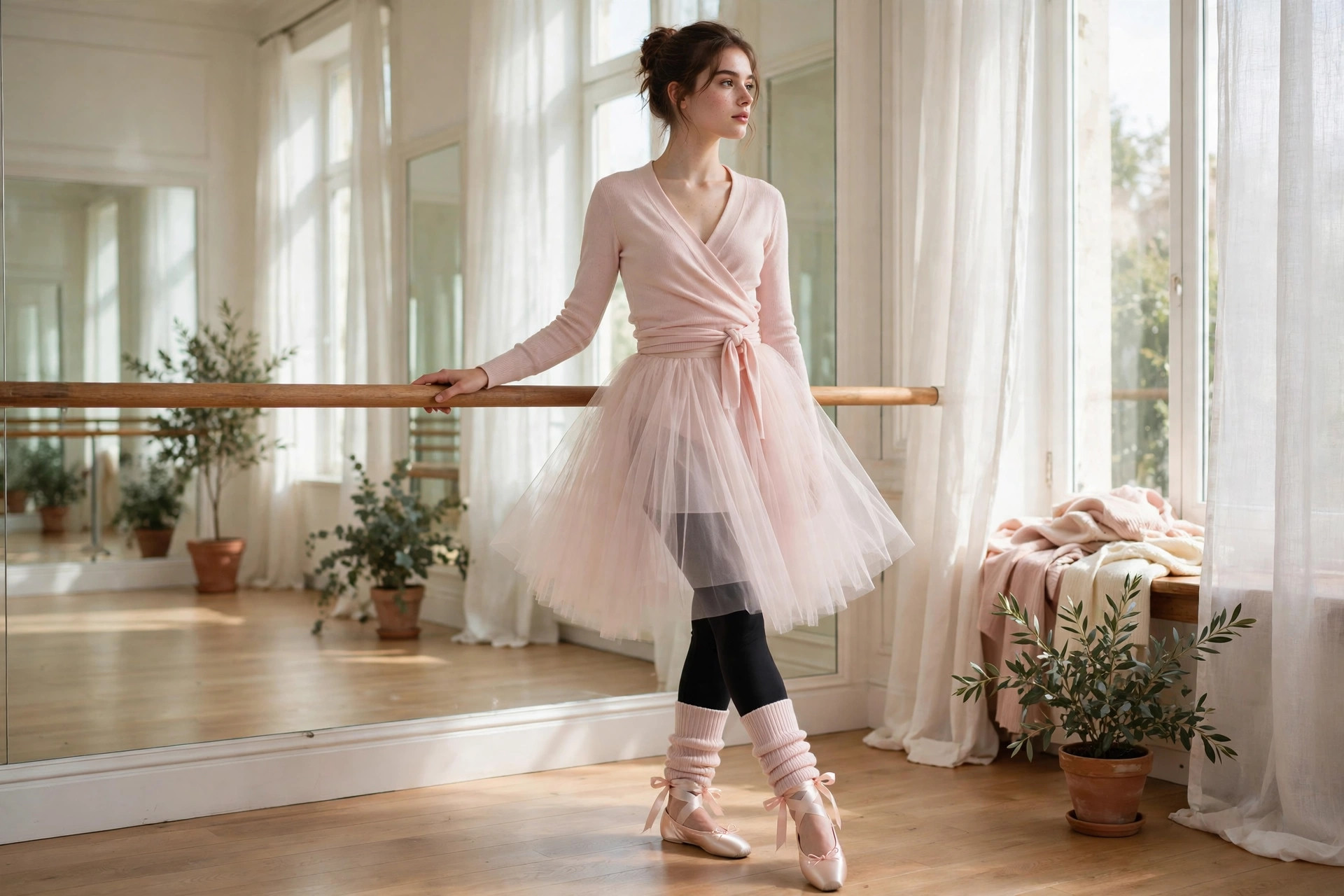
Balletcore is a fashion aesthetic that takes the clothing of the ballet studio — wrap tops, leotards, tulle skirts, leg warmers, tights and satin ballet flats — and wears it as everyday style. Soft, graceful and overwhelmingly pastel, it borrows the dancer's uniform and the dancer's posture: neat hair, ribbons, and layers that move.
What Balletcore Is
Every ballet class dresses by the same logic: a fitted base layer you can move in, a wrap layer for warmth between exercises, a skirt or shorts over tights, and hair tied completely out of the way. Balletcore lifts that logic out of the studio. A wrap cardigan over a camisole, a tulle skirt over leggings, ballet flats with the ribbons left long — the pieces are recognisable dancewear, restyled for pavements instead of sprung floors.
It is closely related to its romantic neighbours. Balletcore shares the ribbons, lace and pastel femininity of the coquette look, and the softness of cottagecore, but its references are specific: the rehearsal room rather than the cottage garden or the boudoir. When in doubt, ask whether a dancer would wear it to class — if yes, it is balletcore; if it is merely pink and pretty, it is probably something else.
Key Balletcore Pieces
The wrap top is the foundation: a cropped cardigan or ballet wrap that ties at the waist, worn over a camisole, leotard-style bodysuit or fitted T-shirt. Below it, the signature is a soft skirt — tulle, chiffon or a rehearsal-style wrap skirt — usually over leggings, tights or slim trousers so it works outdoors. Ballet flats finish nearly every outfit, satin if you dare, leather for daily life.
- Wrap cardigans and tie-front ballet tops
- Leotard-style bodysuits and fitted camisoles
- Tulle, chiffon and wrap skirts, usually midi length
- Leg warmers worn over tights, leggings or jeans
- Satin or leather ballet flats with ribbon ties
- Ribbons, bows and scrunchies for neat buns and ponytails
- Bolero shrugs and cropped knitted layers
Colours, Fabrics and Details
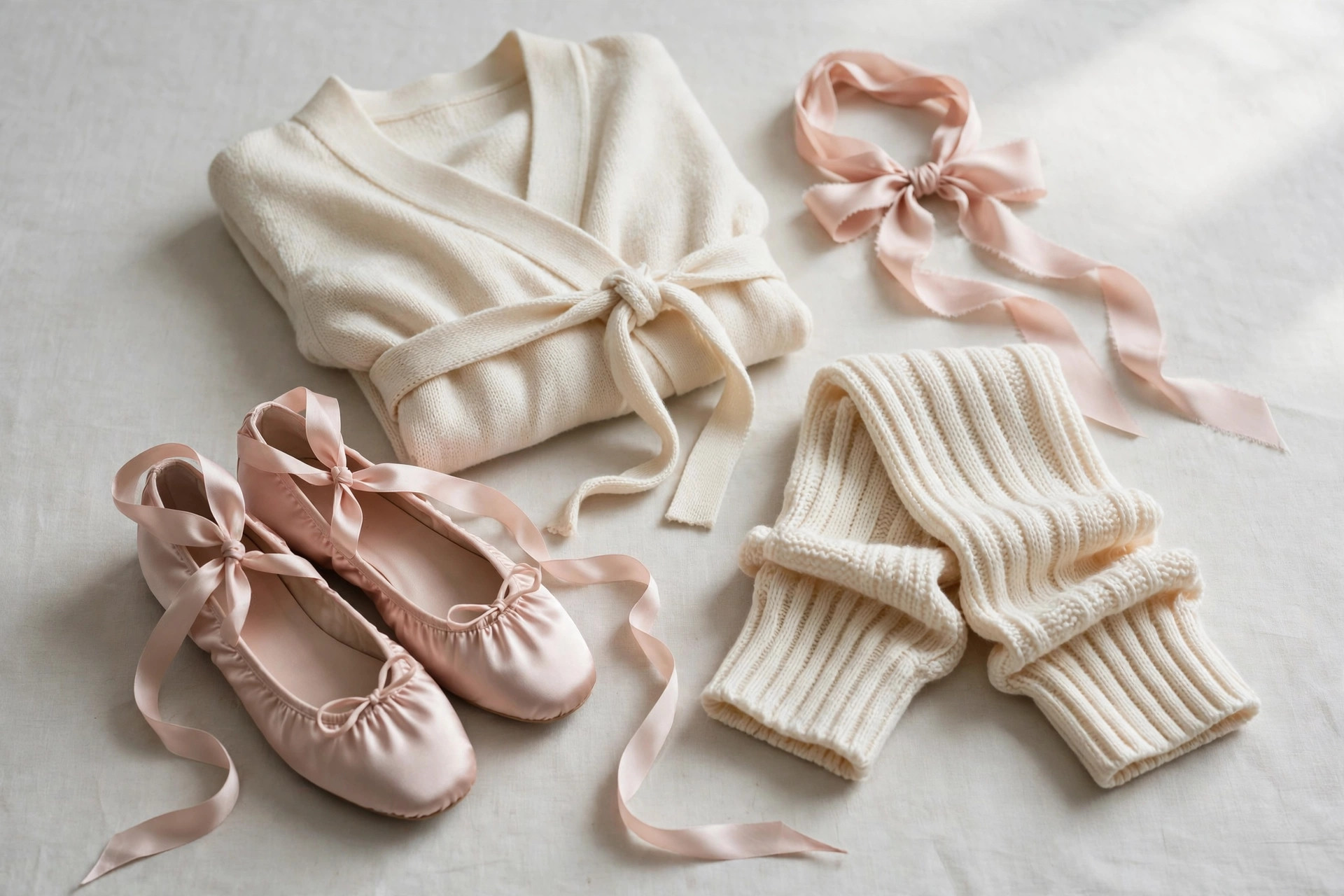
Ballet pink defines the palette — a pale, warm blush — supported by cream, ivory, powder blue, lilac, dove grey and black, the traditional colour of the practice studio. Colour is used softly and in low contrast: whole outfits are often tonal, pink on pink on cream, which is what makes the look feel like a uniform rather than an ensemble of separate clothes.
Fabrics are the fabrics of dance: tulle and chiffon for float, jersey and lycra blends for the fitted base, fine knits for wraps and leg warmers, satin for shoes and ribbons. Texture contrast does the styling work — matte knit against shiny satin, sheer tulle over opaque leggings. The details are functional dance details kept visible: wrap ties, ribbon laces, ruched bodices, and seams designed for movement.
How to Wear Balletcore
Anchor the outfit with one unmistakably balletic piece and keep the rest simple. A wrap cardigan, straight jeans and ballet flats is balletcore at office-safe strength; a tulle midi skirt with a fitted black top and flats is the evening version. Our guide to how to style ballet flats covers the footwear pairings in depth, from ribbon-laced satin to everyday leather.
Leg warmers are the piece people get wrong: wear them scrunched at the ankle over tights, leggings or skinny trousers, with flats or trainers, rather than pulled to the thigh over bare legs, which tips into costume. The same rule applies throughout — balletcore works when it looks like clothes a dancer threw on over her practice kit, not like a stage costume for a performance.
Where Balletcore Came From
Dancewear has leaked into fashion for a century — the ballet flat itself became a street shoe in the 1950s, and leg warmers had a full fashion moment in the 1980s fitness boom. Balletcore as a named aesthetic arrived with social media in the early 2020s, when rehearsal-style dressing went viral alongside a wider revival of ultra-feminine, pastel styles, and fashion houses sent tulle skirts and wrap knits down runways in the same seasons.
Its appeal is partly practical — the pieces are comfortable, layerable and cheap to assemble — and partly theatrical in the gentlest way: it lets the wearer borrow a dancer's grace and discipline as an image. Because the base pieces (flats, wrap cardigans, leggings) are wardrobe staples anyway, balletcore has proven more durable than most named aesthetics, settling into a permanent soft corner of everyday dressing.
Balletcore, Worn Your Way
Balletcore asks for very little: one wrap, one soft skirt or one pair of ribbon flats, worn with the posture the clothes suggest. Shoulders down, hair neat, movements unhurried — the styling is partly physical, which is why dancers wear it best and why anyone can borrow a little of that grace. Keep the pieces working hard in an ordinary wardrobe — the wrap cardigan over dresses, the flats with everything — and the aesthetic stays a pleasure rather than a performance. When the tulle comes out, let it be for joy, not obligation.
Common Questions
- What is balletcore in simple terms?
- Balletcore is wearing ballet-studio clothing as everyday fashion: wrap tops, leotard-style bodysuits, tulle skirts, leg warmers, tights and ballet flats, mostly in blush pink, cream and black. It copies what dancers wear to class and rehearsal.
- What is the difference between balletcore and coquette?
- They share ribbons, bows and pastels, but balletcore is specifically dancewear-based — wraps, tulle, leg warmers and flats with a sporty, rehearsal logic. Coquette is broader romantic femininity: lace, corsetry, pearls and vintage-inspired pieces with no dance connection needed.
- Can you wear balletcore without looking like a costume?
- Yes — use one or two dance pieces at a time with ordinary clothes: a wrap cardigan with jeans, ballet flats with tailoring, a tulle skirt with a plain black top. Full studio kit head to toe is what reads as costume.
- Are leg warmers part of balletcore?
- Very much so. Dancers wear them to keep ankles and calves warm before class, and in balletcore they are worn scrunched at the ankle over tights, leggings or slim trousers, usually with ballet flats or trainers.
- What shoes define balletcore?
- Ballet flats — ideally satin with ribbon ties, practically leather for daily wear. Mary Jane flats and soft, low-heeled dance-style shoes also fit. Chunky or heavily structured footwear works against the aesthetic's lightness.
More Fashion Aesthetics
This guide is part of the Apparel Search fashion aesthetics series, covering the style movements and subcultures that shape how people dress. Explore the related aesthetics below, or browse the full fashion styles and subcultures category.