Ballet Tutu
Clothing Definitions — definitions of garments and clothing terms from Apparel Search
Search Apparel Search
At a Glance
Definition: A ballet tutu is a skirt worn as a ballet costume, usually with an attached fitted bodice, made of layered tulle that either hangs in a soft bell to mid-calf — the romantic tutu — or stands out stiffly from the hips — the classical tutu.
Category: Clothing Definitions
Word Origin
French tutu, dancers' slang formed as a playful nursery alteration of cucu, baby-talk from cul, "bottom" — the skirt named, irreverently, for what it frames. The word entered English with the garment in the late nineteenth century.
A ballet tutu is a skirt worn as a costume in a ballet performance, often with an attached bodice. It might be a single layer hanging down, or multiple layers starched and standing out from the hips. Tutus are often wrap-around skirts fastened at the waist by ribbons sewn into the waistband, and they may also be attached to leotards. The form is not decoration for its own sake: each type of tutu is shaped for a style of dancing, and this page describes the main types, why they look as they do, and how a classical tutu is constructed.
The Main Types
The romantic tutu is a three-quarter-length, bell-shaped skirt of tulle with a fitted bodice and cap sleeves. It is free-flowing, to emphasise the lightness and ethereal quality of the romantic ballets — the sylphs, wilis and spirits whose skirts move a half-beat behind the dancer and make jumps look like floating. The fashion world's ballerina skirt borrows this softer silhouette.
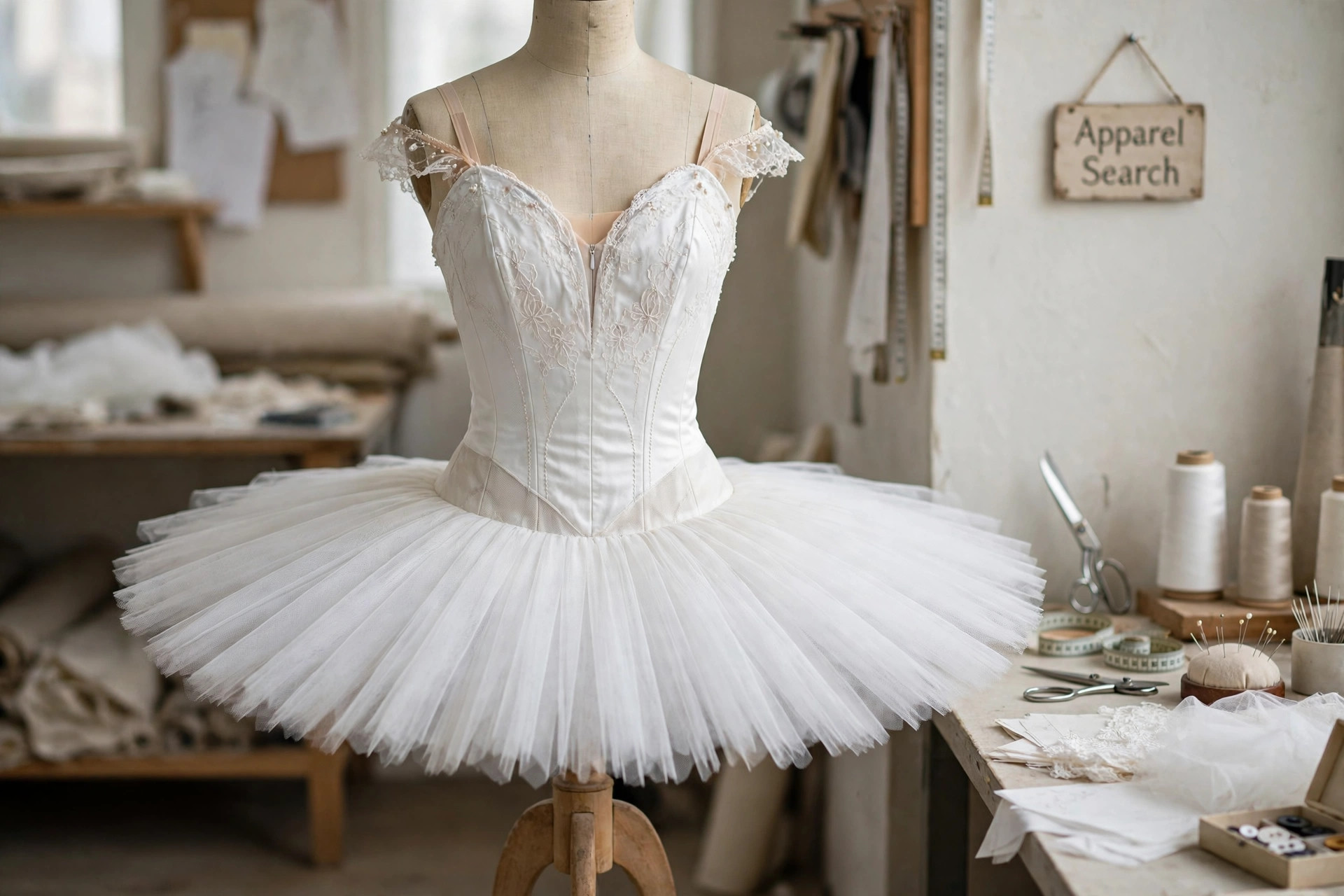
The classical tutus are short and stiff, extending outwards from the hips. The classical bell has a slight bell shape and uses a wired hoop. The classical plate — the pancake design — extends flat from the hips using wire spokes to keep the material stiff, while the powder puff design uses wire hoops. The Balanchine, or Karinska, tutu is similar to the bell and powder-puff plate forms except that no hoops are used and there are fewer layers of netting; the skirt is loosely tacked to give a softer, fuller appearance.
Why the Tutu Looks as It Does
The tutu is stage engineering disguised as decoration. The romantic tutu's long, soft tulle serves the story: it trails the movement and lends the supernatural characters of the romantic repertory their floating quality. The classical tutu does the opposite job — it clears the legs entirely from view, so the audience sees footwork, line and turnout without fabric in the way, and its flat plate requires the dancer's balance to be exact, since the skirt betrays any tilt.
Costume shops grade tutus by that function. Rehearsal tutus are simple and durable, built to survive daily class and studio work. Performance tutus are built to the choreography's silhouette, with the layering, hooping and finishing the role demands. The same dancer may wear both kinds in a single week, which is why the definition has to cover construction and not just appearance.
The repertory keeps both forms in constant use. The romantic tutu belongs to Giselle and Les Sylphides, where the long soft skirt is part of the ghostly or sylph-like character itself. The classical plate belongs to Swan Lake and The Sleeping Beauty, where brilliance of footwork is the point and the skirt must not interfere with it. A costume department therefore holds the two forms side by side, and a dancer's fitting starts from the ballet, not from preference: the choreography chooses the tutu, and the tutu's construction follows from that choice.
Construction Notes
A classical tutu is one of the most technical garments in theatre: a basque fitted to the hips, rows of net ruffled and tacked to hold the plate flat, a steel hoop in the plate styles, and hooks and bars placed so a partner's hands find a secure waist in lifts. The bodice, often with a V-front and piping, is boned lightly and closes up the back. Simpler tutus fasten as wrap-around skirts, tied at the waist by ribbons sewn into the waistband, or are built onto a leotard or unitard as a single costume, which keeps the skirt positioned through lifts and turns.
Tulle quality decides the result — stiff net for classical plates, soft net for romantic skirts — and storage matters as much as making: tutus are stored flat or hung by their waist loops so the layers keep the shape the maker set. A crushed plate or a sagging romantic skirt changes how the costume reads from the house, and careful storage is part of the garment's working life.
Below the performance forms sits the practice tutu: a short, simple half-skirt of stiff net on an elastic waistband, worn over a leotard in class and rehearsal. It gives the dancer the feel of the plate's clearance without the cost or fragility of a built costume tutu, and it is the form most students ever wear.
Common Questions
What are the main types of tutu?
The romantic tutu is a three-quarter-length, bell-shaped tulle skirt with a fitted bodice and cap sleeves, free-flowing for lightness. Classical tutus are short and stiff: the bell form uses a wired hoop, and the plate, or pancake, form extends flat from the hips using wire spokes, or wire hoops in the powder-puff design. The Balanchine, or Karinska, tutu is the softer short form, without hoops and with fewer layers of netting.
What is a tutu made of?
Tulle, layered. A single layer hangs down softly; multiple layers, starched or supported by hoops and spokes, stand out from the hips. The skirt is worn with a fitted bodice, often attached, and may be attached to a leotard.
How does a tutu fasten?
Tutus are often wrap-around skirts fastened at the waist by ribbons sewn into the waistband. Others are built onto a bodice or leotard as a single costume, which keeps the skirt positioned through lifts and turns.