Fabric, Fiber & Textile Terms
Fashion Terms by Category — what clothing is made of: fibers, performance fabrics, denim, leather and the mill-floor vocabulary of cloth.
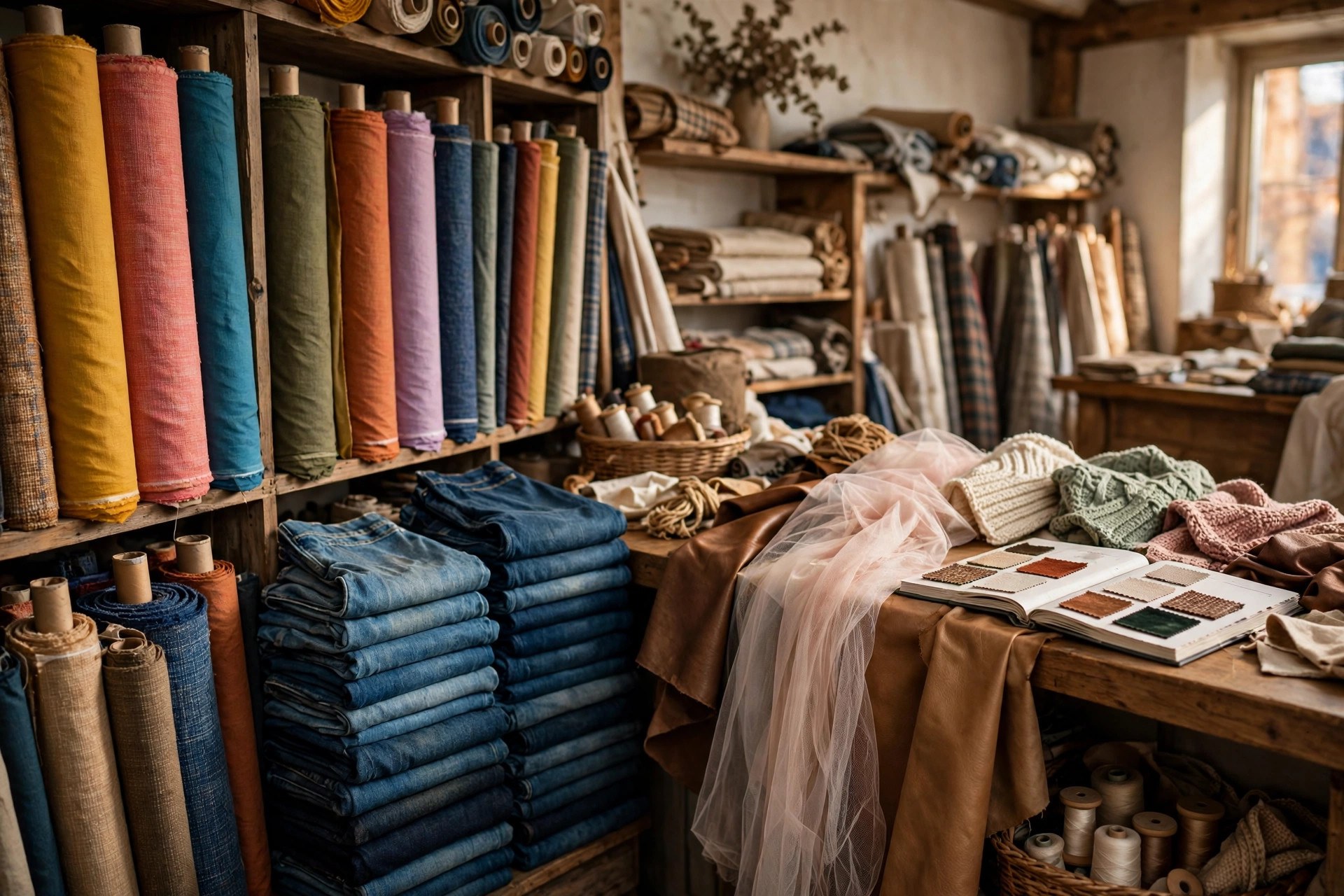
Before a garment is a style, it is a material. Fabric, fiber and textile terms describe what clothing is made of — the fibers it starts from, the cloth those fibers become, and the finishes and technologies that make modern fabrics breathe, wick, repel water or fight odor. This vocabulary is shared by textile mills, product developers and quality teams, and increasingly by shoppers comparing spec sheets.
The category is organized the way the industry thinks about materials: fibers first, then the performance fabrics engineered for sport, work and weather, then denim and leather — the two material families with dictionaries of their own — and finally fabric types, constructions and reference terms, from cable knits to greige goods, that buyers use when ordering cloth by the bolt.
Fibers & Fiber Types
Every fabric begins as a fiber. The natural fibers list covers the plant and animal classics that clothed the world for millennia; synthetic fibers and man-made fibers cover the laboratory side of the family tree; and newer entries like cottonized hemp and mechanically processed bamboo show how traditional fibers are being re-engineered and re-processed for modern mills and modern marketing.
Performance & Functional Fabrics
Modern textiles are expected to do things. Performance fabrics and smart fabrics are the engineered categories; breathable fabrics and moisture-wicking fabrics manage heat and sweat, with wicking as the mechanism behind most of them; flame-resistant fabrics protect workers in hazardous jobs; antimicrobial fabrics — including the silver and copper versions — fight odor in socks, base layers and activewear; and waterproofing treatments keep the weather on the outside of the garment. Performance vocabulary is also marketing vocabulary, which is why the definitions matter: “moisture-wicking” describes a testable fabric behavior rather than just a feeling, and antimicrobial claims are regulated in many markets.
Denim & Leather
Two materials carry enough history to need their own glossaries. In denim, raw and selvage describe cloth in its least-processed, most collectible forms, while mid-wash names a finish level in between the dark and the distressed. In leather, kip is a specific hide grade used for quality goods, and pleather is the synthetic stand-in that imitates leather’s look without the hide. Both materials also age in public, which is part of their vocabulary: denim earns fades that collectors name and grade, and leather develops a patina that pleather, for all its consistency, does not — one reason the genuine-versus-imitation distinction runs through this whole glossary.
Fabric Types, Constructions & References
The working shelf of the fabric library: constructions like cable knits and the jersey-versus-interlock comparison; cloth types from gauzy tulle to formal suitings; narrow fabrics for tapes, ribbons and trims; down terminology for insulation; color swatches for choosing shades; and the mill-floor vocabulary every fabric buyer learns — the bolt of fabric, greige goods (cloth before finishing), the “hand” or feel of a fabric, pilling, and the ringspun yarns that are also cross-listed in our manufacturing category. Buyers learn these terms at the mill or the fabric fair, swatch book in hand — color swatches and the hand of a fabric are quite literally how cloth gets chosen, long before any garment exists.
How the groups connect: fibers are spun into yarns, yarns are woven or knitted into the constructions on the reference shelf, and finishes turn those constructions into performance fabrics. Denim and leather sit apart because each is a complete material culture — with its own grades, finishes and collectors — rather than a single cloth type.
Materials meet manufacturing in the Apparel Manufacturing Terms category, where fabric testing and utilization are covered, and the finished results appear in Garment & Clothing Type Terms. The full glossary is browsable A–Z from the Fashion Terms hub.