Greige Goods
Fashion Terms — the Apparel Search fashion terminology directory
Greige goods are material (fabric) in its raw state, before any process has been applied to it — fabric in its natural state of color, prior to being dyed or printed. For woven fabric, the term describes cloth woven on a loom with warp and filling yarns that have not been dyed; it is unfinished fabric, just removed from a knitting machine or the weaving loom, that has typically received no dry or wet finishing. The term has nothing to do with the color grey.
What are greige goods?
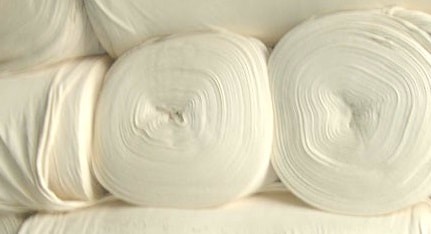
If you work in the clothing industry, you have most likely heard the term “Greige Goods”. Hopefully, you have already realized that it is not at all relevant to the color grey (gray).
Greige goods is essentially material (fabric) in their raw state; before any process has been applied to any piece of fabric. Greige Goods is a term for fabric that is in its natural state of color. Fabric in its raw state, prior to being dyed or printed. In regard to woven fabric, the term greige goods is used to describe cloth woven on a loom with warp and filling yarns that have not been dyed. Greige goods is an unfished fabric, just removed from a knitting machine or the weaving loom. The cloth has typically not received any sort of dry or wet finishing. The woven fabric may be dyed later after weaving, as in piece dyed fabrics.
What is the difference between greige fabric and greige yarn?
Well, that is sort of a silly question. One is fabric and one is yarn. These are two totally different items.
Greige fabric is un-bleached, un-dyed or un-treated fabric or cloth.
Greige yarn is un-bleached, un-dyed or un-treated yarn.
You get the picture.
ML21115
You may also want to learn about bolts of fabric and fabric by the yard.
Thank you for using the Apparel Search website to learn more about textiles.
Why Greige Goods Matter in Production
Greige goods are the textile industry's blank canvas, and holding fabric in greige form is a deliberate business strategy. A mill or converter can weave or knit a base cloth once, store it unfinished, and then dye or print it to order — which shortens the path from a buyer's color decision to finished fabric. Piece dyeing depends on exactly this: the cloth is woven first from undyed yarns and colored afterward, so the greige stage is where flexibility lives in the production calendar.
From Greige to Finished Fabric
Everything that makes fabric look and feel finished happens after the greige stage: bleaching, dyeing, printing, and the dry and wet finishing processes that set softness, shrinkage and hand. When a fabric problem appears — uneven dyeing, for example — the investigation often starts with the greige goods, because defects woven or knitted into the raw cloth will show through every later process.
Common Questions
What are greige goods?
Fabric in its raw, unfinished state — cloth just off the loom or knitting machine, un-bleached, un-dyed and un-treated, that has not received any dry or wet finishing. Woven greige goods may be dyed later, as in piece-dyed fabrics.
What is the difference between greige fabric and greige yarn?
One is fabric and the other is yarn — two totally different items. Greige fabric is un-bleached, un-dyed or un-treated cloth; greige yarn is the same unfinished idea applied to yarn before it becomes cloth.
Does greige mean the fabric is grey in color?
No. Greige goods are fabric in their natural state of color, whatever the fiber produces; the word describes the unfinished condition, not a grey shade.