Retail & Merchandising Terms
Fashion Terms by Category — the vocabulary of selling clothing: stores, wholesale, merchandising math and returns.
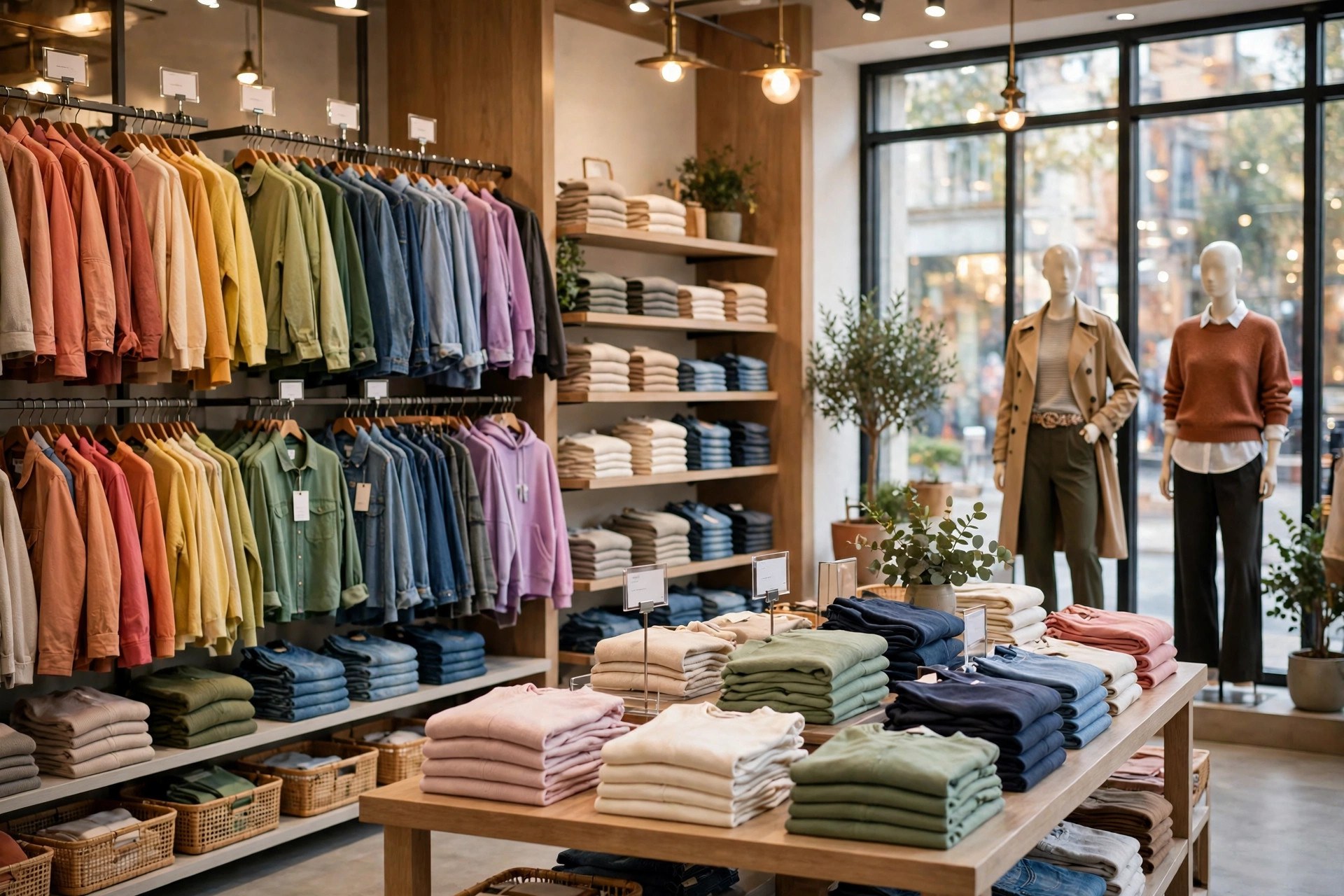
Every garment that gets made eventually has to get sold, and the selling half of the fashion business has a vocabulary all its own. Retail and merchandising terms describe how clothing moves from a designer’s line sheet into stores and shopping carts: how buyers decide what to stock, how prices and margins are calculated, how inventory is planned and replenished, and how stores — physical and online — present products to shoppers.
This category collects the Apparel Search glossary entries that belong to the selling side of the industry. Merchandisers, retail buyers, store managers, e-commerce teams and wholesale salespeople use these words daily, and students of fashion merchandising will meet most of them in a first retailing course. The terms are grouped below by the job they do, from planning and math to store formats, wholesale, selling events, resale and the increasingly complicated world of returns.
Retail Math, Planning & Merchandising
Retailing runs on numbers and calendars. Retail math covers the formulas behind markups, margins and sell-through; assortment planning decides the breadth and depth of what a store will carry; and inventory management with replenishment programs keeps the right sizes in stock without drowning the store in leftovers. Market week and fashion merchandising tie the calendar together — the rhythm of buying seasons that the whole trade works around. New buyers usually meet this vocabulary in a first job on a buying team, where a misunderstood term — open-to-buy, sell-through, margin — can turn into an expensive mistake.
Store Formats & Selling Channels
Where clothing is sold shapes how it is priced and presented. The traditional brick & mortar store now sits alongside department stores, mass merchants, specialty chains and boutiques, discount-driven outlet stores and value retailers, and a growing online world described by terms like omnichannel. Pop-up retail and drop shipping stretch the definition of a “store” even further — one is temporary by design, the other never touches the merchandise it sells.
Wholesale & Private Label
Before clothing reaches a shopper it usually passes through wholesale. Wholesalers and supplier sources connect factories to retailers; a trunk show lets a store’s best customers order from a designer’s full line; private label turns the retailer itself into the brand; and capsule collections package a small, tightly edited group of styles into a single selling story.
Selling Events, Resale & Social Selling
Retail also has its rituals and its second life. Sample sales and events like Super Saturday move excess or sample merchandise at a discount; holiday fashion retail drives the industry’s biggest quarter; and consignment shops, thrift shops and the broader secondhand and used-clothing market give garments a second (or third) owner. Limited editions create urgency, while social commerce turns social feeds into storefronts. The resale terms in particular have moved from the industry’s margins to its center: consignment and secondhand selling are now channels that major brands operate themselves, not just thrift-store territory.
Shoppers, Service & Returns
The other side of the counter has its own terminology. Buyers and shoppers are not quite the same thing; consumer behavior and consumerism describe how and why people buy; changing rooms and window displays shape the in-store experience; and when purchases come back, store returns, return authorizations, reverse logistics and chargebacks describe the costly journey in reverse.
How the terms connect: a garment’s retail life runs roughly in the order of these groups. It is planned and bought with the math terms, placed into a store format, sourced through wholesale, sold — often at an event or, later, through resale — and sometimes returned. Reading the groups in order is a short course in how a clothing business actually operates, and each definition page goes deeper into the formulas, formats and practices behind its term.
Looking for the making half of the business instead? The Apparel Manufacturing Terms category covers production from pattern to quality control, and the full glossary can always be browsed A–Z from the Fashion Terms hub.