The Style in Brief
What Boho Style Is
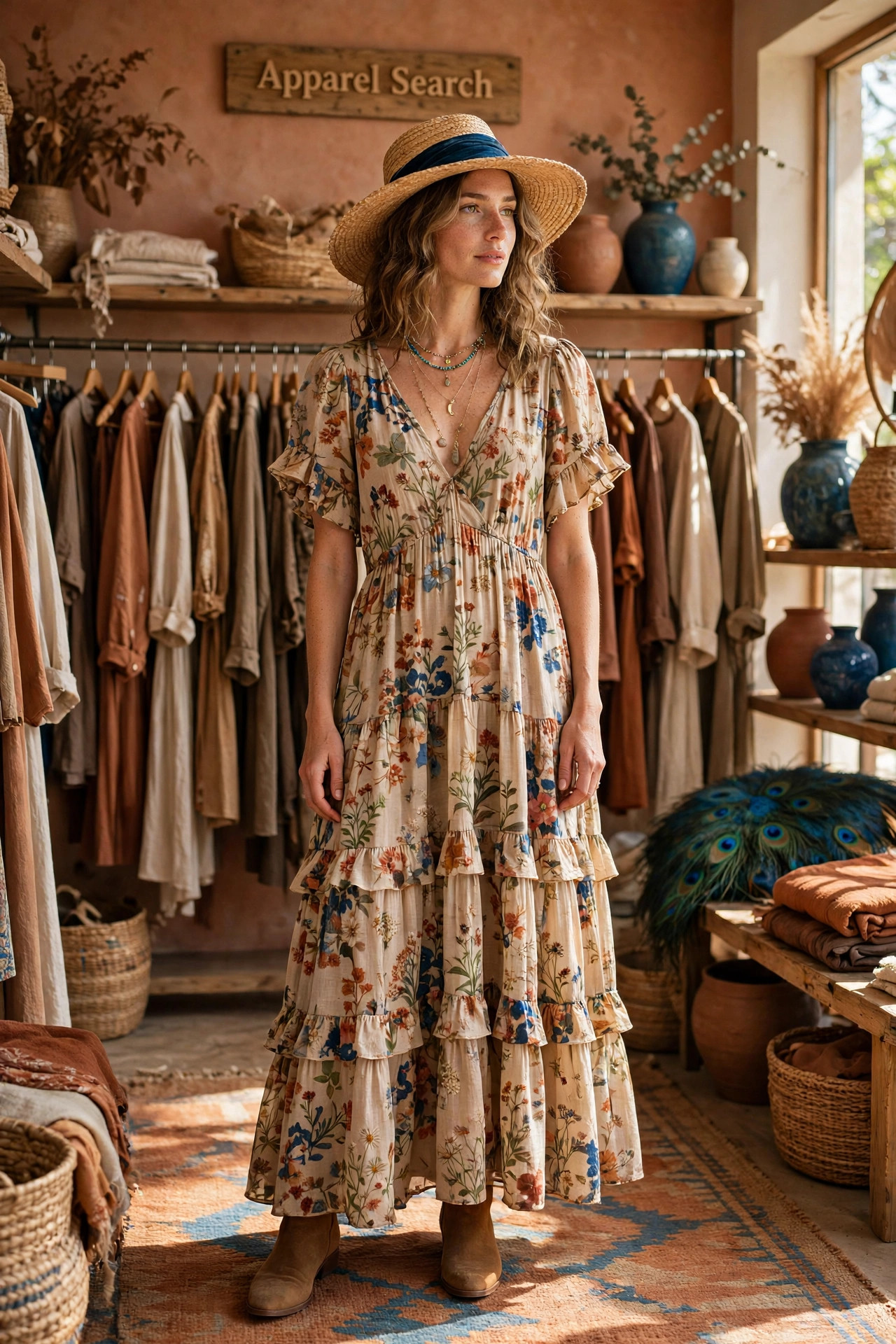
Boho — short for bohemian — is a style built on ease: loose, flowing silhouettes, natural fabrics, earthy colour, handcrafted-looking detail and layers that look collected rather than coordinated. A boho outfit rarely matches perfectly, and that is the point. Prints mix with prints, a vintage-feeling belt sits over a new dress, and jewellery arrives in layers rather than a single matched set.
The word itself is defined on the bohemian fashion and boho chic term page, which is the definition spoke of this family of guides. This hub is the wearing side: how the style is put together, where it came from, and which pieces do the work. Boho sits among the wider movements surveyed on the fashion subcultures and aesthetics hub, and it remains one of the most wearable of them because it is a method — flow, layer, mix — rather than a single uniform.
“Boho is not a costume. It is a way of dressing that values movement, texture and pieces that look as if they have a story.”
Search Apparel Search
Roots & Revivals
From the 1960s Counterculture to Boho Chic — and Back Again
Bohemian dressing takes its name from the artists and writers who rejected formal, restrictive clothing in favour of loose, second-hand and folk-inspired dress. Its modern fashion roots are in the 1960s and 1970s: peasant blouses, maxi skirts, embroidered tunics, suede, fringe and jewellery gathered from markets and travel. Rock musicians and festival culture carried the look around the world, and the flowing dress with boots became a decade-defining image.
The style returned in polished form in the 2000s as boho chic — the same flowing dresses and layered jewellery, styled with designer bags and cleaner hair and make-up, so the ease stayed but the finish sharpened. The current revival keeps that polish and adds a stronger interest in natural fibres, craft details such as crochet and embroidery, and vintage or vintage-look pieces. Each revival changes the balance slightly, but the ingredients below have stayed remarkably constant for sixty years.
The Ingredients
Signature Fabrics, Prints and Palette
Fabrics are natural and soft-handled: cotton and cotton gauze, linen, rayon challis that drapes like a vintage scarf print, crochet and open lace, denim, and — for cooler weather — suede and velvet. The fabric stories behind those two are told in the fabric stories guide. Stiff, shiny or heavily structured fabrics work against the style; boho cloth should move when the wearer does.
Prints are small-scale and organic: ditsy florals, paisley, block-print motifs, tile and border prints, and embroidery used as pattern. The palette starts with earth and stone — cream, sand, tan, rust, terracotta, olive and chocolate — then deepens with jewel notes. Burgundy is the classic boho deep note, alongside peacock teal and mustard. White and ivory boho — the broderie dress, the lace top with denim — is the summer branch of the same family, and how to wear lace covers that fabric in full.
Start Here
The Boho Guides in This Family
Work through the family in whatever order your wardrobe needs. Women’s boho outfits gives complete outfit formulas — the combinations that reliably work, from maxi dresses to denim pairings. Boho dresses is the deep dive on the style’s signature garment: silhouettes, prints, lengths and footwear. Boho accessories covers the finishing layer — layered jewellery, hats, belts, fringed and woven bags, scarves and shoes — which is where a plain outfit becomes a boho one.
Finally, boho style by season shows how the same wardrobe shifts from spring and summer float to autumn and winter layering, including the festival season where boho is most at home — a crossover explored further in the festival outfit guide. Start with outfits if you want formulas today; start with dresses if one great dress is the goal.
Texture · Crochet
Crochet: Boho’s Hand-Made Texture
No fabric is more at home in boho dressing than crochet — the openwork dresses over slips, the motif vests over shirts, the long cardigans that finish a maxi dress. The crochet clothing guide explains the garment families, yarns and openness levels, and the crochet dresses guide covers the dress branch in full, from beach cover-ups to lined city dresses with the slips that make them work. The crochet tops guide covers the tank, cardigan and vest branch — the layering pieces boho outfits lean on hardest.
Questions
Common Questions
What does boho mean in fashion?
Boho is short for bohemian. In fashion it means a relaxed style built on flowing silhouettes, natural fabrics, earthy colours, folk-inspired prints such as paisley and small florals, and layered, handcrafted-looking accessories. It values ease and individual mixing over matching sets.
What is the difference between boho and boho chic?
Boho chic is the polished version of boho that became popular in the 2000s. The flowing dresses, layered jewellery and earthy palette stay the same, but the finish is cleaner — neater hair and make-up, better-fitting pieces and more deliberate styling — so the look reads intentional rather than thrown together.
Can boho style be worn in winter?
Yes. Winter boho swaps gauze and sandals for velvet, suede, knitwear and boots, and leans on layering: a maxi dress under a long cardigan or coat, a scarf and hat on top, and deeper colours such as burgundy, olive and chocolate in place of summer ivory and pastels.