The Craft in the Clothes
Openwork You Can See Through — on Purpose
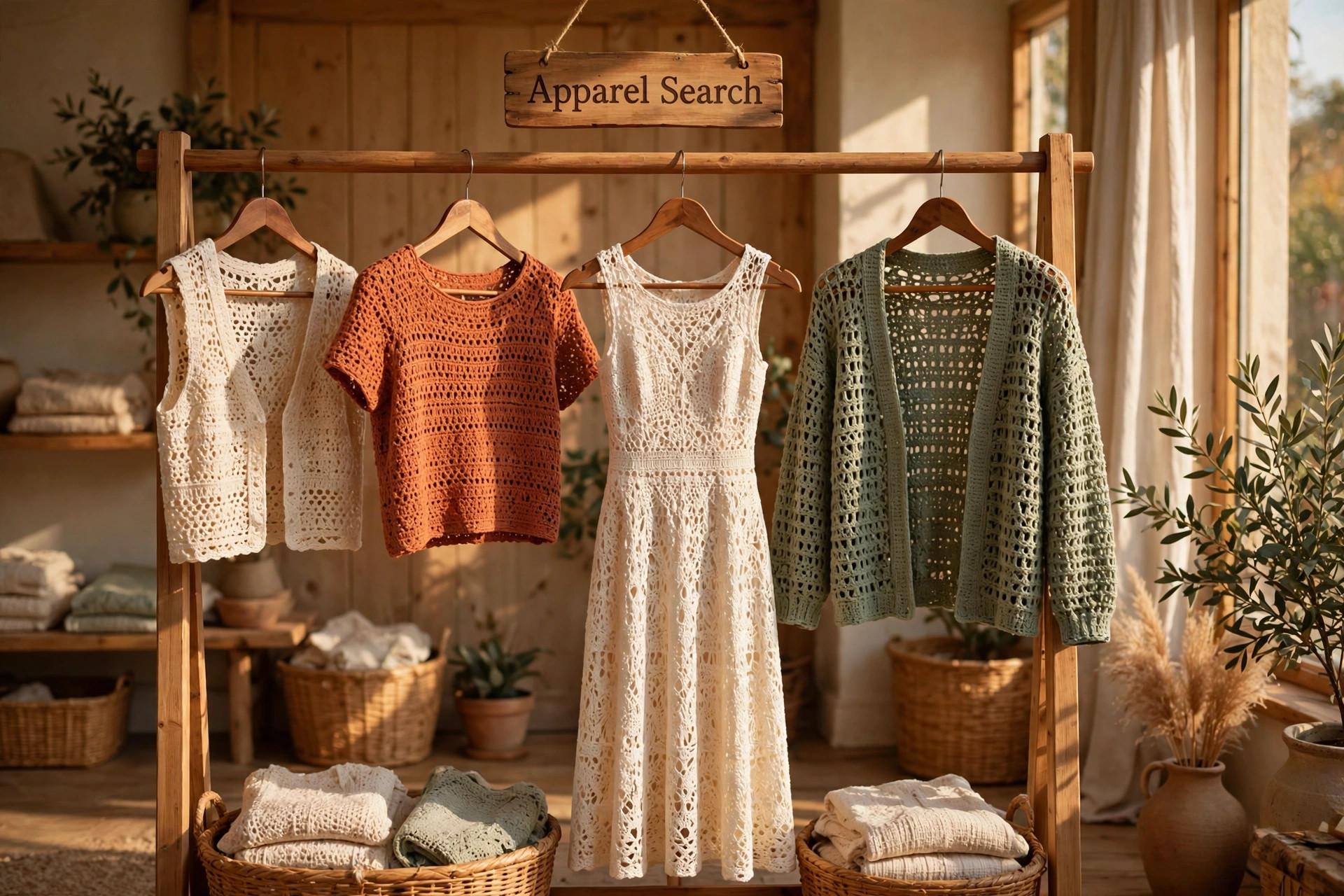
Crochet clothing is made from yarn looped into fabric one stitch at a time, and its signature is the hole. Where a woven dress hides its construction, a crochet dress displays it: grids, shells, flowers and meshes you can partly see through, worn over slips, swimsuits and camisoles. This hub explains how the garments are made, the families worth knowing, and how to wear and keep them.
Start with the technique itself. The crochet definition covers the single-hook method in full: one active loop, each stitch finished before the next begins, which is why crochet can turn corners and build motifs without seams. The clothing on this page is that technique scaled up to dresses, tops, skirts, cardigans and swim cover-ups — summer-weighted, textured and handmade in character, whether a person or a machine held the hook.
“Crochet is the only common clothing fabric whose pattern is its structure — remove the holes and there is no cloth left.”
Search Apparel Search
Hand or Machine?
Hand-Crocheted, Machine-Made and Crochet-Look
Three kinds of garment share the crochet name, and telling them apart explains most of the price spread. Hand-crocheted pieces are worked stitch by stitch with a hook; a dress can take days, and the price reflects hours, not materials. Machine-made crochet — often labelled crochet-style or openwork knit — is produced on machines programmed to imitate crochet stitches; it is even, lighter, cheaper and far more common in shops. Hand-look trims sit between the two: a machine-made body with hand-worked edgings.
Neither route is automatically better. Hand work drapes with satisfying weight and lasts for decades, but stretches and needs gentle handling. Machine openwork holds its shape, washes more forgivingly and makes the look affordable. What matters is honesty: hand-crocheted work shows slight irregularities, machine pieces show uniform linking throughout — check the inside joins.
The Garment Families
Dresses, Tops, Layers and the Beach Set
The families divide by how much openness each has to manage. Dresses are the headline act — column maxis, fitted midis and loose cover-up styles — and get their own guide: women’s crochet dresses covers lined city dresses versus beach cover-ups, lengths and the slips that make them work. Tops, tanks, cardigans and vests are the everyday entry point, layered over camisoles and shirts; see women’s crochet tops for openness levels, proportions and work-appropriate versions.
Swim and beach crochet is its own world of cover-ups, beach dresses and crochet-trimmed swimwear, covered in the women’s crochet swimwear guide — including the distinction between decorative crochet worn over a swimsuit and lined pieces built for the water. Around those sit the supporting pieces: openwork skirts over slips, shawls and wraps, motif bags and hats, and the granny-square jackets and vests that return every few summers.
Yarn & Openness
Reading Yarn, Weight and the Size of the Holes
Two choices decide how a crochet garment behaves: yarn and stitch openness. Cotton is the classic clothing yarn — crisp stitch definition, breathable, a little heavy in a long dress. Cotton blends and modern acrylics lighten the weight and add resilience. Linen blends give a dry, structured hand suited to vests and jackets; wool crochet is rare in dresses. Fine thread crochet produces the laciest, most formal garments.
Openness is a spectrum you can read at arm’s length. Dense stitch patterns behave almost like a light knit and need no layer beneath. Mid-open patterns — shells, V-stitches, open fans — show skin in pattern and want a slip or camisole in a matching tone. Fully open mesh and motif work is decoration over something else: treat the garment as a frame and dress the layer underneath as the real outfit. The more open the work, the more it stretches on the body, so open pieces are cut closer than they look on the hanger.
Fit, Layering & Care
Wearing It Without the Sag, Keeping It Without the Stretch
Crochet grows. Yarn loops ease under their own weight, so a dress lengthens through a day and across a season. Buy for the fit at the hip and bust rather than the length, expect a hem to settle lower than it tried on, and be suspicious of any piece that already feels loose. Underneath, the layer should be smooth, close and either skin-toned or deliberately contrasting. A black slip under ivory crochet is a styling choice; a crumpled vest top under it is an accident. Our women’s camisoles guide covers the underlayer wardrobe in depth.
Care is where crochet is won or lost. Wash cool and gently, or hand-wash; never wring; dry flat, reshaped to its measurements — hanging a wet crochet dress is how hems end up at the ankle. Store folded, never on hangers. Snags repair well: ease the pulled yarn back along the row with a blunt needle rather than cutting it. Kept this way, good crochet outlasts most of the wardrobe around it.
Start Here
The Crochet Guides in This Family
The Crochet Guides
Questions
Common Questions
Is crochet clothing see-through?
Much of it is partly see-through by design — the open stitch patterns are the point. Dresses and tops are worn over slips, camisoles or swimwear chosen for the purpose: skin-toned for a seamless look, or a deliberate contrast for a bolder one. Dense stitch patterns in cotton are nearly opaque and can be worn with ordinary underlayers.
What is the difference between crochet and knitting in clothing?
Knitting holds a whole row of live loops on two needles; crochet works one active loop with a single hook, finishing each stitch before the next. In clothing, crochet is typically firmer, thicker and more textured stitch for stitch, holds motifs and lace patterns beautifully, and stretches more in wear — which is why crochet garments are stored folded and dried flat.
How do you stop crochet clothing from stretching out?
Dry it flat after washing, store it folded rather than hanging, and avoid carrying heavy items in crochet bags or pockets. In wear, a lined garment stretches far less than an unlined one. If a piece has grown, a gentle cool wash and careful flat drying, reshaped to its original measurements, recovers much of the lost shape.