Women's Crochet Swimwear Guide
Knitted texture, beach-boho charm — and the lining test that tells real swimwear from poolside-only crochet.
Shop Women's Crochet Swimwear Now
Shop Women's Crochet Swimwear on Amazon Shop Women's Crochet Swimwear on eBayThe Amazon and eBay links on this page are affiliate links. If you make a purchase through them, Apparel Search may earn a commission.
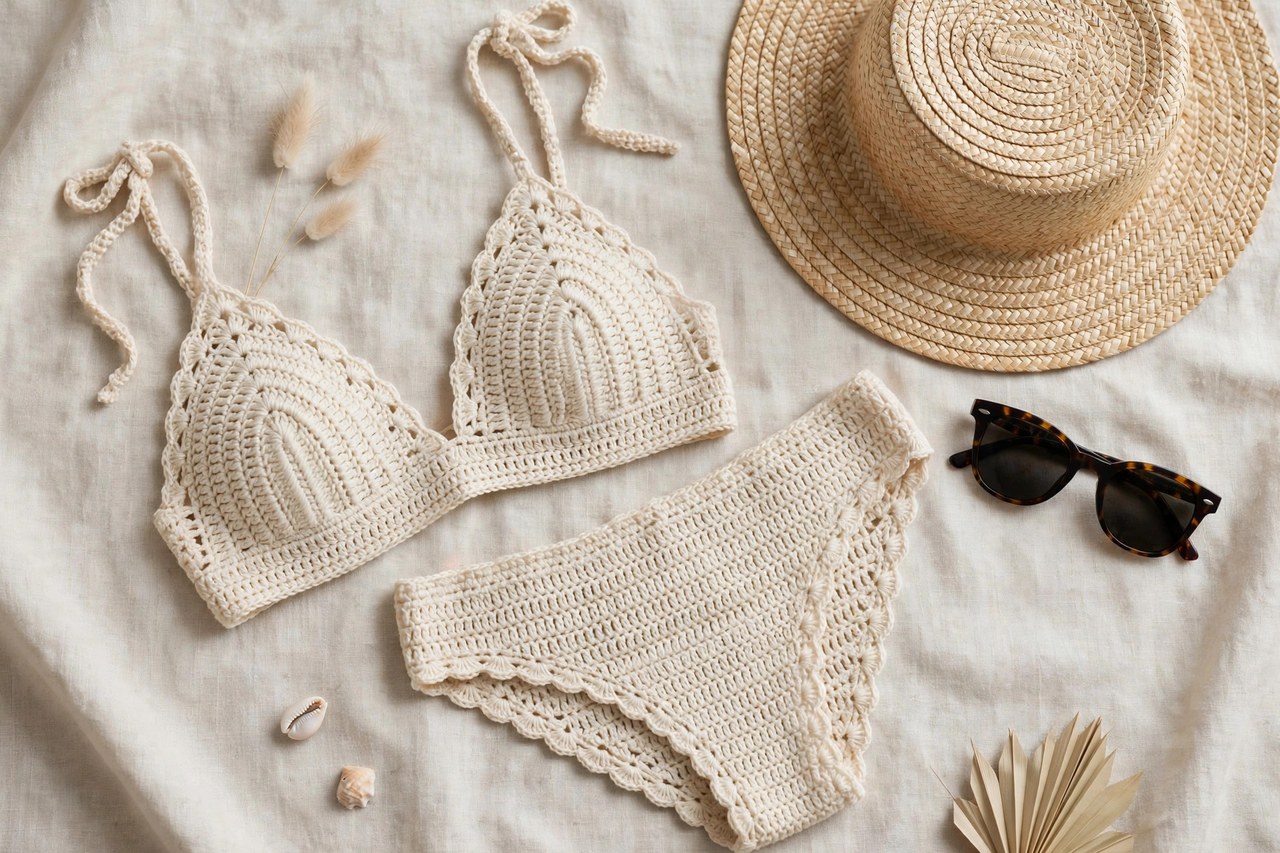
Crochet swimwear brings handcrafted texture to the beach: openwork patterns, scalloped edges, and a relaxed bohemian feel that smooth nylon swimsuits cannot imitate. Tops, bottoms, one-pieces, and dress-style pieces in cream, white, earth tones, and bright festival colors appear every summer, photographed flat with straw hats and sunglasses — a product story built on texture. The critical fact shoppers must understand is that this category contains two very different products: genuine swimwear with a crochet or knit-look outer layer fully lined in proper swim fabric, and decorative crochet pieces with little or no lining that are designed for poolside, festivals, and layering rather than swimming. Both can be worth buying, but only if you know which one you are holding. This guide gives you the checks that tell them apart, plus fit, styling, and care advice.
Real Swim Lining Versus Festival Crochet
Turn the garment inside out — that single action answers most questions. Swim-ready crochet has a complete inner swimsuit: a smooth lining in nylon or polyester swim knit covering the full bust and body, often with removable pads, elastic support, and proper swim closures. The crochet layer is attached securely at edges so it cannot shift or sag independently in water. Festival or decorative crochet, by contrast, may be unlined, partially lined only at the bust, or lined in thin fashion fabric that turns transparent when wet and offers no support. It is honestly sold for sunbathing, beach clubs, photo moments, and layering over a plain swimsuit — and worn that way, it is charming. Problems arise only when it is expected to swim, dive, or survive a wave. Check product descriptions for the words fully lined, swim lining, and quick-drying, and treat vague language about beach looks as a signal to verify before you rely on it in the water.
Styles: Bikinis, One-Pieces, and Dress Pieces
Crochet bikinis are the most common form: triangle, bandeau, halter, and underwire-style tops paired with tie-side, classic, or high-waist bottoms, the crochet texture adding visual interest that lets simple shapes feel special. Support varies enormously, so bustier shoppers should seek lined styles with structured cups, wider straps, and tie adjustments that genuinely tighten. Crochet one-pieces use the knit as a full suit or as panels and overlays over a solid swim body; the panel approach often gives the best combination of look and security. Beyond suits, the category includes crochet swim dresses, skirts, and shorts designed to wear over swimwear to and from the water. Color choice matters practically as well as aesthetically: white and cream crochet is the classic but shows lining contrast most when wet, while deeper tones and multicolor yarns are more forgiving and hide sand and sunscreen marks better across a holiday.
Fabrics and How Crochet Behaves in Water
Traditional crochet is cotton yarn, which absorbs water, grows heavy, stretches when wet, and dries slowly — beautiful on dry land, impractical for active swimming. Swim-intended crochet therefore usually uses synthetic yarns or knit-look woven patterns in polyester or nylon blends that mimic crochet stitches while drying faster and holding shape. Some pieces are not true crochet at all but machine-knitted openwork or lace-effect swim fabric, which is often the most durable option of all. Whatever the method, test expectations: even good swim crochet will feel heavier wet than a smooth suit, openwork stretches more under water weight, and ties and edges take longer to dry. Read fiber labels, favor quick-dry synthetics for anything you plan to swim in, and reserve true cotton crochet for dry poolside wear where its softness and matte texture are pure advantage.
Fit and Support Checks
Fit crochet swimwear more carefully than standard swim, because openwork and knit structures stretch differently. Tops should feel secure on land with straps and ties adjusted firmly — remember the garment will gain weight and give slightly when wet, so a top that already slides while dry will not stay put in the sea. Check coverage in bright light, since open stitches can reveal more than the fitting-room mirror suggests, especially in light colors; a proper lining solves this, an absent one does not. Bottoms should sit smoothly without the crochet edge rolling or digging, and tie sides should knot securely with enough tail to re-tie. For one-pieces, torso length is the common failure: if the suit pulls at the shoulders when you raise your arms dry, it will be uncomfortable wet. When between sizes in lined swim crochet, the larger size with tightened ties usually wears better than a smaller size under strain.
Styling and Gentle Care
Crochet swimwear styles itself with natural textures: a straw or woven bag, leather-look sandals, wooden or shell-tone jewelry, and a simple linen or cotton cover-up that lets the knit texture remain the focal point. Keep the arrangement product-simple — the crochet is the decoration, so competing prints and heavy accessories dilute it. It pairs beautifully with plain swim pieces too: a crochet top over solid bottoms, or a crochet skirt over a classic suit, extends both wardrobes. Care must be gentle, because snagging and stretching are this category's weaknesses. Rinse in cool fresh water after every wear to remove salt, chlorine, and sunscreen, wash by hand or in a mesh bag on the gentlest cycle, never wring, and dry flat away from direct sun so the knit keeps its shape and color. Store flat rather than hanging, keep away from rough surfaces and hook closures that catch loops, and pull a snagged thread back through rather than cutting it. Handled kindly, it keeps its charm for many summers.
Related Women's Guides
Photos


More to Explore on Apparel Search
Looking for Women's Clothing Stores?
This guide helps you choose women's crochet swimwear by style, fabric and fit. To browse where to buy, visit our women's clothing store directory, where you can find retailers that carry them.