Women's Cardigan Sweaters Guide
The layer that finishes everything — buttoned, open, belted, or boyfriend-long, a good cardigan is a wardrobe’s hardest worker.
Shop Women's Cardigan Sweaters Now
Shop Women's Cardigan Sweaters on Amazon Shop Women's Cardigan Sweaters on eBayThe Amazon and eBay links on this page are affiliate links. If you make a purchase through them, Apparel Search may earn a commission.
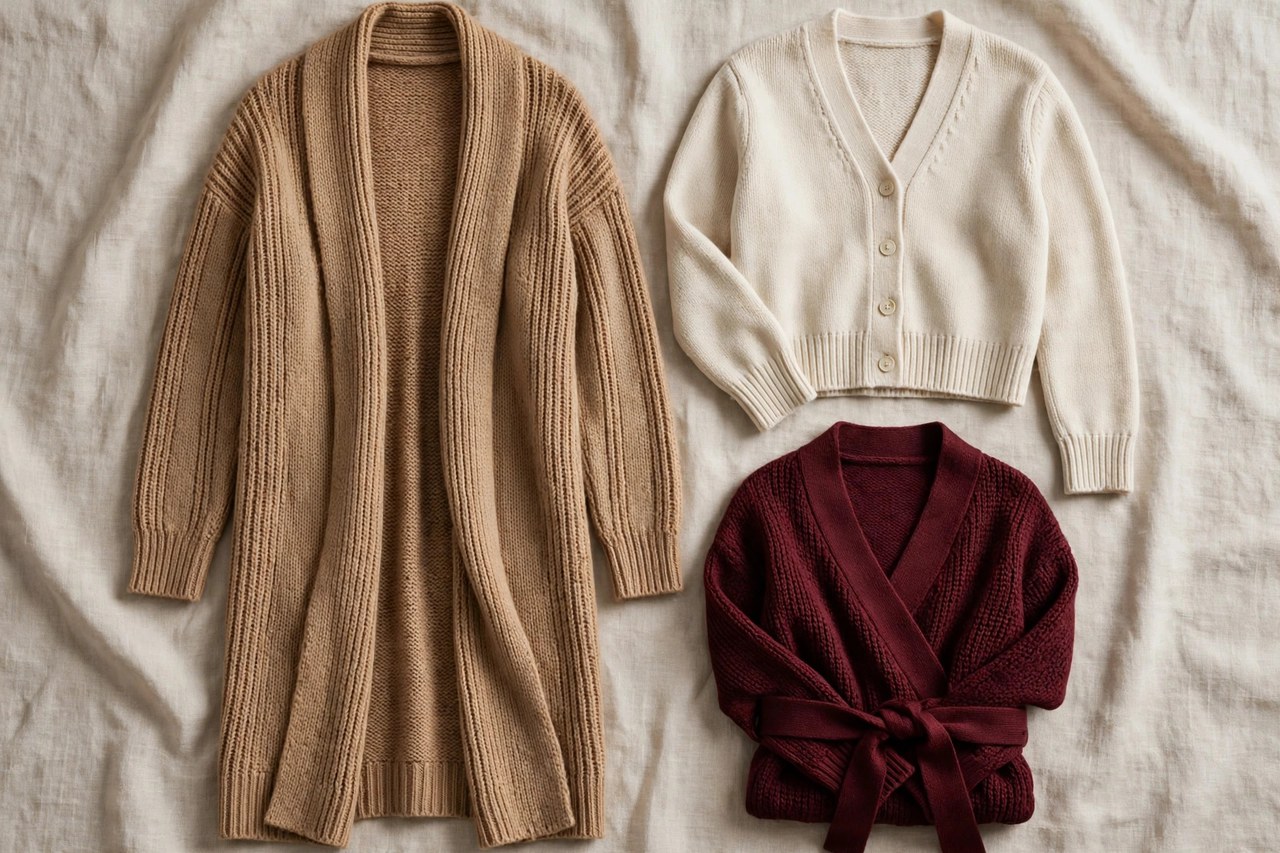
A cardigan is a knitted sweater that opens down the front, fastening with buttons, a zip, a belt, or nothing at all — named for the Earl of Cardigan, whose troops popularized the knitted waistcoat. That front opening is the whole point: a cardigan can be put on, taken off, buttoned halfway, or worn loose without disturbing hair, makeup, or the outfit underneath, which makes it the most adaptable layer a wardrobe owns. Women’s cardigans range from cropped, fine-gauge styles that behave like soft blouses to long boyfriend and duster lengths that replace a coat in mild weather. This guide sorts the main styles, yarns, layering formulas, and the buttoning etiquette wearers actually argue about.
Styles: Button-Front, Open, Belted and Boyfriend
The classic button-front cardigan, crew or V-neck, hip length, is the most versatile style ever knitted: a light layer, a top in its own right when buttoned, and the natural partner of dresses and blouses. Open-front cardigans dispense with fastenings and rely on drape; waterfall fronts add fluid folds, while straight open styles in structured knits read almost like soft jackets. Belted and wrap cardigans define the waist and suit dressier layering, the belt replacing the need for buttons altogether. Boyfriend cardigans are deliberately oversized — longer, slouchier, often with patch pockets and bigger buttons — borrowed in spirit from menswear and worn over slim outfits for contrast. Cropped cardigans end at or above the waist and exist to complete high-waisted skirts, trousers, and dresses. Shawl-collar and hooded cardigans sit at the cozy extreme, one step from loungewear, and earn their place in cold houses and on travel days.
Length is the other lever: cropped cardigans create a waist over dresses and suit petite frames, hip length layers over nearly everything, thigh and knee lengths cover the seat over leggings and skinny jeans, and duster lengths behave like knit coats over slim bases. The longer the cardigan, the slimmer and more defined the layers beneath should be.
Yarns, Gauges, and Warmth Without Bulk
Gauge describes how fine the knitting is. Fine-gauge cardigans in cotton, silk blends, or merino look smooth and dressy, layer under coats, and work in offices year-round. Mid-gauge knits in wool blends or acrylic-wool mixes are the everyday standard. Chunky and hand-knit-look cardigans use thick yarns and open stitches for texture and drama; they are warm but add visual volume, so their silhouettes are usually kept simple. Fiber decides care and lifespan: merino is soft, warm, and naturally odor-resistant; cotton is cool and washable but heavier and slower to dry; cashmere is the luxury insulator, warm at a fraction of the weight, and demands gentle handling; quality acrylic blends suit allergy-sensitive wearers. Check buttonhole reinforcement and cuff recovery on any yarn — a cardigan usually fails at its fastenings and edges long before its body wears out.
Layering Formulas That Always Work
Four formulas cover most cardigan dressing. First, the dress formula: a fitted or cropped cardigan over a sleeveless or cap-sleeve dress restores coverage and warmth while keeping the dress’s waist visible. Second, the tee formula: a mid-length open cardigan over a crew tee and jeans, with the cardigan a clear step darker or lighter than the tee so the layers read distinctly. Third, the blouse formula: a fine-gauge V-neck cardigan over a collared shirt, collar and cuffs showing, buttons open at the top and bottom for ease. Fourth, the column formula: a long cardigan worn open over a matching top-and-trouser base, creating one unbroken vertical line that lengthens the whole figure. Belts belong over a closed or wrap cardigan at the natural waist, never slung over a long open cardigan’s drifting fronts. Add a brooch or a contrasting camisole beneath and each formula gains a second life.
Buttoning Etiquette and Small Rules Worth Knowing
Cardigan buttoning has genuine conventions, not just habits. Buttoning only the middle button or two defines the waist while letting the sweater move — the classic styling trick for button-front styles worn as tops. Leaving the bottom button undone follows the older menswear rule for waistcoats and jackets, and in practice it stops the hem pulling when you sit, so it looks better as well as feeling better. Buttoning every button reads neat and modest and suits fine-gauge styles worn alone; buttoning none turns the cardigan into a frame for the layer beneath. A single top button fastened, with the rest open, creates a soft cape-like drape over dresses. Mismatched or replaced buttons are acceptable only when deliberately contrasted; otherwise match size, color, and material as closely as possible, and keep the spare button that came with the garment sewn inside a pocket or stored with your sewing kit from day one.
Care: Washing, Depilling, and Storing Knits
Cardigans suffer most from hanging and from heat. Store them folded, always: a season on a hanger stretches shoulders into points and lengthens the body unevenly, especially in heavier knits. Wash according to fiber — merino and cashmere in cool water with wool wash, by hand or on a machine wool cycle in a mesh bag; cotton and most blends on a gentle cold cycle — then reshape the sweater flat on a towel, aligning button bands and squaring the hem, and dry it there. Button the front before washing so the bands keep their alignment. Pilling gathers where the cardigan rubs bags and seatbelts; a battery fabric shaver or a knit comb restores the surface in minutes and is worth doing each season. Mend snags by pulling the loop inside rather than cutting it, and air cardigans between wears.
Choosing the depilling tool itself is covered in our comparison of fabric shavers, sweater combs, and sweater stones — the comb for fine knits, the shaver for everyday wool, the stone for sturdy fleece and heavy knits.
Related Women's Guides
Photos

More to Explore on Apparel Search
Looking for Women's Clothing Stores?
This guide helps you choose women's cardigan sweaters by style, fabric and fit. To browse where to buy, visit our women's clothing store directory, where you can find retailers that carry them.